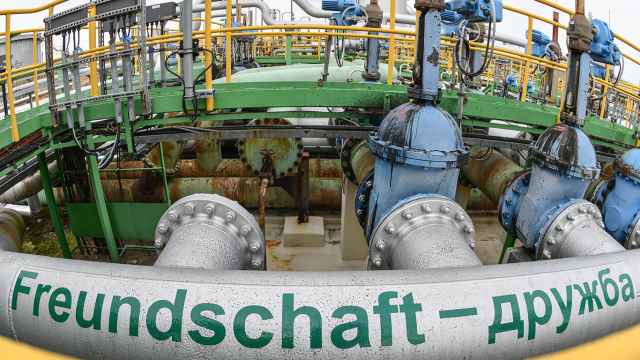
The crisis in the Strait of Hormuz has only cemented the views of Russian officials that the Northern Sea Route is the future of global trade — a faster, cheaper alternative to traditional shipping lanes that’s now made viable by melting Arctic ice.
But a recent oil spill in warmer, more accessible waters suggests that Moscow is not ready for the risks it is already taking. Indeed, a report Russia compiled last winter and submitted to the International Maritime Organization (IMO) suggests that the country is in over its head when responding to even the most basic oil mishaps at sea.
In December 2024, two oil tankers, Volgoneft-212 and Volgoneft-239, broke apart during a storm in the warm waters of the Kerch Strait off the coast of Crimea, spilling more than 3,000 tons of heavy fuel oil. The location matters. This was not the remote Arctic, but a relatively accessible maritime corridor near major ports, with rescue vessels, infrastructure and personnel nearby.
The response fell short. More than a year later, oil was still being found along the coastline.
According to the report to the IMO, Russia lacks a strategy for responding to heavy fuel oil spills in cold conditions. That admission alone should raise red flags for European policymakers, insurers and shipping companies increasingly drawn to Arctic routes. Even the report itself was slow. While it was presented last winter, the spill had occurred almost a year before, at the end of 2024.
Heavy fuel oil behaves differently from lighter products. In cold water, it becomes denser and sinks, spreading through the water column and settling on the seabed. This is what happened in the Kerch Strait. Instead of being contained on the surface, much of the oil had to be recovered manually by divers.
Even in these relatively mild conditions, cleanup operations were slow and intermittent. Oil continued leaking from the wreckage weeks after the accident. Cleanup onshore relied heavily on volunteers — tens of thousands of them — who often stepped in before authorities fully mobilized.
These structural problems cannot be brushed aside as technical.
Oil that could have been removed earlier continued to leak from a grounded section of one tanker. Waste management broke down, with contaminated sand stored improperly and, in some cases, reportedly washed back into the sea. Protective barriers failed during winter storms. Official claims of progress were repeatedly contradicted by new oil discharges documented by volunteers and the media.
All of this unfolded in shallow waters, above-freezing temperatures and within reach of established infrastructure. What if a spill like this took place in the Arctic?
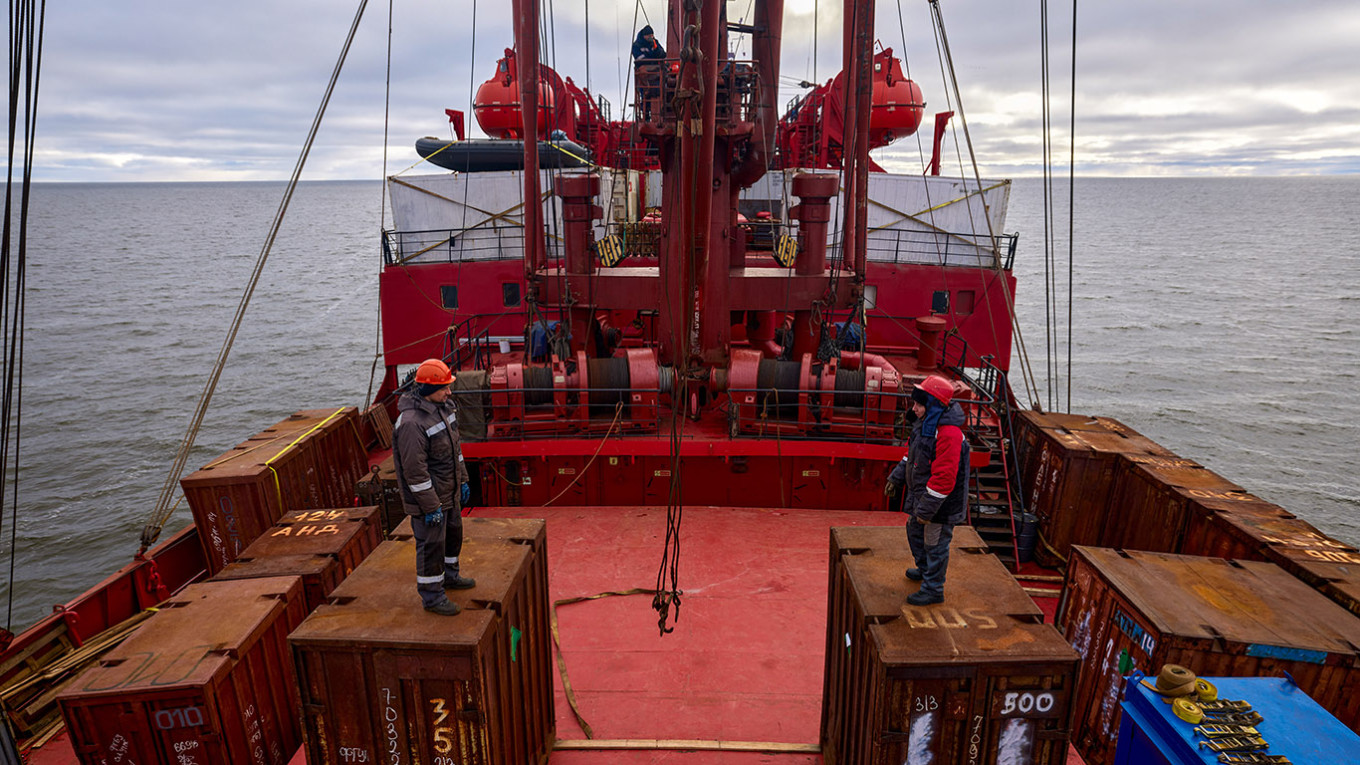
Along the Northern Sea Route, distances between rescue centers can stretch thousands of kilometers. Water temperatures hover near freezing, even in summer, and plunge below zero in winter. Ice cover complicates or simply prevents response operations. Moreover, it is nearly impossible to remove oil trapped in ice.
All this means that the baseline conditions for Arctic spill response are significantly worse than in other environments. Russia’s response to the Kerch Strat oil spill suggests its current capabilities for addressing a similar crisis in the Arctic would be grossly insufficient.
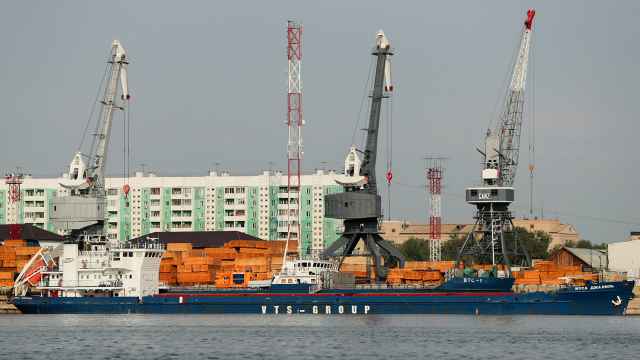
At the same time, the condition of Russia’s expanding Arctic shipping fleet raises additional concerns. The number of shadow fleet vessels is increasing, with ships often sailing under opaque ownership structures, limited insurance coverage and minimal regulatory oversight. Moreover, many are decades old. In 2025, roughly half of the tankers authorized to use the route were over 25 years old, including some more than 50 years in service. Single-hull tankers — widely considered environmentally high-risk — remain in operation.
The Volgoneft vessels themselves illustrate the problem. Designed for navigating rivers and only later adapted for limited coastal use, these single-hull vessels were operating in conditions that exceeded their design parameters. Their structural failure in a storm was not an isolated incident. It was a foreseeable outcome.
But the political narrative surrounding the Northern Sea Route continues to move in the opposite direction. Russian officials frame the route as a cornerstone of a “multipolar” global economy. Some international policymakers have begun to echo the idea that Arctic shipping routes could play a growing role in global trade, often without fully accounting for the environmental and operational risks.
That is a mistake.
The Northern Sea Route is not primarily a global transit corridor. It is, above all, an export route for Russian oil and gas. Expanding its use means expanding Arctic hydrocarbon production at a time when the climate consequences of such development are becoming increasingly difficult to ignore.
The Kerch Strait spill offers a rare, real-world stress test of Russia’s spill response capabilities. It shows that even under relatively favorable conditions, the system struggles: slow mobilization, limited technical capacity, reliance on manual labor and volunteers, and persistent gaps in coordination and waste management.
Transplant those weaknesses into the Arctic and the risks multiply.
For European governments, insurers and companies considering engagement with Arctic shipping, the lesson is straightforward: the gap between Russia’s ambitions and its capabilities is wider than advertised. And until that gap is addressed, the Northern Sea Route is not an opportunity. To the contrary, it is a liability.
A Message from The Moscow Times:
Dear readers,
We are facing unprecedented challenges. Russia's Prosecutor General's Office has designated The Moscow Times as an "undesirable" organization, criminalizing our work and putting our staff at risk of prosecution. This follows our earlier unjust labeling as a "foreign agent."
These actions are direct attempts to silence independent journalism in Russia. The authorities claim our work "discredits the decisions of the Russian leadership." We see things differently: we strive to provide accurate, unbiased reporting on Russia.
We, the journalists of The Moscow Times, refuse to be silenced. But to continue our work, we need your help.
Your support, no matter how small, makes a world of difference. If you can, please support us monthly starting from just $2. It's quick to set up, and every contribution makes a significant impact.
By supporting The Moscow Times, you're defending open, independent journalism in the face of repression. Thank you for standing with us.

Remind me later.