A new Russian law regulating public signage may appear to be a minor administrative change. But in practice, the move will further marginalize Russia’s Indigenous languages by shutting them out of the public arena.
Starting March 1, businesses are required to use Russian on signs, labels and other public-facing texts, including storefronts and online marketplaces. Officials present it as a measure to protect the Russian language and ensure accessibility.
But this explanation does not hold up. Russian already dominates nearly every sphere of public life, from education and media to government and business. It does not need protection.
What this law does instead is define the conditions under which other languages are allowed to exist.
At its core, the issue is not accessibility, but authority over public space.
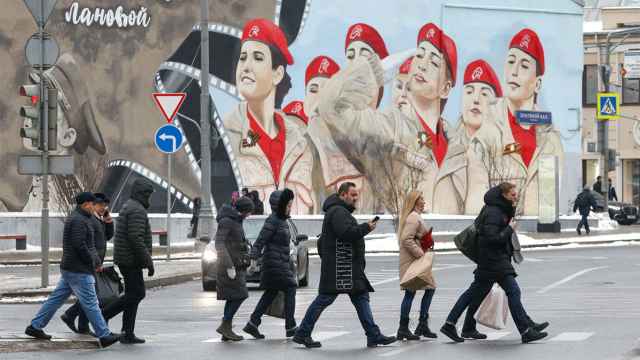
In any city, language is not only spoken; it is seen. It appears on shop signs, menus and navigation systems. These signals shape what is perceived as normal. A language that is visible becomes part of everyday life and will not disappear.
Under the new rules, any text in another language must now be duplicated in Russian. Previously, signs in Indigenous languages could exist on their own. Now their presence is conditional.
Once one language becomes mandatory and others are optional, a hierarchy of languages forms.
This dynamic is especially visible in Russia’s national republics, where local languages formally share official status with Russian but remain largely absent from urban environments. Their presence in public space has rarely been the result of state policy. Instead, it depends on the efforts of activists, teachers and small business owners.
As a Buryat language teacher, I encounter this gap every day.
I first visited Ulan-Ude, the capital of Buryatia, in 2002, when I was 10 years old. The Buryat people, indigenous to the region, speak a language closely related to Mongolian.
The first thing I remember is a large shopping center called Sagaan Morin (“White Horse”), which still stands there today. Coming from a small village without urban infrastructure, it was more than just a building. It was one of the first words in my language I could recognize and carry with me.
Names like this, in the local Indigenous language, create points of connection. Even people who do not speak Buryat can pick up and remember a few words through everyday encounters.
Translating such names into Russian would erase this function by removing one of the simplest ways a language remains visible and usable in the city.
I still carry that experience with me. When I teach Buryat today, I try to show that the language belongs not only to memory or tradition, but to the present. New initiatives continue to emerge, aiming to make Buryat more visible in urban life.
But this space remains fragile, and it is shrinking.
Many Buryat words and names do not translate easily into Russian. They carry cultural and historical meanings that are often lost or distorted in the process. Mandatory duplication does not simply add Russian alongside Buryat, but changes how Buryat functions in public space.
Visibility also shapes how a language is learned and perceived. When a language appears in everyday settings, it gains legitimacy. Without that presence, it quickly loses relevance.
This law is not an isolated development. Over the past two decades, the institutional role of non-Russian languages has steadily declined.
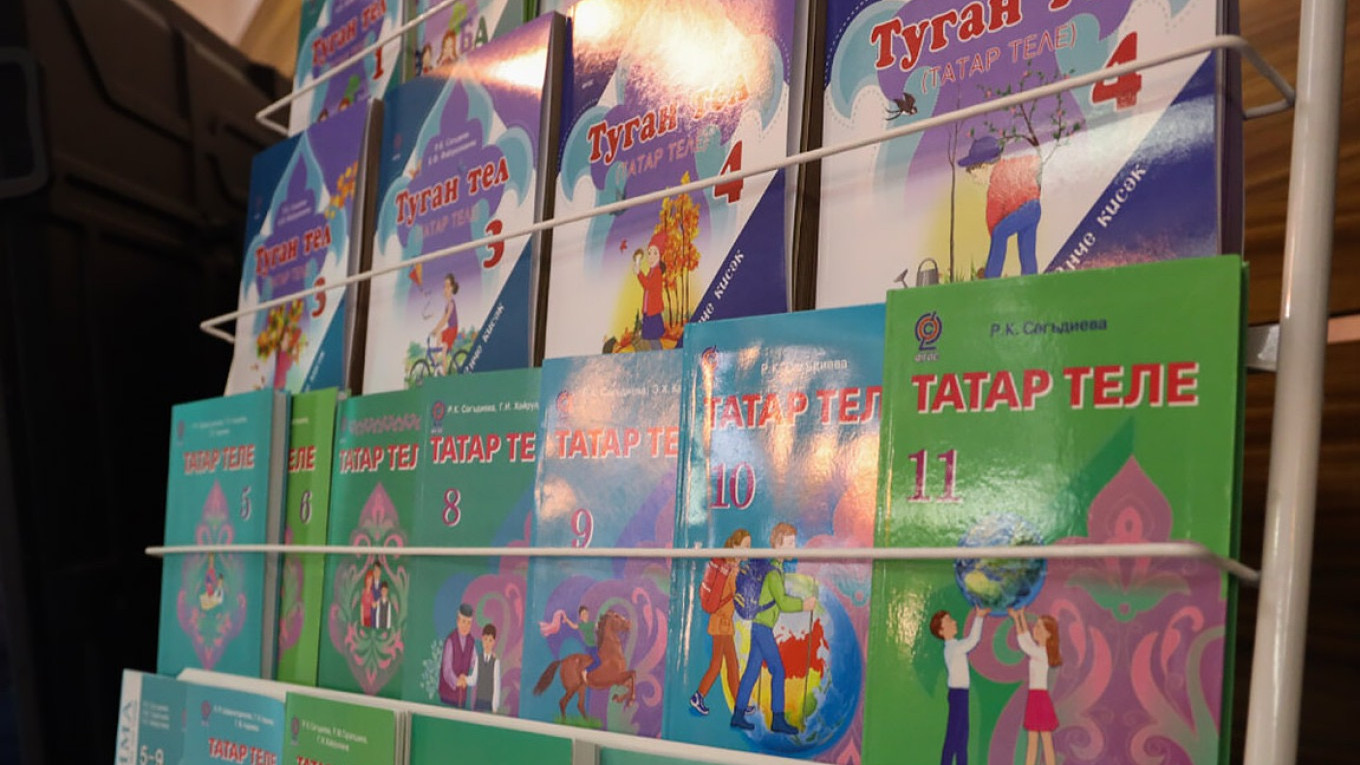
Since 2002, official languages have been required to use a Cyrillic-based script, no matter what. In Buryatia, interest in the traditional Mongolian script has grown, but its use remains excluded from official contexts. In 2018, the study of regional languages in schools became optional, and the possibility of taking exams in them was removed. Constitutional amendments further reinforced the privileged status of Russian.
The contrast with neighboring Mongolia is striking. There, the state supports the use of traditional script alongside Cyrillic. The coexistence of two writing systems allows Russian to expand further into the lives of Indigenous people at the expense of their own culture.
The numbers reflect this trend. Between 2002 and 2020, the number of speakers of languages of Russia’s republics declined by nearly 29% with more than 5 million people losing proficiency in their native languages. Today, only about 1% of schoolchildren are educated in them.
This is not a natural cultural shift. Rather, it is a conscious political process that reduces linguistic diversity. After all, a homogenous society is supposedly easier to control.
Beyond Russia, the trajectory looks different. In countries such as New Zealand and Canada, Indigenous languages are increasingly present in public signage and urban space as part of broader efforts to restore their status after decades of marginalization.
There, visibility is treated as a condition for these languages’ survival. In Russia, it is treated as something to be managed.
When a language disappears from public space, it also disappears from domains associated with opportunity — business, services and professional environments. It is no longer perceived as useful for social or economic mobility.
For younger generations, this changes the stakes. A language that is not present in these domains is less likely to be seen as worth investing in. Over time, it shifts from a tool of everyday use to an object of preservation.
The language's future becomes under threat As public presence declines, languages face intergenerational loss — a break in transmission that becomes increasingly difficult to reverse.
After a certain point, this process becomes hard to undo.
This law is part of a broader move toward centralizing language and identity, where linguistic diversity is treated as a deviation rather than a norm.
At the same time, the Kremlin continues to promote an image of Russia as a diverse, multinational country where many languages are preserved. This is reflected, for example, in official holidays dedicated to languages and “Indigenous peoples.”
Such gestures create an appearance of care, but they do not address structural problems: the lack of education in native languages, the shortage of teachers and the limited presence of these languages in media and public life.
Symbolic recognition like this coexists with the steady erosion of real opportunities to use language.
This logic extends beyond domestic policy. Russia presents itself internationally as a multicultural state while sidelining those cultures and languages at home. When only Russian is visible in public space, it becomes the dominant marker of identity.
Language policy thus operates in two directions at once: it reduces diversity within the country while projecting a simplified and more controllable image abroad.
In this sense, the issue goes beyond language. It is about control over the narrative of what Russia is, which, according to the Kremlin, is a monolithically Russian-speaking space where linguistic diversity exists in theory but is absent in public.
There is nothing neutral about this law. It does not protect language. It determines which languages are allowed to exist in the public space. And when that space becomes conditional, the language's disappearance is an expected outcome, not a distant risk.
A Message from The Moscow Times:
Dear readers,
We are facing unprecedented challenges. Russia's Prosecutor General's Office has designated The Moscow Times as an "undesirable" organization, criminalizing our work and putting our staff at risk of prosecution. This follows our earlier unjust labeling as a "foreign agent."
These actions are direct attempts to silence independent journalism in Russia. The authorities claim our work "discredits the decisions of the Russian leadership." We see things differently: we strive to provide accurate, unbiased reporting on Russia.
We, the journalists of The Moscow Times, refuse to be silenced. But to continue our work, we need your help.
Your support, no matter how small, makes a world of difference. If you can, please support us monthly starting from just $2. It's quick to set up, and every contribution makes a significant impact.
By supporting The Moscow Times, you're defending open, independent journalism in the face of repression. Thank you for standing with us.

Remind me later.