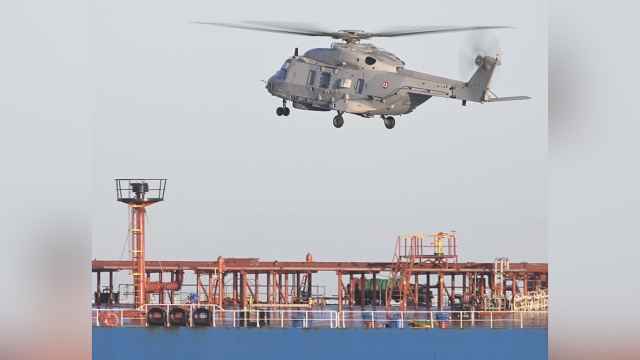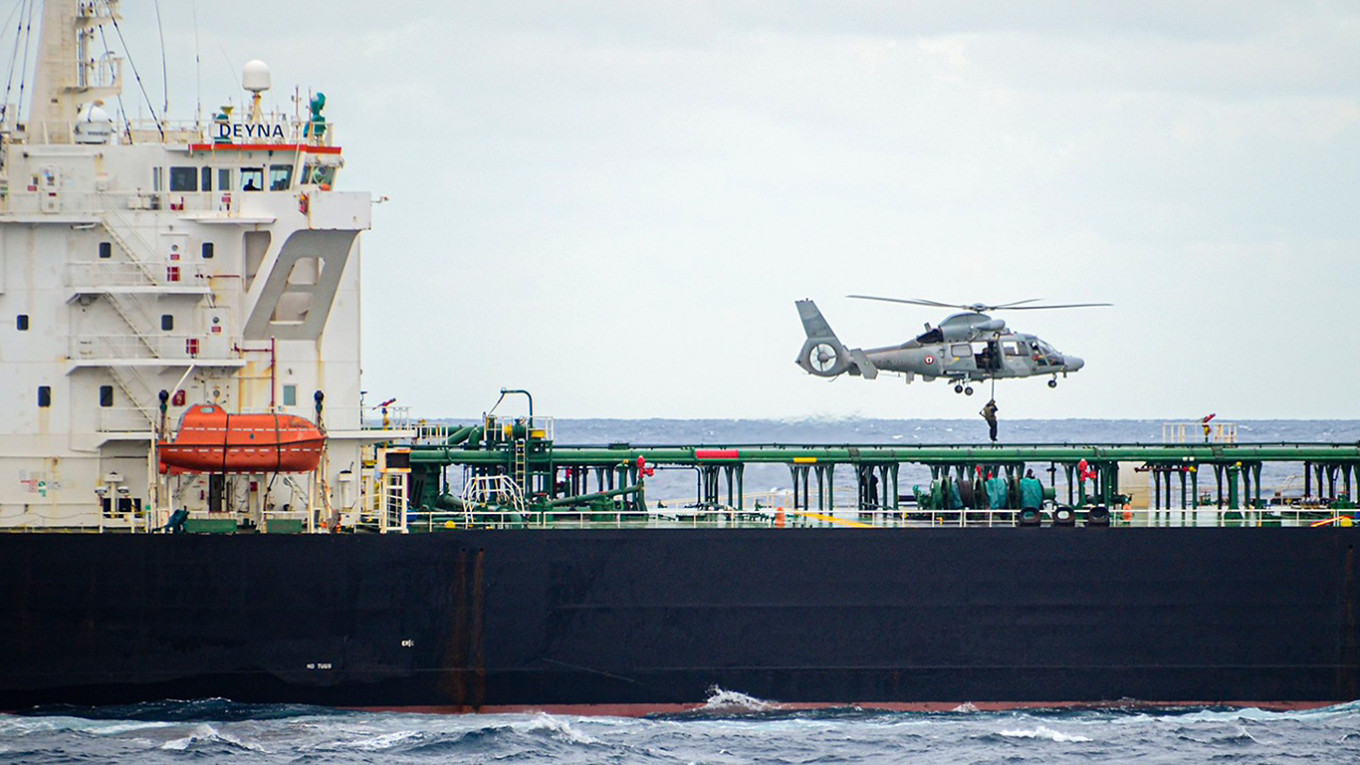
The French navy said Friday that it intercepted a false-flagged oil tanker sailing from Russia in the Mediterranean.
“This morning in the Mediterranean, the French Navy intercepted and boarded another vessel from the shadow fleet, the Deyna,” French President Emmanuel Macron posted on X.
Russia’s so-called “shadow fleet” consists of vessels with opaque ownership used to skirt Western sanctions. They frequently change flags and sometimes sail with invalid registration papers to evade monitoring and enforcement.
The Mozambican-flagged Deyna, which sailed from Murmansk in northwestern Russia, was inspected over the regularity of its flag and will be escorted to an anchorage point for further checks, French authorities said.
Ship tracking services show that the 250-meter (820-feet) Deyna left Murmansk on March 1 and was due to arrive in Port Said, Egypt, on March 26.
Macron stressed that France “will not allow” vessels like the Deyna to “line their pockets while helping finance Russia’s war effort.”
“The war involving Iran will not deflect France from its support for Ukraine, where Russia’s war of aggression continues unabated,” he added.
There was no immediate response from authorities in Moscow.
It is at least the third such operation by French authorities in recent months.
Last month, France released an oil tanker suspected of belonging to Russia’s “shadow fleet” after its owner paid a multimillion-euro fine.
In September, it detained a Russian-linked tanker in a move President Vladimir Putin condemned as “piracy.” Its captain was due to stand trial last month.
Sweden, meanwhile, has seized two false-flagged ships in recent weeks.
The EU lists hundreds of vessels suspected of belonging to Russia’s “shadow fleet,” barring them from European ports and maritime services.
AFP contributed reporting.
A Message from The Moscow Times:
Dear readers,
We are facing unprecedented challenges. Russia's Prosecutor General's Office has designated The Moscow Times as an "undesirable" organization, criminalizing our work and putting our staff at risk of prosecution. This follows our earlier unjust labeling as a "foreign agent."
These actions are direct attempts to silence independent journalism in Russia. The authorities claim our work "discredits the decisions of the Russian leadership." We see things differently: we strive to provide accurate, unbiased reporting on Russia.
We, the journalists of The Moscow Times, refuse to be silenced. But to continue our work, we need your help.
Your support, no matter how small, makes a world of difference. If you can, please support us monthly starting from just $2. It's quick to set up, and every contribution makes a significant impact.
By supporting The Moscow Times, you're defending open, independent journalism in the face of repression. Thank you for standing with us.

Remind me later.