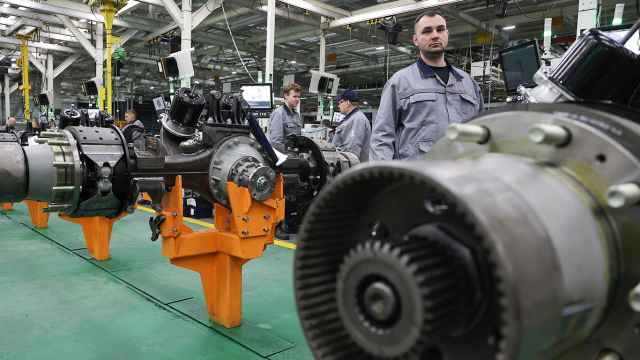
Automaker AvtoVAZ is recalling more than 33,000 of its Lada Granta because of a potential defect in the driveshaft of the vehicles, the company’s press service told state media on Wednesday.
The recall applies to vehicles sold between June 6 and Dec. 12, 2025, Russia’s standards watchdog Rosstandart said in a recall statement last week, with vehicle identification numbers listed in an accompanying notice.
“The issue concerns a driveshaft component in one of the Lada Granta assemblies, where there is a minimal risk of the connection loosening,” the company’s press service was quoted as saying by the TASS news agency.
“It is unlikely that this would occur under real-world driving conditions. However, AvtoVAZ has decided to carry out a recall campaign to fully eliminate this possibility,” the automaker added.
AvtoVAZ said the potential defect is linked to a component supplier and that it had already made changes to its production process to address the issue.
It was not immediately clear if there were any reports of accidents or injuries related to the defect.
The business newspaper Kommersant reported that the driveshaft defect could lead to loose or stiff steering, and in the worst-case scenario, it may even cause the steering system to lock up.
The Granta, a four-door sedan, is AvtoVAZ’s best-selling model, with 134,200 cars sold between January and November, according to the company.
Experts told Kommersant they do not believe the recall would significantly affect demand for the model.
This is AvtoVAZ’s sixth and largest recall this year.
Overall, Lada sales fell 25% in the first 10 months of the year compared with the same period in 2024, reducing the brand’s market share to 25.5%, according to market research firm Avtostat.
AvtoVAZ has shifted to a four-day workweek, cut wages and started laying off workers in response to the declining sales.
A Message from The Moscow Times:
Dear readers,
We are facing unprecedented challenges. Russia's Prosecutor General's Office has designated The Moscow Times as an "undesirable" organization, criminalizing our work and putting our staff at risk of prosecution. This follows our earlier unjust labeling as a "foreign agent."
These actions are direct attempts to silence independent journalism in Russia. The authorities claim our work "discredits the decisions of the Russian leadership." We see things differently: we strive to provide accurate, unbiased reporting on Russia.
We, the journalists of The Moscow Times, refuse to be silenced. But to continue our work, we need your help.
Your support, no matter how small, makes a world of difference. If you can, please support us monthly starting from just $2. It's quick to set up, and every contribution makes a significant impact.
By supporting The Moscow Times, you're defending open, independent journalism in the face of repression. Thank you for standing with us.

Remind me later.