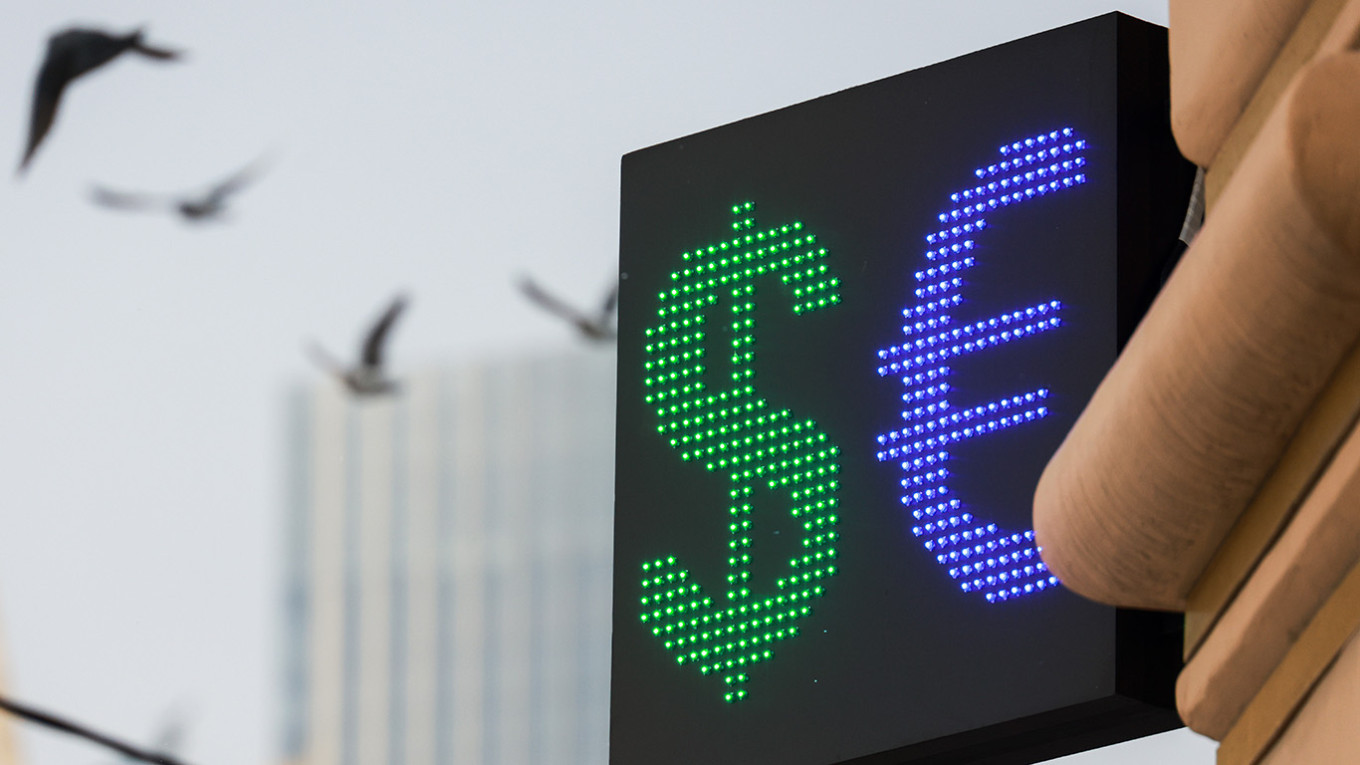
Russia’s decision to scrap most restrictions on foreign transfers is doing little to stem the flow of money back into the country, as households continue repatriating funds from overseas accounts, according to preliminary Central Bank data.
In October, Russians sent 29.5 billion rubles ($383 million) more into domestic accounts than they transferred abroad.
This year is now on track to become the first in which households bring home more money than they move out.
The Central Bank recorded net inflows from non-resident banks in seven of the first 10 months of 2025.
Between January and October, Russians returned more than 216 billion rubles ($2.8 billion).
As of Nov. 1, the Central Bank estimated household savings held in foreign banks at 6.34 trillion rubles ($82 billion), down 2 trillion rubles since the start of the year, mostly due to the ruble’s appreciation.
The regulator stressed that these figures reflect the cumulative amount previously transferred abroad, not the real balance currently held overseas.
The Central Bank cannot trace how these funds are used once they leave Russia. Some may be spent on imports or day-to-day expenses.
Sanctions and attractive domestic interest rates are key reasons people are pulling money back. The EU’s decision to add Russia to its list of high-risk money-laundering jurisdictions is expected to raise more compliance barriers.
Economist Dmitry Polevoy argued that the Central Bank’s removal of transfer restrictions is linked to this risk rather than any attempt to weaken the ruble.
Ending limits now “may ease already strained payment channels” before new EU rules take effect, he said.
Analysts at Alfa Bank said cross-border payment difficulties mainly stem from foreign banks’ compliance policies, not Russian capital controls.
High domestic rates also matter, analysts noted. Polevoy said the interest-rate gap between ruble and foreign-currency instruments is driving repatriation, and demand for FX assets is unlikely to rise until the key rate falls “closer to 12-13%.”
Most households that wanted to transfer funds abroad have already done so over the past three and a half years, said Ivan Uklein, senior director at ratings agency Expert RA.
Others continue using alternative routes, such as cryptocurrencies or foreign brokers, a method recommended by independent adviser Natalya Smirnova.
According to the Central Bank, Russians transferred 285 billion rubles ($3.7 billion) to non-resident brokers between January and October, amounting to tens of billions per month.
“New payment solutions make it fairly easy to bypass limits — whether it’s the $10,000 cap on money-transfer systems or even sending $1 million to foreign banks,” Uklein said.
Even if outflows pick up, both the returning and outgoing sums are small relative to the size of Russia’s banking system and FX market, Alfa’s analysts said.
But the easing of controls may encourage households to boost their foreign-currency deposits inside Russia.
In October, the Central Bank recorded a sharp increase of 0.2 trillion rubles ($2.6 billion), or 7.1%, in FX deposits held by the public — driven largely by inflows into yuan accounts.
Much of this came from “a narrow group of individuals” who bought foreign currency and placed it on deposit, the regulator said.
A Message from The Moscow Times:
Dear readers,
We are facing unprecedented challenges. Russia's Prosecutor General's Office has designated The Moscow Times as an "undesirable" organization, criminalizing our work and putting our staff at risk of prosecution. This follows our earlier unjust labeling as a "foreign agent."
These actions are direct attempts to silence independent journalism in Russia. The authorities claim our work "discredits the decisions of the Russian leadership." We see things differently: we strive to provide accurate, unbiased reporting on Russia.
We, the journalists of The Moscow Times, refuse to be silenced. But to continue our work, we need your help.
Your support, no matter how small, makes a world of difference. If you can, please support us monthly starting from just $2. It's quick to set up, and every contribution makes a significant impact.
By supporting The Moscow Times, you're defending open, independent journalism in the face of repression. Thank you for standing with us.

Remind me later.