
For relations between Russia and the United States, the 1990s are back.
No, this doesn’t mean that the Starlite Diner — the darling of expats and locals in the earliest days — is once again serving creamy, cold milkshakes near the Mayakovskaya metro station.
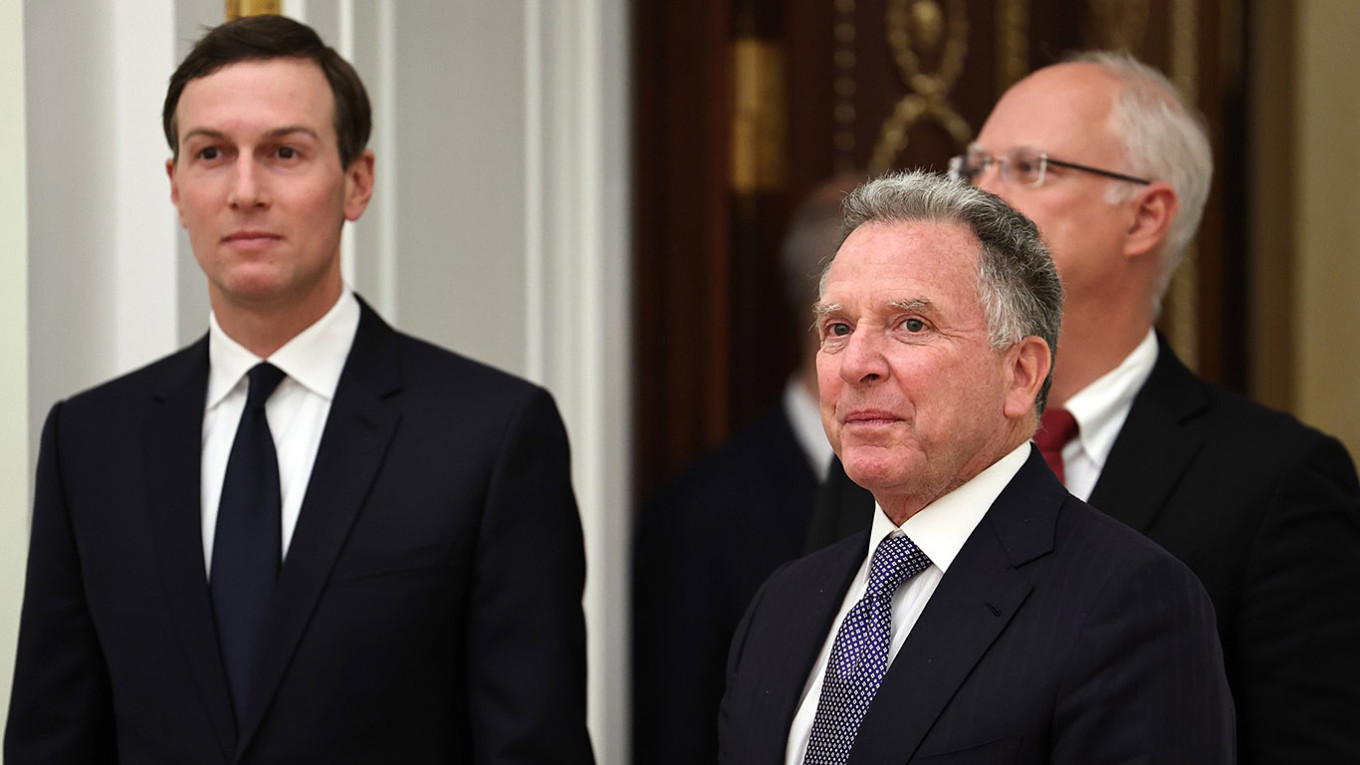
Today’s geopolitical performance of Back to the Future instead comes courtesy of negotiations between Steve Witkoff and Jared Kushner on the US side, and Kirill Dmitriev, CEO of the Russia Direct Investment Fund, on the Russian side.
In the run-up to Tuesday’s Kremlin meeting — the latest effort to bring an end to Russia’s war of aggression on Ukraine — Witkoff, Kushner and Dmitriev reportedly met in Miami Beach to discuss a staggering array of business deals. According to a report in The Wall Street Journal, the trio discussed potential transactions in energy, rare-earth minerals, Arctic exploration, and even a joint trip to Mars involving Elon Musk’s SpaceX.
For long-term observers of Russia’s relationship with the West, talks among these business moguls mirror two of the sweeping, but ultimately failed, assumptions that business executives and political leaders once made about Russia.
The first was that economic engagement with Russia in the wake of the Soviet collapse would help develop a transparent, domestic market economy.
The second was that integrating Russia into the global economy would spur its transition toward democracy. Making money, the thinking went, would make Russia a less threatening geopolitical rival.
We now know where those assumptions, and our failure to stress-test them often and robustly enough, have brought us. This, of course, takes ample advantage of hindsight, though some of Moscow’s sharper expats claim they saw this coming all along.
No matter their current job titles, Witkoff and presidential son-in-law Kushner, still buzzing with energy from the Abraham Accords, are businessmen. They are emissaries from an extraordinarily transaction-oriented White House.
Their Russian counterpart, the Harvard-educated Dmitriev, is Putin’s ambassador to the American business community. It is his specific role to dangle business opportunities in front of people like Witkoff, Kushner, and executives at U.S. companies that left Russia, but might consider going back. Not long ago, Dmitriev might have even overcooked his job description by suggesting the two countries build a tunnel between Russia and Alaska under the Bering Strait. Ukraine has been conspicuously left out of these business talks; U.S. President Donald Trump coerced Ukraine into a mineral extraction deal in April.
Dmitriev’s meeting in South Florida is not his first in the U.S. since the start of the second Trump presidency. He also figured prominently in talks early this year in Riyadh with Secretary of State Marco Rubio, one of the first attempts at a Russo-American rapprochement. Famously, he brought to those meetings a report enumerating the billions of dollars U.S. companies supposedly left on the table when they left Russia following the full-scale invasion of Ukraine in February 2022. According to the Wall Street Journal, the most recent meeting was the high point of a strategy to engage President Trump and his team commercially first, and to let the politics sort themselves out later.
We are back in the years of magical thinking that business can change Russia. Putin was never driven by commercial imperatives beyond those that strengthened the Russian state and lined the pockets of his closest associates. If he ever harbored sympathies for the private sector, that is certainly and resolutely no longer the case.
More to the point, the Russian business environment has evolved substantially over the course of a war that has lasted far longer than any of its parties anticipated. Russia’s business elite is changing. Russian commercial legislation has changed. Some Russian executives hope to keep their former Western colleagues permanently at a safe distance; in their minds, Western business turned and ran when the going got tough.
There is, of course, a cohort of Russian elites in both political and business circles who eagerly want back their place at the global table. Some American executives who remain in Russia, including the president of the American Chamber of Commerce in Russia, have been working hard to convince their peers that coming back offers a great opportunity.
Autocrats can change their minds; that’s what makes them autocrats. But business deals can’t quickly erase concrete ideological or military differences. Decades of Western investment in China have not weakened the Chinese Communist Party’s grip. Foreign money has not made Xi Jinping a swashbuckling capitalist, nor has it diminished China’s role as Washington’s number one geopolitical rival.
Innumerable international companies made billions of dollars in China, which arguably aided China’s global ascent. But Russia and China appear to share one crucial tenet: when critical national interests are at stake, the rules come from above, not from the market.
Witkoff, Kushner and Dmitriev are said to be negotiating potential transactions in high-profile sectors of strategic importance to both their capitals. This is not surprising — these are, after all hardest deals to pull off. They are in spheres of activities where the players need cast-iron stomachs and reliable political backing.
The West’s track record with transactions in Russian strategic sectors reminds us that ambitions and outcomes can diverge dramatically. TNK-BP, the Russo-British 50-50 energy joint venture, came unstuck over deep commercial and political incompatibilities.
It is also interesting to note that, so far, these talks appear to exclude sectors like retail, pharma, automotive and the media, to name a few. Kusher and Witkoff reportedly hope their talks with Dmitriev will have a broad commercial impact. While most American companies remain quiet about their ambitions in Russia, the list of companies that would go back is longer than you might think.
Against the backdrop of Pax Americana and a stable geopolitical environment, international investment had the power to change countries. For decades, globalisation has moved people, capital, and know-how around the world, largely to everyone’s benefit. Ironically, the Trump administration has put that geopolitical order under colossal pressure.
Maybe the Trump White House harbors no illusions about what it can accomplish in the impossible triangle of the U.S., Russia and Ukraine (with Europe trying to work its way in). This leads, possibly, to a more ominous outcome: Washington abandons Ukraine completely, the Trump administration sets up shop with Moscow, and the U.S. business community, even partially, follows along.
A Message from The Moscow Times:
Dear readers,
We are facing unprecedented challenges. Russia's Prosecutor General's Office has designated The Moscow Times as an "undesirable" organization, criminalizing our work and putting our staff at risk of prosecution. This follows our earlier unjust labeling as a "foreign agent."
These actions are direct attempts to silence independent journalism in Russia. The authorities claim our work "discredits the decisions of the Russian leadership." We see things differently: we strive to provide accurate, unbiased reporting on Russia.
We, the journalists of The Moscow Times, refuse to be silenced. But to continue our work, we need your help.
Your support, no matter how small, makes a world of difference. If you can, please support us monthly starting from just $2. It's quick to set up, and every contribution makes a significant impact.
By supporting The Moscow Times, you're defending open, independent journalism in the face of repression. Thank you for standing with us.

Remind me later.