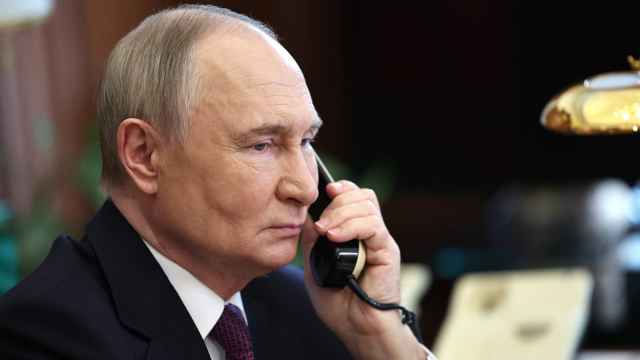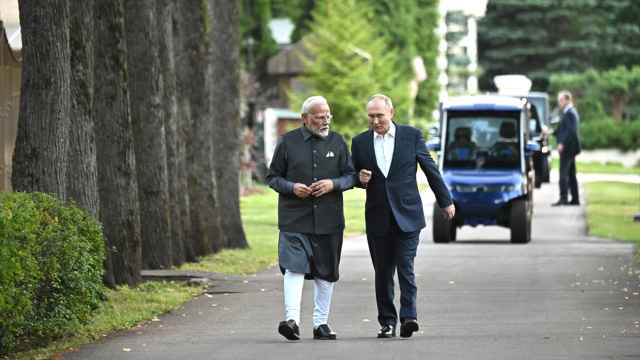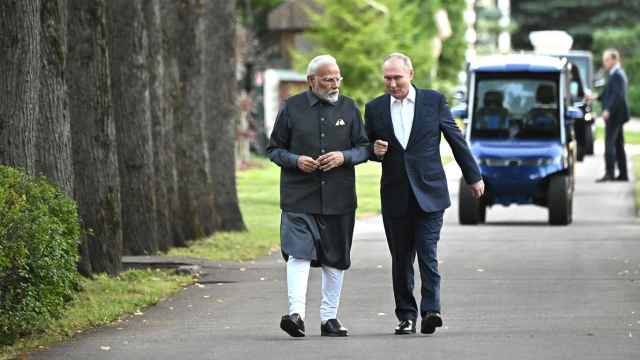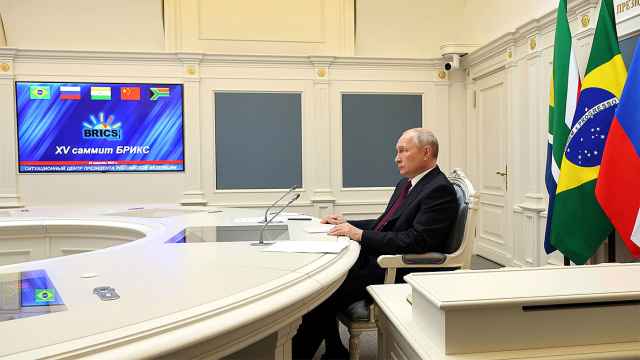

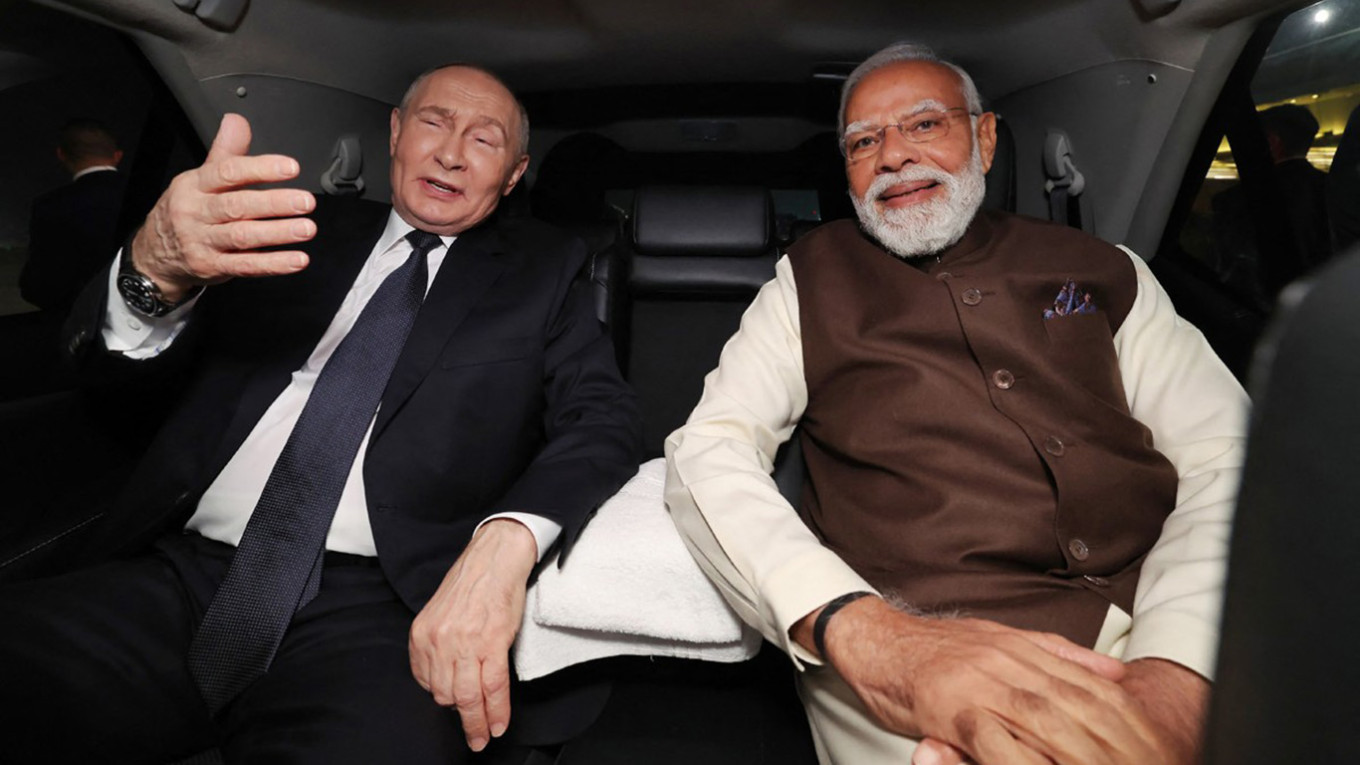
President Vladimir Putin arrived in India on Thursday for a two-day visit, his first trip there since the full-scale invasion of Ukraine, as he looks to shore up defense and trade ties with New Delhi, which faces mounting pressure from the Trump administration over its purchases of Russian oil.
Putin is accompanied by a delegation that includes Russian Defense Minister Andrei Belousov. Media outlets have reported that the two sides may discuss a long-stalled fighter jet deal.
Prime Minister Narendra Modi is set to host Putin for a private dinner on Thursday before a summit meeting and a business event on Friday.
Signaling that defense cooperation remains a central part of the relationship between India and Russia, Kremlin spokesman Dmitry Peskov said that Russia’s S-400 air defense systems would be “an important” topic of discussion.
India has received three of the five units it ordered in 2018, but the remaining deliveries have been delayed due to Western sanctions and supply-chain issues stemming from the war in Ukraine.
Media outlets have also reported that Moscow may propose joint production of its Su-57 fighter jet.
Russia has long been India’s top arms supplier, though its share of India’s weapons imports has fallen sharply as New Delhi pushes to expand domestic manufacturing.
Putin’s visit also comes after U.S. President Donald Trump imposed 50% tariffs on most Indian goods in August, arguing that New Delhi’s reliance on discounted Russian crude helps fund the war in Ukraine.
India has become one of Russia’s largest oil customers since 2022, saving billions through the trade, but it has recently reduced purchases as U.S. sanctions tightened around major Russian producers Rosneft and Lukoil.
Indian officials worry that any new energy or defense deals with Moscow could provoke further retaliation from Washington at a time when the two countries are locked in difficult trade negotiations.
Peskov, speaking to Indian journalists this week, said Russia was unconcerned about U.S. tariffs.
“What matters to us is maintaining and increasing our business with India without interference,” he said.
Analysts say neither side is likely to walk away from the relationship. Even if India reduces its purchases of Russian crude, Moscow remains a key supplier of spare parts for India’s aging, Russian-made military hardware.
“There may be some reduction in energy purchases under U.S. pressure,” said Nandan Unnikrishnan of the Observer Research Foundation in New Delhi, “but the overall direction of the ties will be maintained because both countries need each other at the strategic level.”
Meanwhile, bilateral trade reached $68.7 billion in 2024-25 — nearly six times its pre-pandemic level — but Indian exports made up less than $5 billion of that total. Indian officials say they have been pressing Russia to open its market to Indian pharmaceuticals, automobiles and service-sector firms.
Analysts say the visit offers both Putin and Modi a chance to take stock of the geopolitical situation, including the war in Ukraine, and to signal that the partnership remains intact.
“For India, the optics is a statement of intent for strategic autonomy, and Putin, who rarely travels, is sending a message about the importance of the relationship by traveling here,” said Harsh V. Pant, an international relations scholar at King’s College London.
An Indian Foreign Ministry official, speaking on the condition of anonymity, described the Russia-India ties as the “most stable relationship in modern times” and urged observers to see the visit within “its bilateral context.”
“This is just another annual summit between two countries with a steady relationship,” the official said.
A Message from The Moscow Times:
Dear readers,
We are facing unprecedented challenges. Russia's Prosecutor General's Office has designated The Moscow Times as an "undesirable" organization, criminalizing our work and putting our staff at risk of prosecution. This follows our earlier unjust labeling as a "foreign agent."
These actions are direct attempts to silence independent journalism in Russia. The authorities claim our work "discredits the decisions of the Russian leadership." We see things differently: we strive to provide accurate, unbiased reporting on Russia.
We, the journalists of The Moscow Times, refuse to be silenced. But to continue our work, we need your help.
Your support, no matter how small, makes a world of difference. If you can, please support us monthly starting from just $2. It's quick to set up, and every contribution makes a significant impact.
By supporting The Moscow Times, you're defending open, independent journalism in the face of repression. Thank you for standing with us.

Remind me later.