


Top Theater 2003
By John Freedman
The best of Moscow theater in 2003 represented a healthy mix of the new and the familiar both in names and styles. From the young Pavel Safonov to veterans Kama Ginkas and Konstantin Raikin, it seemed as though something unexpected and exciting was always happening. Here, in chronological order, are five of the year's top shows to prove it.
"School of Fools" at the Meyerhold Center was arguably the season's most inventive show, a combination of physical, musical, poetic, puppet and shadow theater acted out on the deck of a seafaring galleon. Under the direction of Nikolai Roshchin, and with the crucial participation of the composer Stefan Andrusenko, this delightfully baffling production set in the Middle Ages offered a thought-provoking look at the way in which, over the centuries, the same human weaknesses, cruelties and stupidities keep rising to the surface.
"Dreams of Exile" at the Theater Yunogo Zritelya was a marvelous surprise from the renowned Kama Ginkas. Built on short scenes originally developed by Ginkas' students at the Moscow Art Theater School, it drew its themes loosely from the paintings of Marc Chagall. Ginkas pulled the funny, touching and tragic episodes of Jewish life into a coherent whole that exhibited equal doses of Chagall's lyrical magic and the director's own demanding sense of truth.
"A Profitable Post" at the Satirikon again showed off Konstantin Raikin's energetic, ultra-contemporary theater to best advantage. The great actor Raikin limited himself to directing duties here, but coaxed a cast-full of superb performances from his talented stable of actors. Together they turned this Alexander Ostrovsky drama about vice and cynicism in the 19th century into a gripping, modern tale of greed, conscience and sexual politics.
"The Seagull" at the Vakhtangov Theater showcased a fine new directing talent in Pavel Safonov. Chekhov's play puts artists of varying generations on a collision course, but Safonov was especially drawn to the younger characters -- the fledgling writer Treplev and the would-be actress Nina Zarechnaya -- and drew a penetrating portrait of people whose ambitions are bigger than their potential. The result was a sensitive, perceptive show that occasionally rose to the exceptional.
"Lucette Gauthier" at the Et Cetera Theater was an eye-popping combination of lowbrow farce and innovative theater. The play is a frothy Georges Feydeau comedy about a weak-willed man hiding his fiancee from his lover, but what makes it work so well is the deliciously manic direction from Alexander Morfov. Not only does he keep the action tumbling forward at a breakneck pace, he constantly wraps it around hair-pin turns that his actors navigate with ease. This stuff may be old as the hills, but it's at least twice as funny.
Top Films 2003
By Tom Birchenough
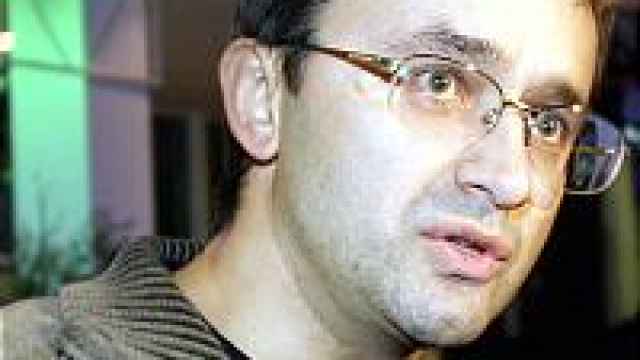 Andrei Zvyagintsev |  |
| |
"Koktebel," a debut film from a talented directing pair, Boris Khlebnikov and Alexei Popogrebsky, charts the troubled relationship between a father and son traveling through rural Russia toward the hope of a new future. Really sensitive playing from the young Gleb Puskepalis as son and Igor Chernevich as father gave this an emotional truth which for me just topped its rival, "The Return." The ensemble playing is also outstanding, creating a very sympathetic picture of life outside the big cities -- another element common in many of the year's best works.
"The Return" brought Andrei Zvyagintsev victory at the Venice Film Festival in a rush of national pride, spurring comparisons -- which will be hard for the 39-year-old director to live up to -- with Andrei Tarkovsky. Set in the rugged landscapes of Russia's northern lakes, the film is masterfully shot by Mikhail Krichman and particularly well played by its two young actors; the death of one of these boys, however, overshadowed the film's subsequent successes.
"Boomer" was one of those rare cases where critical enthusiasm matched audience interest. Pyotr Buslov's film was a welcome escape from the bandit cliches that have long dominated cinema and television screens. There's nothing romantic in this road movie about four friends trying to escape their past, and no happy ending. Critical comparisons were to Quentin Tarantino -- again, high expectations for the 27-year-old director to meet.
"Magnetic Storms." Born in 1945, director Vadim Abdrashitov looks like a veteran in this list -- itself an encouraging fact -- but he is in high form in this strange drama of conflict. Street fighting by night around a Urals factory has some unforgettable scenes, and a sad emotional atmosphere where human relationships are corrupted by circumstance. Stylized, this film is not for everyone -- least of all, perhaps, for the general Russian viewer.
"Granny," by Lidia Bobrova, and "With Love, Lilya," by Larisa Sadilova, tie for fifth place. Both are unsparing in their depictions of provincial life, and the emotional struggles that accompany it, but grounded in a firm final sympathy for the worlds depicted. Neither are perhaps as strong as earlier works by the two woman directors, but both earned plenty of international acclaim. While Sadilova's film effectively fell off the release radar in Russia, it won a major prize at the prestigious Rotterdam festival back in January.
Top Books 2003
By Rebecca Reich
 | |
| |
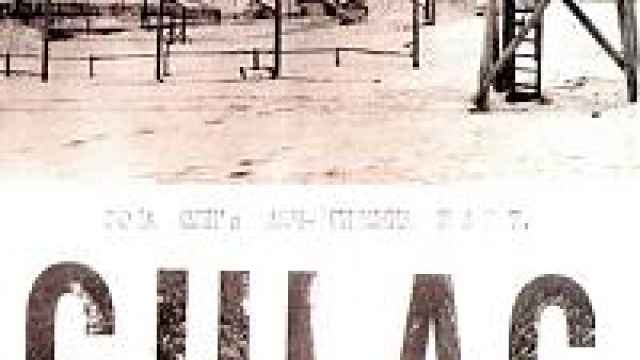
"Khrushchev: The Man and His Era," is, hands down, the definitive biography of a man famous for playing both sides of the field. Too often painted as a country bumpkin, Nikita Khrushchev used that bluster to spearhead unthinkable reforms. Indeed, as William Taubman demonstrates, Khrushchev's paradoxical combination of belligerence and forward-thinking was Mikhail Gorbachev's model a quarter of a century later.
In his novel, "The Commissariat of Enlightenment," Ken Kalfus takes us back from today's squeaky-slick PR business to the rural train station where Leo Tolstoy lay dying in 1910. Milling through the media circus outside are cinematographer Gribshin and embalmment enthusiast Vorobev, who hope to tweak the Tolstoy icon to their advantage. Fourteen years on, with Vladimir Lenin on his deathbed and Gribshin in charge of Soviet cinema propaganda, their brand of PR has become a sinister reality.
T.J. Binyon's "Pushkin: A Biography" wisely avoids the recent hype of Alexander Pushkin's 200th birthday, opting instead for a multi-faceted and often touching reconstruction of the poet's life. Authoritative and well-balanced, it's also a first-rate read -- as indeed it should be, since if there's anything that Pushkin knew how to do better than write, it was to have a scandalously good time. Timothy C. Westphalen reviews the book on page VII.
In her debut short-story collection, "There Are Jews in My House," Russian-born Lara Vapnyar takes a wistful look at the late Soviet Union's coming of age. Her shy, overlooked characters are as inexperienced as children when it comes to explaining the sensual realities -- sex, envy, death -- that Soviet ideology forgot to explain. Indeed, most of the stories are narrated by children, but it is when Vapnyar grafts that childlike innocence onto her adults that she isolates the shockwave that went through the country.
Top Discs 2003
By George Loomis
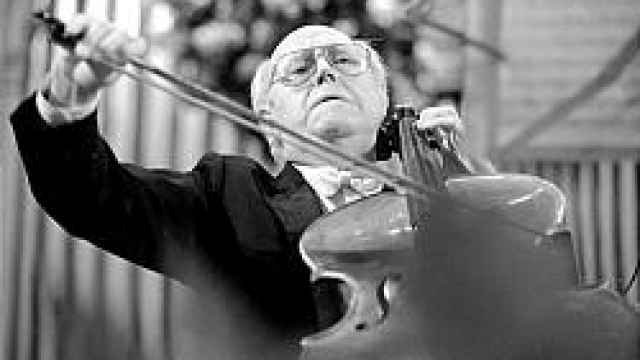 Mstislav Rostropovich | |
| |
Benjamin Britten: Violin Concerto; William Walton: Viola Concerto. Maxim Vengerov, violin, viola; London Symphony, Mstislav Rostropovich, conductor. EMI. -- Both concertos are indebted to Sergei Prokofiev's First Violin Concerto in formal structure. Vengerov's incandescent performance of the Britten has more Russian parallels in the plaintive lines of the outer movements and the razor-sharp scherzo. His equally honeyed tone in the Walton makes for a lyricism that brightens the music's autumnal glow.
Dmitri Hvorostovsky, baritone: "Where Are You My Brothers?" Moscow Chamber Orchestra, Constantine Orbelian, conductor. Delos. -- "Songs of the War Years" is the alternate title here and a sobering one, given that the selections stretch from the Russo-Japanese War (1904) to the 1970s. The popular Russian song has shown a perhaps unexpected capacity for expression. Occasional hints of propaganda color the texts, but the songs are strikingly heartfelt, as soldiers sing of loved ones back home or colleagues lost on a nameless hill. They can't have sounded better than in Hvorostovsky's strongly emotional, luxuriantly sung interpretations.
Sergei Prokofiev: War and Peace. Soloists, Paris National Op?ra, Gary Bertini, conductor. TDK Mediactive. -- Prokofiev's greatest opera was never performed in his lifetime, but 2000 saw two important productions: a Metropolitan Opera/Mariinsky Theater show and Francesca Zambello's staging for Paris documented on this DVD. Zambello grasps the drama's epic sweep, and Bertini conducts ardently. Heading a splendid cast are the lovely soprano Olga Guryakova, as Natasha, and the fine American baritone Nathan Gunn, as Andrei.
Sergei Rachmaninov: Piano Concerto No. 3 in D Minor; Sergei Prokofiev: Piano Concerto No. 3 in C Major. Mikhail Pletnev, piano; Russian National Orchestra, Mstislav Rostropovich, conductor. Deutsche Grammophon. -- After hostile critical reception in 1999, Rostropovich vowed not to perform in Russia again. He's kept his word, although this recording was made in Moscow. Pletnev gives a patrician account of the Rachmaninov, beautifully nuanced in melodic shaping and structurally lucid. His sparkling performance of Prokofiev's most popular piano concerto captures both its lyrical urges and incisive wit.
Dmitri Shostakovich: Symphony No. 7 in C Major ("Leningrad"). Kirov Orchestra; Rotterdam Philharmonic; Valery Gergiev, conductor. Philips. -- Wartime performances of the Seventh Symphony created a sensation in Allied countries, but, in part because of its outrageous "invasion" march, the work later accrued a reputation as militaristic and even superficial. This performance, recorded shortly after Sept. 11, 2001, shows that the score has much to communicate, notably in its many ruminative moments and majestic closing movement.
A Message from The Moscow Times:
Dear readers,
We are facing unprecedented challenges. Russia's Prosecutor General's Office has designated The Moscow Times as an "undesirable" organization, criminalizing our work and putting our staff at risk of prosecution. This follows our earlier unjust labeling as a "foreign agent."
These actions are direct attempts to silence independent journalism in Russia. The authorities claim our work "discredits the decisions of the Russian leadership." We see things differently: we strive to provide accurate, unbiased reporting on Russia.
We, the journalists of The Moscow Times, refuse to be silenced. But to continue our work, we need your help.
Your support, no matter how small, makes a world of difference. If you can, please support us monthly starting from just $2. It's quick to set up, and every contribution makes a significant impact.
By supporting The Moscow Times, you're defending open, independent journalism in the face of repression. Thank you for standing with us.

Remind me later.