

A year ago, the long-standing Georgian-Ossetian conflict escalated into a five-day war. This military conflict between Georgia and South Ossetia was the third of its kind in 17 years. But in terms of its impact, it was radically different from the previous two.
Before 2008, ethnic and political conflicts in Eurasia remained outside of the focus of the global agenda. In the West, such conflicts were deemed frozen at best, and at worst they were ignored. But the five-day war was the first case after the collapse of the Soviet Union when the entire world was focused on territorial issues of a former Soviet republic. On the first day of the conflict, it was discussed in the United Nations Security Council three times.
Such heightened interest is understandable. To begin with, it was the first time in the Caucasus since 1991 that the principles of “Belovezh nationalism” were violated. (Belovezh is the name of the agreement that the leaders of Russia, Ukraine and Belarus signed on Dec. 8, 1991, which dissolved the Soviet Union and replaced it with the Commonwealth of Independent States.) According to these principles, the national borders that were in place at the end of the Soviet Union would be the borders of the new independent states. With the Kremlin’s recognition of independence of Abkhazia and South Ossetia, however, the Belovezh principles were broken.
 | |
|
To Our Readers | |
|
The Moscow Times welcomes letters to the editor. Letters for publication should be signed and bear the signatory's address and telephone number.
| |
| | |
Moscow recognized the independence of two former autonomous regions within Georgia in the same spirit that Washington and Brussels recognized Kosovo. Today it is useless to argue about whether President Dmitry Medvedev made the right decision when he recognized them just two weeks after the end of the war. In any case, the war showed that the disintegration of the Soviet Union did not stop when the Belovezh Agreement was signed. The formal collapse of a country that comprised one-sixth of the world’s landmass was not the end of the story, but the beginning of a process of forming new nation-states.
The Russia-Georgia war also demonstrated the obvious flaws in the ability of international organizations to mediate border disputes. The world’s leading players were sharply divided. The United States and its allies supported the territorial integrity of Georgia, closing their eyes to Tbilisi’s often brutal methods of solving this problem.
For its part, Russia unilaterally changed its status from the role of an “independent peacekeeper” to that of military and political sponsor of the independence of two former Georgian autonomous regions.
In February 2008, some members of the UN, including three permanent members of the Security Council, chose to recognize the independence of Kosovo. And in August 2008, Russia, both a member of the Security Council and the “nuclear club,” recognized the independence of Abkhazia and South Ossetia. The two opposing sides have dug in their heels: Moscow remains fiercely opposed to Kosovo’s independence, and Washington has not budged from its position of supporting Georgia’s territorial integrity, regardless of how loosely this concept is defined.
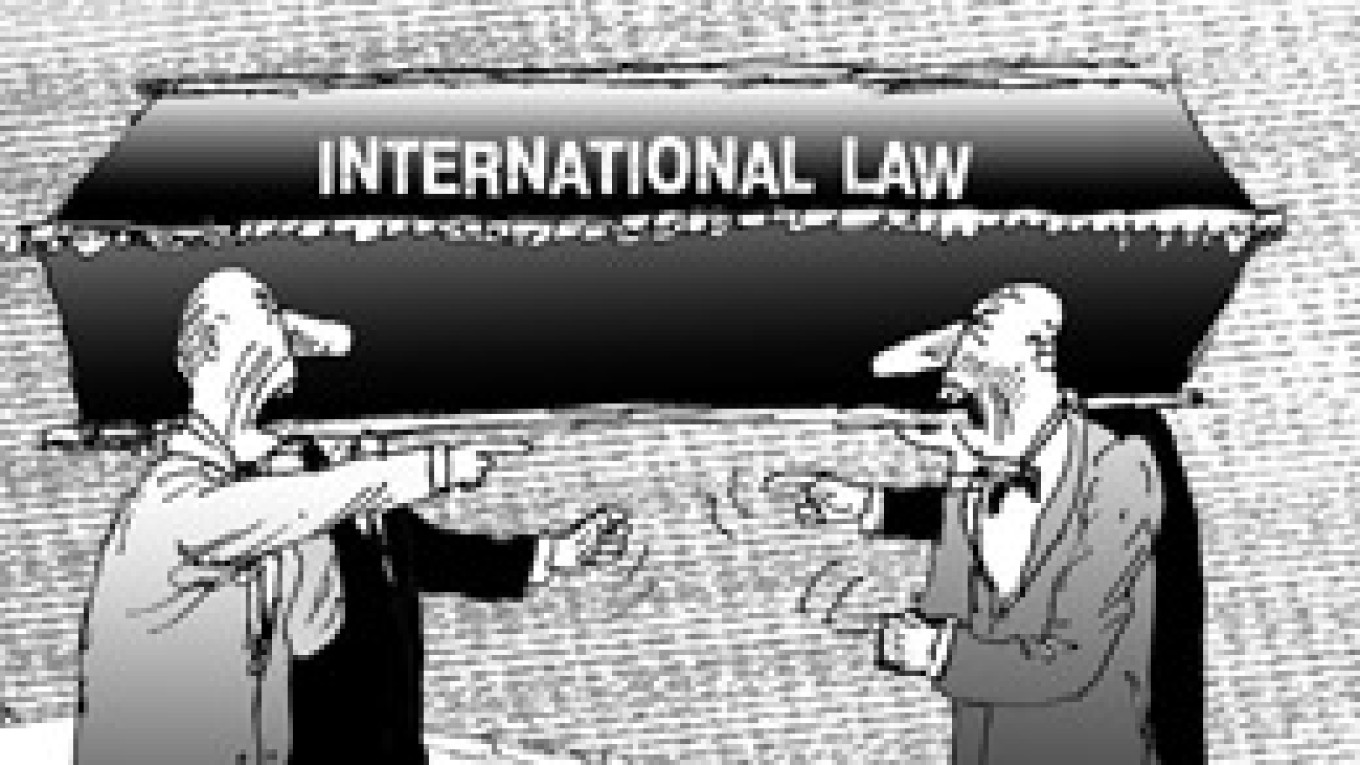
Political expediency has prevailed in world politics. Of course, this process did not start yesterday. Last year’s military conflict was not only further confirmation that the Yalta-Potsdam version of international law does not work, but a new, post-Yalta model has not yet been formed in its place. After Georgia was defeated and after Russia’s bold demarche of recognizing South Ossetia and Abkhazia, the Kremlin tried to claim its role as a global power.
The world’s major powers have a huge task in front of them — to develop a new model for global affairs. If they are not successful, we will be left with an “international jungle” model that relies on brute force as the main mechanism for solving conflicts. Although it appears that other leading countries have also voted in favor of the jungle model, this is of little consolation to Russia.
Sergei Markedonov is the head of the interethnic issues group at the Institute for Political and Military Analysis. This comment appeared in Vedomosti.
A Message from The Moscow Times:
Dear readers,
We are facing unprecedented challenges. Russia's Prosecutor General's Office has designated The Moscow Times as an "undesirable" organization, criminalizing our work and putting our staff at risk of prosecution. This follows our earlier unjust labeling as a "foreign agent."
These actions are direct attempts to silence independent journalism in Russia. The authorities claim our work "discredits the decisions of the Russian leadership." We see things differently: we strive to provide accurate, unbiased reporting on Russia.
We, the journalists of The Moscow Times, refuse to be silenced. But to continue our work, we need your help.
Your support, no matter how small, makes a world of difference. If you can, please support us monthly starting from just $2. It's quick to set up, and every contribution makes a significant impact.
By supporting The Moscow Times, you're defending open, independent journalism in the face of repression. Thank you for standing with us.

Remind me later.