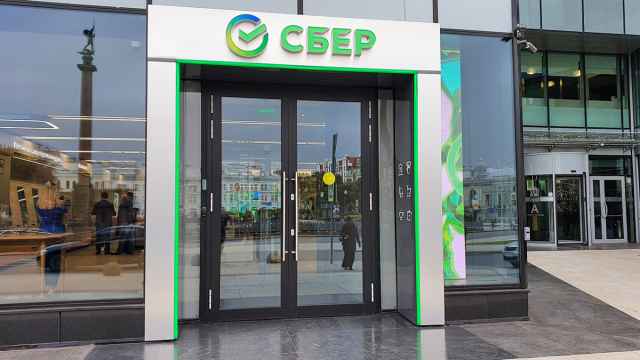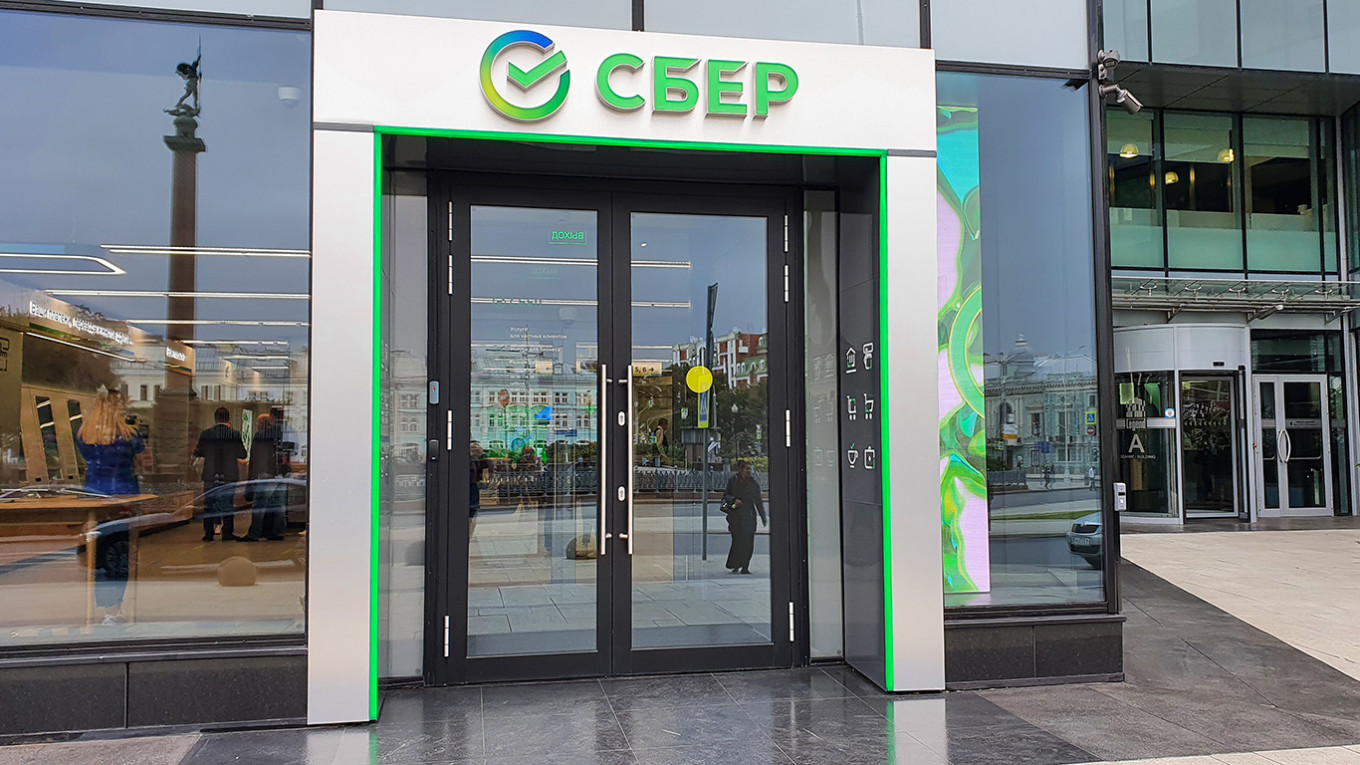
Defaulted assets at Russia’s largest lender Sberbank rose nearly 20% in the first nine months of the year, highlighting growing strains on businesses and households as high interest rates weigh on the economy.
The state-controlled bank reported 2.7 trillion rubles ($33.5 billion) in defaulted assets at the end of September, according to its financial statements.
“The quality of the corporate loan portfolio is what causes us the greatest uncertainty and concern,” Sberbank deputy CEO and Chief Financial Officer Taras Skvortsov said.
Defaulted loans to developers under project financing arrangements rose by nearly half, from 258 billion rubles ($3.2 billion) to 375 billion rubles ($4.65 billion). Defaults on loans to other companies increased by more than a quarter, from 821 billion rubles ($10.18 billion) to 1.06 trillion rubles ($13.14 billion).
Residential real estate lending accounts for 27.8% of Sberbank’s loan portfolio, followed by oil and gas companies at 13.4% and metals and mining companies at 11.9%.
The prolonged period of high interest rates is “putting more and more pressure on clients,” Skvortsov said.
While Sberbank reported lower loan-loss provisions in the third quarter, Skvortsov said the figures partly reflected the release of reserves previously set aside against risks across certain industries. The bank is now beginning to allocate provisions to individual troubled borrowers.
Sberbank CEO German Gref warned last year that banks eventually “inherit all the problems” of the economy.
Skvortsov said the fourth quarter would “definitely be worse” for corporate borrowers than the first three quarters.
“We already see several cases in the fourth quarter … where clients’ financial positions are deteriorating, where there are problems with revenue, sales, certain export restrictions and investment demand,” he said.
The scale of the problems may be larger than the headline figures suggest. Sberbank does not classify restructured loans as overdue in its reporting, even though restructuring can conceal borrowers’ difficulties.
The Center for Macroeconomic Analysis and Short-Term Forecasting, a think tank close to the Russian authorities, has warned that banks are masking deteriorating asset quality by restructuring loans.
Including risky restructured loans, the Central Bank classified 12.9% of corporate lending across Russia’s banking sector as problematic at the end of August — equivalent to 13.3 trillion rubles ($164.92 billion). Overdue debt alone accounted for just 3.7% of the portfolio.
Problem loans increased by 600 billion rubles ($7.44 billion) in August, mainly because of “the deteriorating financial position of certain coal and electric power companies,” the regulator said.
Sberbank estimates its share of Russia’s corporate lending market at 32.7%.
The bank also held more than 1.2 trillion rubles ($14.88 billion) in defaulted loans to individuals.
Defaulted mortgages rose from 203 billion rubles ($2.52 billion) to 251 billion rubles ($3.11 billion), while defaulted credit card debt increased from 305 billion rubles ($3.78 billion) to 344 billion rubles ($4.27 billion).
Defaulted car loans climbed from 34 billion rubles ($421.6 million) to 43 billion rubles ($533.2 million). Consumer loans were the only household lending category to show a decline in defaulted assets, from 620 billion rubles ($7.69 billion) to 608 billion rubles ($7.54 billion).
The Center for Macroeconomic Analysis and Short-Term Forecasting has argued that a recovery in economic activity would allow borrowers to resume servicing troubled restructured debt, easing pressure on banks.
But forecasts point to a prolonged period of sluggish growth.
The OECD recently maintained its forecast for Russian economic growth of 0.5% in 2026 and cut its 2027 projection to 0.6%. The International Monetary Fund expects growth of 0.9% in both years.
This article was translated with the help of artificial intelligence and was reviewed by a Moscow Times editor before publication. Learn more about our newsroom's AI policy here.
Read this article in Russian at The Moscow Times' Russian service.
A Message from The Moscow Times:
Dear readers,
We are facing unprecedented challenges. Russia's Prosecutor General's Office has designated The Moscow Times as an "undesirable" organization, criminalizing our work and putting our staff at risk of prosecution. This follows our earlier unjust labeling as a "foreign agent."
These actions are direct attempts to silence independent journalism in Russia. The authorities claim our work "discredits the decisions of the Russian leadership." We see things differently: we strive to provide accurate, unbiased reporting on Russia.
We, the journalists of The Moscow Times, refuse to be silenced. But to continue our work, we need your help.
Your support, no matter how small, makes a world of difference. If you can, please support us monthly starting from just $2. It's quick to set up, and every contribution makes a significant impact.
By supporting The Moscow Times, you're defending open, independent journalism in the face of repression. Thank you for standing with us.

Remind me later.