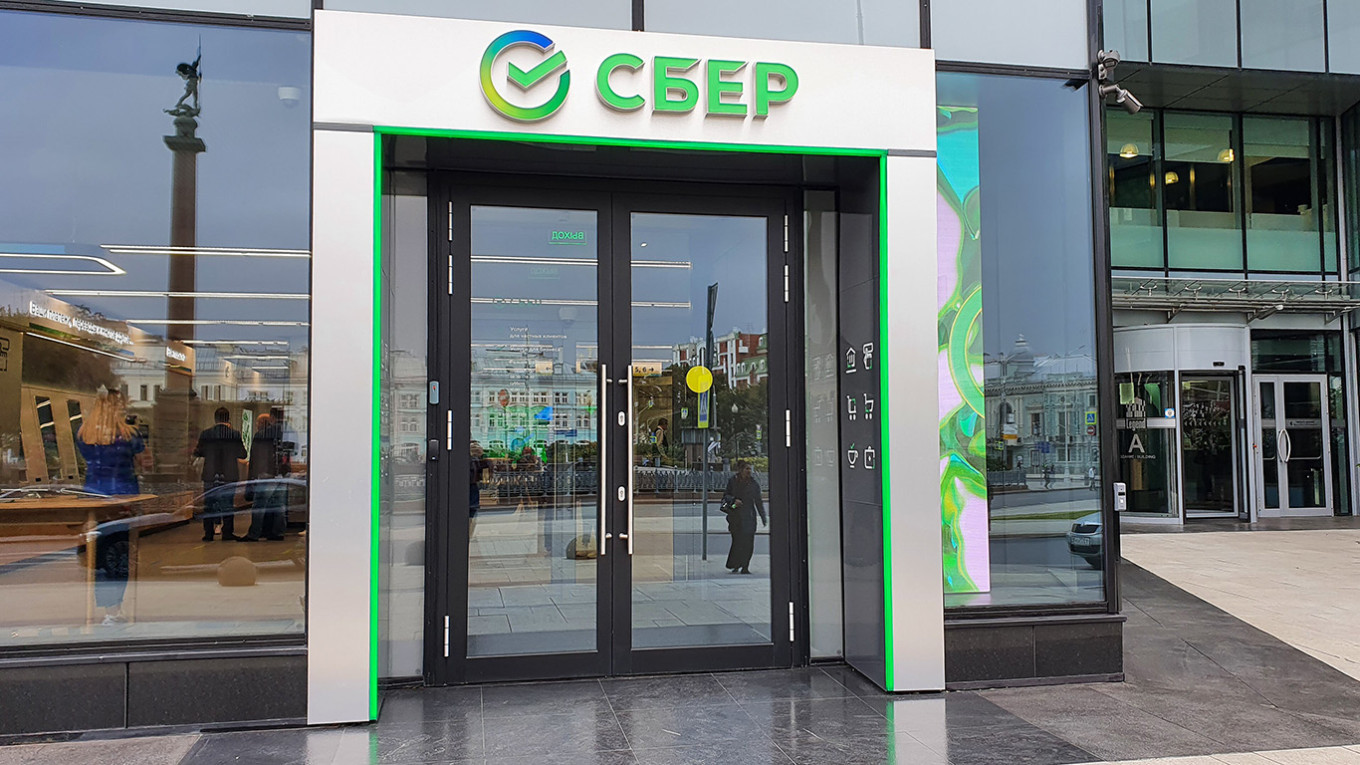
Russia's largest lender, Sberbank, reported a deterioration in the quality of its loan book in the second quarter as the share of impaired loans increased and executives warned that corporate borrowers face mounting pressure from slowing economic growth, high interest rates and a strong ruble.
The share of impaired loans in Sberbank's portfolio rose to 5.5% at the end of the second quarter from 4.8% three months earlier, according to the state-controlled lender's financial statements.
Sberbank attributed the increase primarily to a gradual deterioration in its corporate loan portfolio, while noting that it had also written off fewer retail loans than in previous quarters.
The bank's total loan portfolio stood at 52.6 trillion rubles ($657.5 billion), implying impaired loans of about 2.9 trillion rubles ($36.3 billion).
Overdue loans totaled 2.6 trillion rubles ($32.5 billion), according to the bank's financial statements. Of those, loans worth 1.6 trillion rubles ($20.0 billion) were more than 90 days past due, including 636 billion rubles ($8.0 billion) in corporate loans, 144 billion rubles ($1.8 billion) in project finance, 158 billion rubles ($2.0 billion) in mortgages and 563 billion rubles ($7.0 billion) in consumer loans. Restructured loans are not classified as overdue under Sberbank's reporting.
Analysts have warned that restructurings can obscure underlying asset quality. The government-linked Center for Macroeconomic Analysis and Short-Term Forecasting (CMAKP) has said Russian banks are masking deteriorating loan quality through restructurings. Including loans it considers risky restructurings, the Central Bank classified 11.7% of corporate loans, 1.9% of mortgages and 13.2% of consumer loans as problematic as of the beginning of June, amounting to 13.4 trillion rubles ($167.5 billion) across the banking system.
Sberbank estimates that it accounts for 32.5% of Russia's corporate lending market and 50.5% of retail lending.
Sberbank CEO German Gref said earlier this month that the bank's credit committee had effectively "turned into a committee on problem assets" and was now focused primarily on loan restructurings.
Deputy CEO Taras Skvortsov said the outlook had deteriorated further.
Sberbank cut its 2026 GDP growth forecast to 0%-0.5% from a previous estimate of 0.5%-1%, and Skvortsov said the weaker economic outlook would weigh on corporate borrowers' financial performance and increase the bank's cost of risk in the second half of the year.
"Several factors are contributing to this: the rather difficult economic situation, tight monetary policy, and a ruble that remains strong, making it very difficult for exporters to generate a stable positive cash flow," Skvortsov said, according to Interfax.
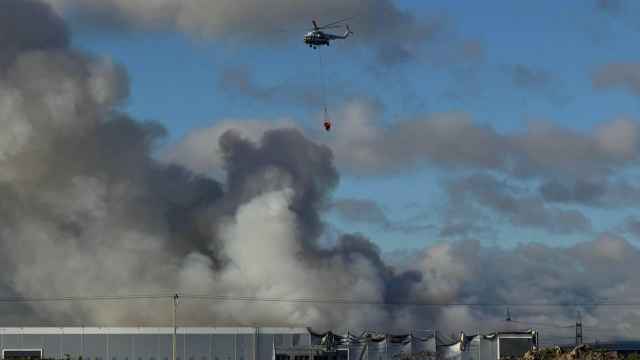
Skvortsov also said Ukrainian drone attacks had increased credit risks for online marketplaces and businesses operating through them. He said Sberbank had already received around 300 requests for loan restructurings from affected borrowers, with more expected, adding that the financial damage to marketplaces had been "quite significant."
Gref has previously described Wildberries and Ozon as partners of the bank.
Russia's second-largest lender, VTB, also reported worsening asset quality in the second quarter. According to its financial statements, the bank increased provisions for bad loans by nearly one-third, while the share of problem loans on its balance sheet rose by almost 50% to 14.2%.
"Banks are always the ones that ultimately inherit all the problems that arise in the economy," Gref said in June.
Read this article in Russian at The Moscow Times' Russian service.
A Message from The Moscow Times:
Dear readers,
We are facing unprecedented challenges. Russia's Prosecutor General's Office has designated The Moscow Times as an "undesirable" organization, criminalizing our work and putting our staff at risk of prosecution. This follows our earlier unjust labeling as a "foreign agent."
These actions are direct attempts to silence independent journalism in Russia. The authorities claim our work "discredits the decisions of the Russian leadership." We see things differently: we strive to provide accurate, unbiased reporting on Russia.
We, the journalists of The Moscow Times, refuse to be silenced. But to continue our work, we need your help.
Your support, no matter how small, makes a world of difference. If you can, please support us monthly starting from just $2. It's quick to set up, and every contribution makes a significant impact.
By supporting The Moscow Times, you're defending open, independent journalism in the face of repression. Thank you for standing with us.

Remind me later.