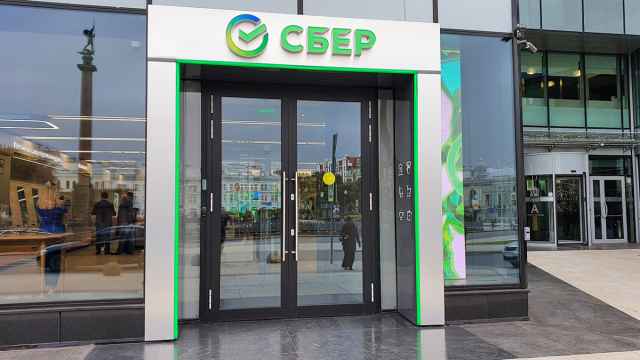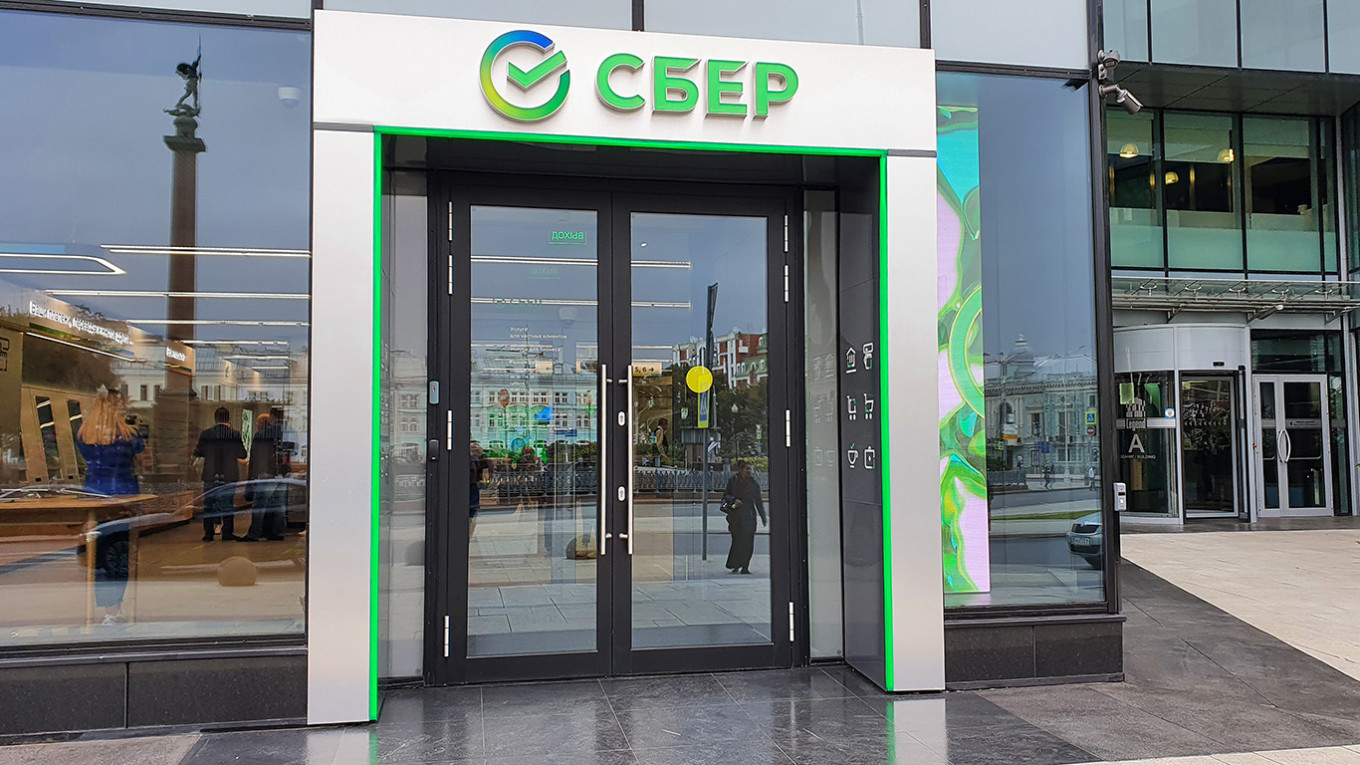
Russian companies are increasingly struggling to repay their debts as prolonged high interest rates and slowing economic growth weaken their finances, the country’s largest lender Sberbank said.
Chief Financial Officer Taras Skvortsov said the state-controlled bank continued to see deteriorating loan quality and rising overdue debt among corporate borrowers.
“For several months, we have seen a steady trend of more loans becoming overdue and a deterioration in corporate clients’ financial condition,” Skvortsov told Interfax.
The warning points to growing pressure on Russia’s banking sector as businesses struggle with high borrowing costs and weak growth. The Economic Development Ministry estimates that gross domestic product expanded 0.6% in January-August and forecasts the same pace for the full year.
Skvortsov said the difficulties affected several sectors, including individual residential development projects, retail, commercial property and online marketplaces.
He said the deterioration was driven by a broader trend linked to persistently high interest rates and slowing growth, rather than problems at a few large clients.
Russian companies’ combined profits minus losses fell to their lowest level since the pandemic in the first seven months of the year. One in three companies reported a loss.
Sberbank CEO German Gref has previously warned that difficulties in the wider economy eventually feed through to banks.
Property developers face particular pressure. Sberbank and other creditors are working to rescue Samolet, one of Russia’s largest developers.
Ildar Khusainov, head of real estate agency Etazhi, estimates that about 30% of developers are struggling financially.
The coal industry is in its second consecutive year of losses, while steelmakers and forestry companies also face a crisis.
Ukrainian drone attacks on online retailers’ warehouses have put further pressure on loans to both marketplace operators and merchants selling through their platforms. Wildberries borrowed primarily from VTB, while Sberbank has received thousands of applications to restructure loans.
Sberbank is due to publish its financial results under international accounting standards in late October. Skvortsov warned that its cost of risk would rise in the second half of the year, meaning the bank would set aside more money to cover potential loan losses.
VTB First Deputy CEO Dmitry Pyanov expects banks to make substantial provisions for loan losses over the next three years.
At the end of June, Sberbank reported 2.6 trillion rubles ($30.7 billion) in overdue loans, including 1.6 trillion rubles ($18.9 billion) more than 90 days past due.
Overdue loan figures alone do not fully capture borrowers’ financial difficulties. Restructuring can allow troubled loans to remain outside that category despite a deterioration in borrowers’ ability to repay.
Pyanov has described restructuring as a way to avert default. The Center for Macroeconomic Analysis and Short-Term Forecasting, a think tank close to the Kremlin, has said banks also use it to mask problems.
Including troubled restructured debt, the Central Bank classified 11.6% of banks’ corporate loans, totaling 11.7 trillion rubles ($138.1 billion), as problem loans at the end of July.
That amount rose by 200 billion rubles ($2.4 billion) during the month, which the regulator attributed to risky loan restructurings for property borrowers and worsening conditions at some industrial companies.
The think tank said an improvement in the banking sector would depend on a revival in economic activity that allowed borrowers to resume servicing troubled, restructured debt.
But economic forecasts point to several more years of sluggish growth.
The OECD expects Russia’s economy to expand 0.5% in 2026 and 0.6% in 2027. The World Bank forecasts growth of 0.6% this year and 0.7%-0.8% over the following two years.
The Bank of Finland forecasts growth of 1% in 2026 and 0.5% annually in 2027 and 2028.
This article was translated with the help of artificial intelligence and was reviewed by a Moscow Times editor before publication. Learn more about our newsroom's AI policy here.
Read this article in Russian at The Moscow Times' Russian service.
A Message from The Moscow Times:
Dear readers,
We are facing unprecedented challenges. Russia's Prosecutor General's Office has designated The Moscow Times as an "undesirable" organization, criminalizing our work and putting our staff at risk of prosecution. This follows our earlier unjust labeling as a "foreign agent."
These actions are direct attempts to silence independent journalism in Russia. The authorities claim our work "discredits the decisions of the Russian leadership." We see things differently: we strive to provide accurate, unbiased reporting on Russia.
We, the journalists of The Moscow Times, refuse to be silenced. But to continue our work, we need your help.
Your support, no matter how small, makes a world of difference. If you can, please support us monthly starting from just $2. It's quick to set up, and every contribution makes a significant impact.
By supporting The Moscow Times, you're defending open, independent journalism in the face of repression. Thank you for standing with us.

Remind me later.