
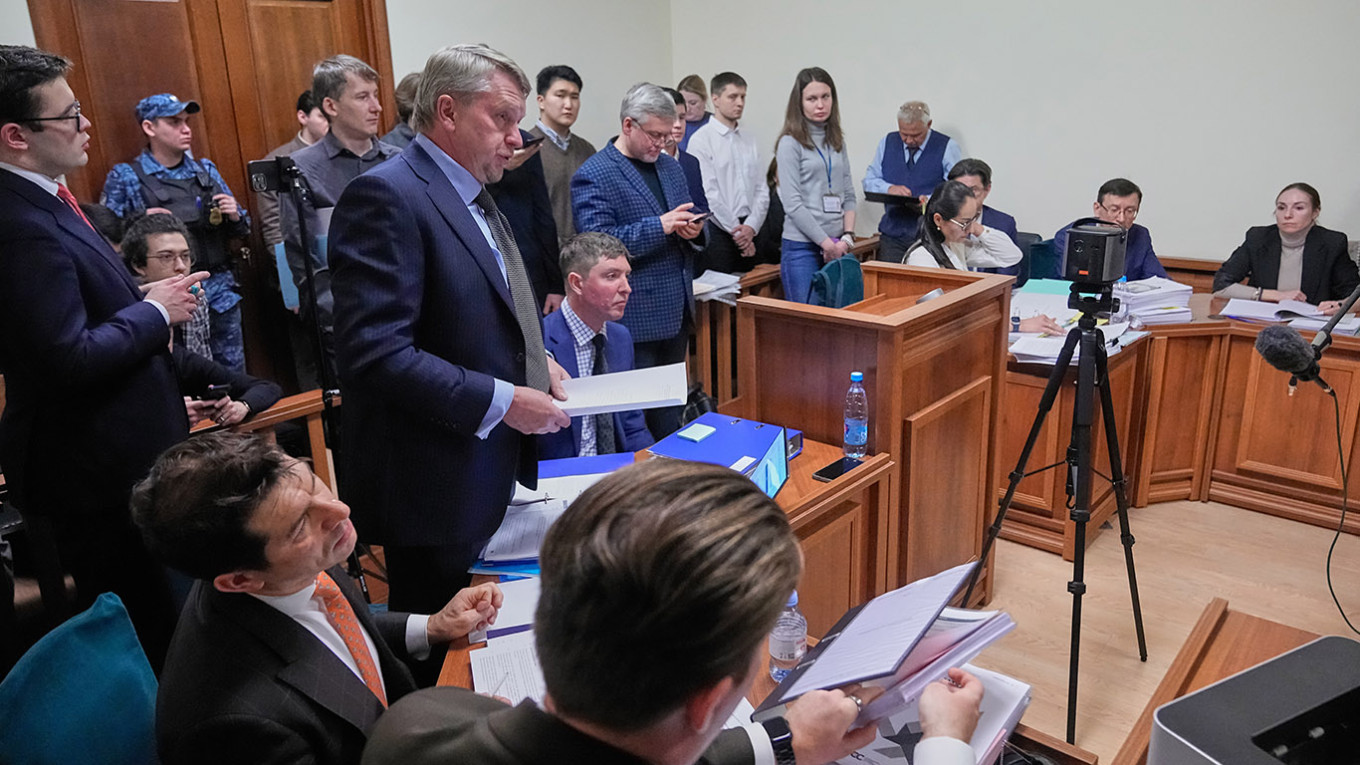
A Russian court on Friday ordered Belgian financial group Euroclear to pay around $250 billion in damages over the freezing of billions of dollars worth of Russian assets in the European Union since the start of the full-scale invasion of Ukraine.
It was not clear how Russia intended to recover the funds, and Euroclear said it did not recognize the Russian court's jurisdiction.
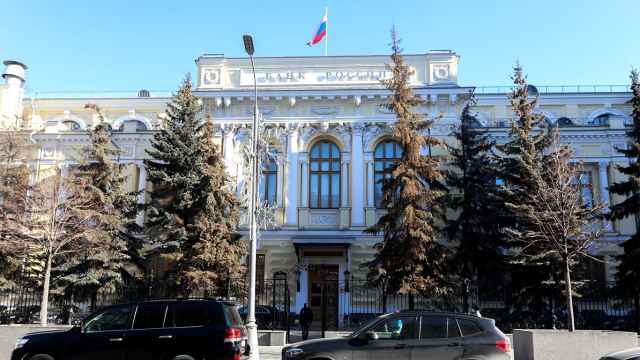
“The Moscow Court of Arbitration upheld the Russian Central Bank’s claim against Euroclear for the recovery of 18.2 trillion rubles ($250 billion),” the court said in a statement.
Euroclear said the central bank's claims were “without merit” in a comment to AFP.
“Euroclear's operations and financial position are unaffected by the court's decision,” a spokesperson for the group told AFP, adding that they would appeal.
The Russian Central Bank welcomed the ruling, which it said recognized Euroclear's actions as “unlawful,” although it cautioned the decision was not definitive.
Russian courts have no jurisdiction abroad, and Moscow has no clear path to having its case heard in a European court, according to legal analysts.
The EU froze tens of billions of euros of Russia's international reserves after the Kremlin launched its full-scale invasion of Ukraine more than four years ago.
Much of it is held in Euroclear, a Belgian-based clearing house that handles transactions and financial deposits.
The move was part of the sweeping sanctions aimed at hindering Moscow's war machine.
Russia, which has described the freezing of its assets as “theft,” filed a lawsuit against the group in December after the European Union suggested using the funds as collateral for a loan to Ukraine.
A Message from The Moscow Times:
Dear readers,
We are facing unprecedented challenges. Russia's Prosecutor General's Office has designated The Moscow Times as an "undesirable" organization, criminalizing our work and putting our staff at risk of prosecution. This follows our earlier unjust labeling as a "foreign agent."
These actions are direct attempts to silence independent journalism in Russia. The authorities claim our work "discredits the decisions of the Russian leadership." We see things differently: we strive to provide accurate, unbiased reporting on Russia.
We, the journalists of The Moscow Times, refuse to be silenced. But to continue our work, we need your help.
Your support, no matter how small, makes a world of difference. If you can, please support us monthly starting from just $2. It's quick to set up, and every contribution makes a significant impact.
By supporting The Moscow Times, you're defending open, independent journalism in the face of repression. Thank you for standing with us.

Remind me later.