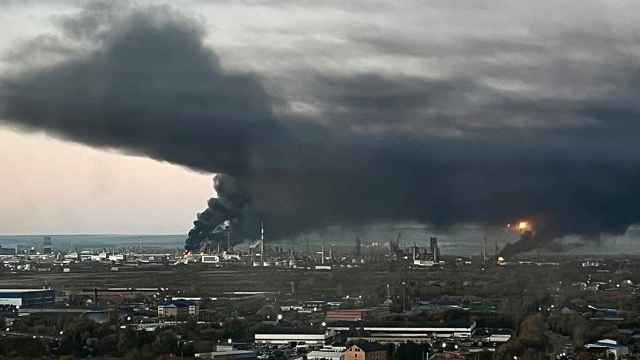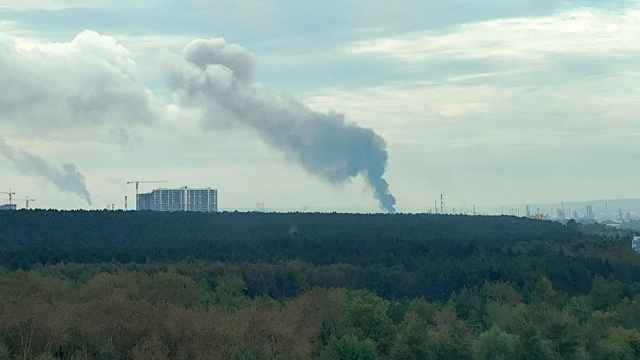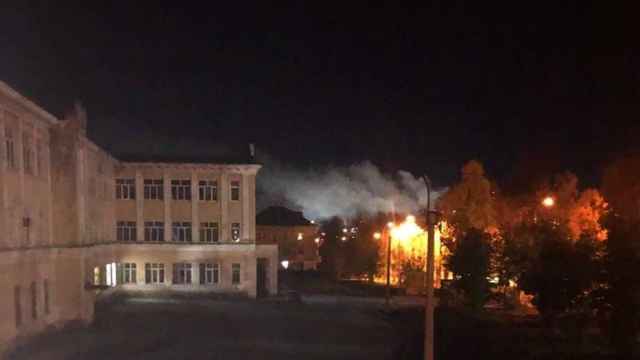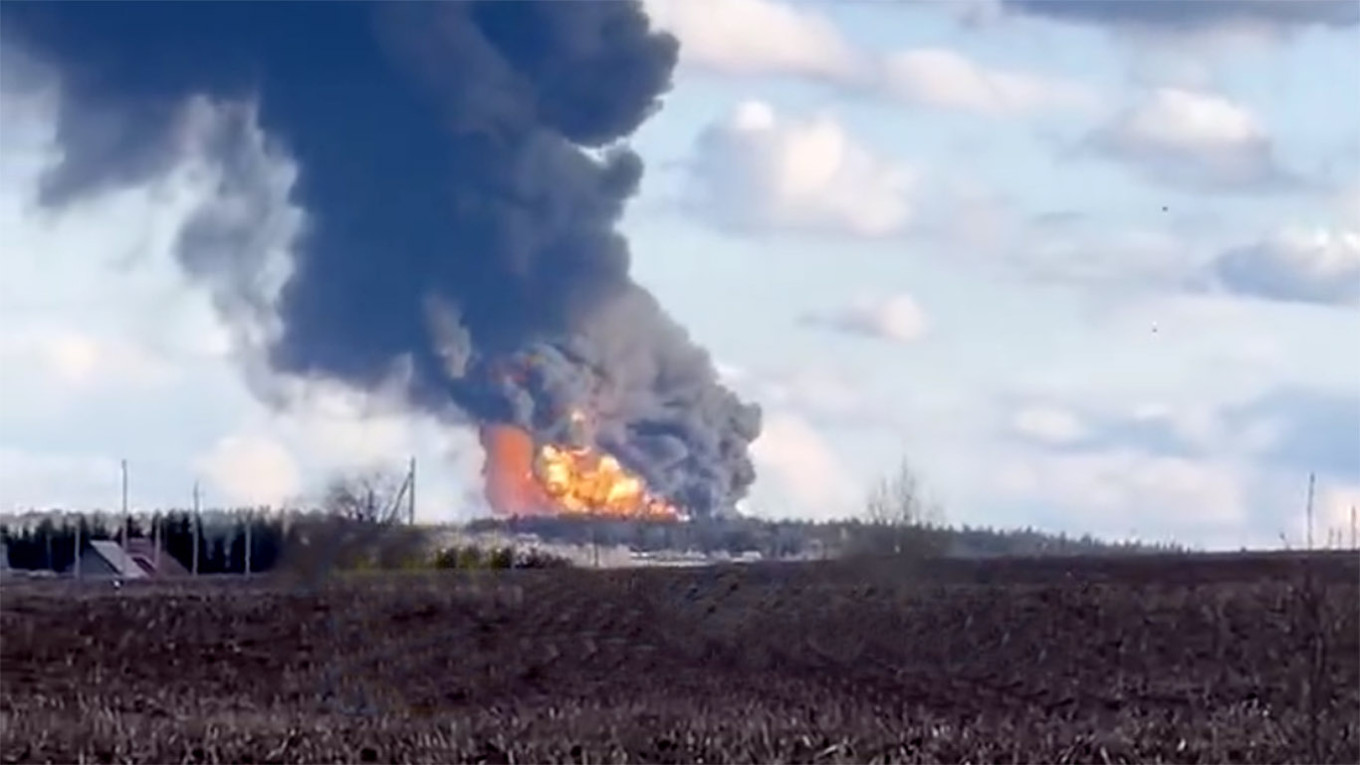
A chemical emergency alert was issued in parts of the city of Perm on Thursday following a second day of Ukrainian drone strikes on industrial sites in the wider region, though local officials later claimed the warning was only a test despite residents reporting huge smoke clouds and a distinct chemical odor in the air.
Perm region Governor Dmitry Makhonin said several industrial sites were targeted in the morning attack. He said workers at the facilities were sheltering in place as emergency responders arrived at the scene of the attacks.
Makhonin claimed there was “no significant damage” and that no one was reported injured.
Yet videos widely circulated on social media and in Russian news reports showed huge columns of smoke rising into the air. NASA satellite imagery also showed a prominent black streak of smoke rising above Perm and extending around 130 kilometers (80 miles) east of the city.
Russian and Ukrainian Telegram news channels identified at least one target of Thursday’s attack as a Lukoil-operated oil refinery.
People in at least one neighborhood of Perm said they heard a chemical emergency alert issued through loudspeakers outside. “They said not to go outside, to close all windows and vents and to drink only boiled water,” one resident told local media.
Makhonin denied there was any hazardous chemical release. Officials claimed the chemical safety alert people reported hearing was a test, though they did not explain why the test was conducted precisely at the same time as a drone attack on industrial sites.
Residents in Perm told Ostorozhno media they could smell a “distinct” odor in the air.
The Moscow Times could not independently verify that report.
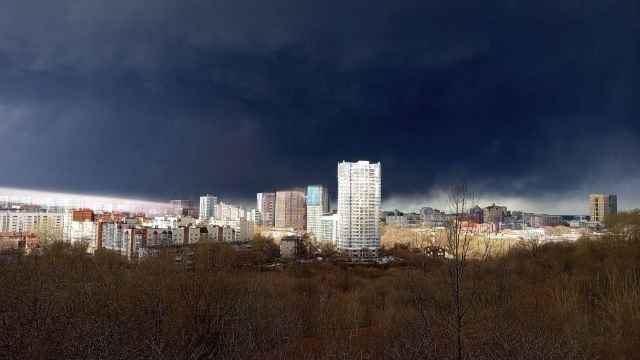
Thursday’s attack came a day after Ukrainian drones struck another industrial site in Perm that caused the city’s skyline to turn black. There were also reports of attempted drone strikes on industrial facilities in the Orenburg region near the border with northern Kazakhstan.
The Ukrainian military claimed to have attacked a Transneft oil pumping station on Wednesday, while Ukrainian President Volodymyr Zelensky called the operation “a new stage in the use of Ukrainian weapons to limit the potential of Russia's war.”
Ukraine has recently stepped up its attacks on Russia’s oil and gas infrastructure in a bid to deprive the Kremlin of energy windfalls amid the continued closure of the Strait of Hormuz.
According to the Institute for the Study of War, a Washington-based think tank, Ukraine is now conducting a sophisticated long-range strike campaign, which is making it difficult for Russia to provide comprehensive air defense coverage across its vast territory.
A Message from The Moscow Times:
Dear readers,
We are facing unprecedented challenges. Russia's Prosecutor General's Office has designated The Moscow Times as an "undesirable" organization, criminalizing our work and putting our staff at risk of prosecution. This follows our earlier unjust labeling as a "foreign agent."
These actions are direct attempts to silence independent journalism in Russia. The authorities claim our work "discredits the decisions of the Russian leadership." We see things differently: we strive to provide accurate, unbiased reporting on Russia.
We, the journalists of The Moscow Times, refuse to be silenced. But to continue our work, we need your help.
Your support, no matter how small, makes a world of difference. If you can, please support us monthly starting from just $2. It's quick to set up, and every contribution makes a significant impact.
By supporting The Moscow Times, you're defending open, independent journalism in the face of repression. Thank you for standing with us.

Remind me later.