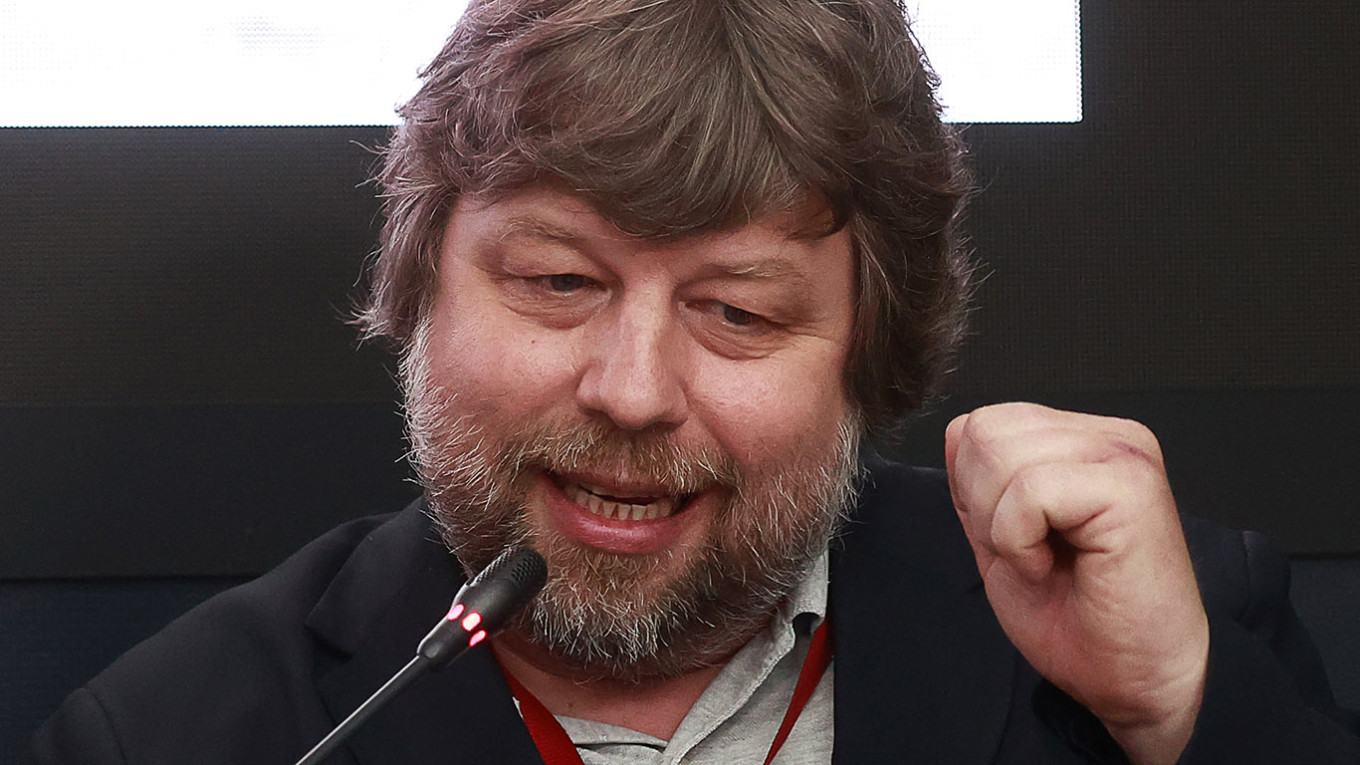
Poland has released a prominent Russian archeologist wanted in Ukraine for excavations in annexed Crimea, Russia’s FSB security service told state media on Tuesday, with U.S. officials confirming that they helped broker the release as part of a wider prisoner swap.
Alexander Butyagin, head of the archaeology department at the State Hermitage Museum in St. Petersburg, was arrested in Poland in December at Ukraine’s request.
A Polish court ruled last month in favor of extraditing Butyagin to Ukraine, where he faced up to 10 years in prison for “destroying cultural heritage sites” and causing an estimated 200 million hryvnias ($4.6 million) in damages.
Russia’s FSB security service confirmed the release of Butyagin and the wife of a Russian serviceman stationed in Moldova’s separatist Transnistria region, according to the state-run TASS news agency.
In the exchange, which took place at the Polish-Belarusian border, Russia returned several individuals whom the FSB identified as Moldovan intelligence officers who had allegedly entered Russia last year under false identities.
U.S. President Donald Trump’s special envoy to Belarus, John Coale, said he and his team secured the release of three Poles and two Moldovans as part of the exchange.
“We thank Poland, Moldova and Romania for their invaluable support in this effort, as well as President Lukashenko’s willingness to pursue constructive engagement with the United States,” Coale wrote on X.
The foreign ministries in Poland and Moldova did not respond to a request for comment.
Belarusian state media reported that negotiations for the exchange began in September as a five-for-five swap but eventually expanded to include several other countries.
The Russian Foreign Ministry had previously called the accusations against Butyagin “absurd” and “speculative,” summoning the Polish ambassador to lodge a formal complaint over his treatment.
Russia annexed the Crimean peninsula in March 2014 following an intervention by its special forces and a referendum that was denounced as illegal in Ukraine and the West.
Crimea remains a significant archaeological hub, containing sites colonized over the centuries by the Greeks, Scythians, Byzantines, Venetians, Mongols, Ottomans and Russians.
A Message from The Moscow Times:
Dear readers,
We are facing unprecedented challenges. Russia's Prosecutor General's Office has designated The Moscow Times as an "undesirable" organization, criminalizing our work and putting our staff at risk of prosecution. This follows our earlier unjust labeling as a "foreign agent."
These actions are direct attempts to silence independent journalism in Russia. The authorities claim our work "discredits the decisions of the Russian leadership." We see things differently: we strive to provide accurate, unbiased reporting on Russia.
We, the journalists of The Moscow Times, refuse to be silenced. But to continue our work, we need your help.
Your support, no matter how small, makes a world of difference. If you can, please support us monthly starting from just $2. It's quick to set up, and every contribution makes a significant impact.
By supporting The Moscow Times, you're defending open, independent journalism in the face of repression. Thank you for standing with us.

Remind me later.