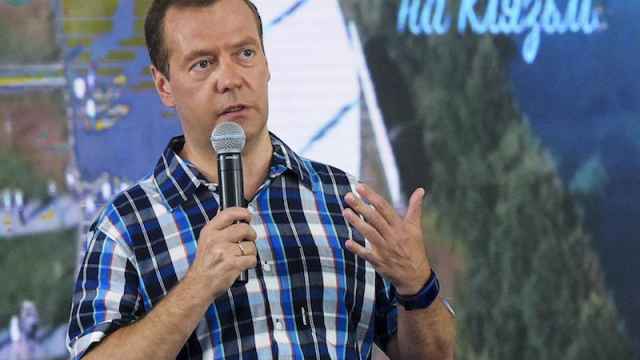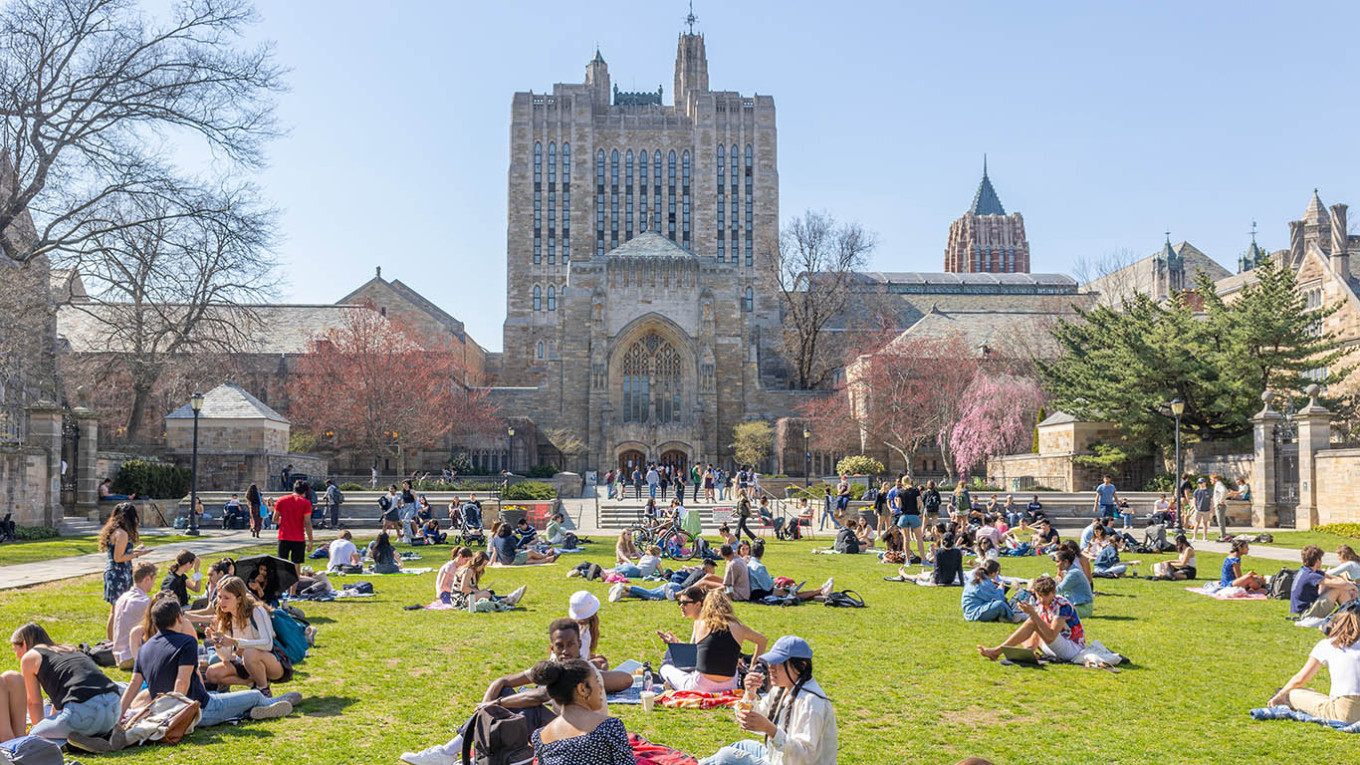
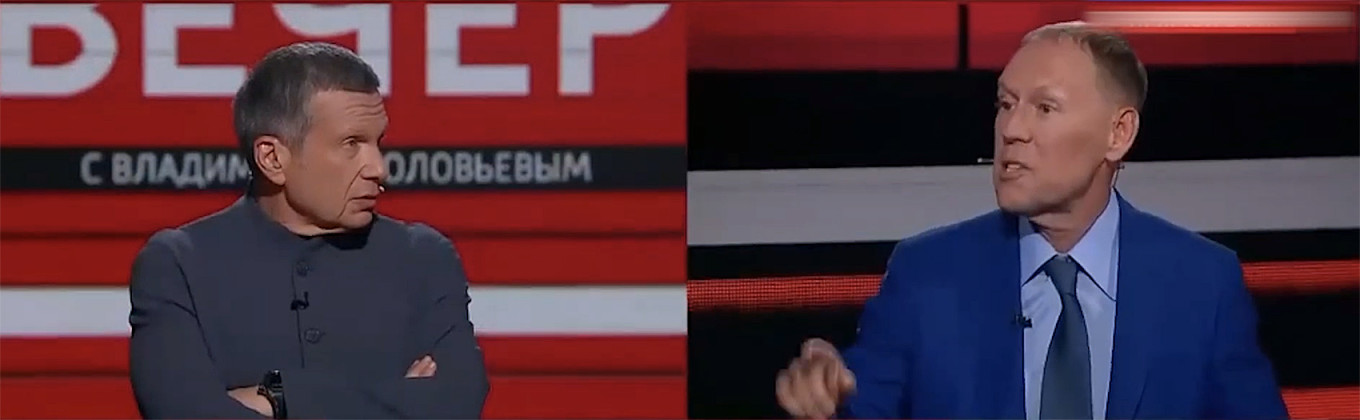
“Yale University was recognized as an undesirable organization at my request,” lawmaker Andrei Lugovoy said on the state television show Evening With Vladimir Solovyov. “Nothing like this has happened before. And we believe it is the right thing to do.”
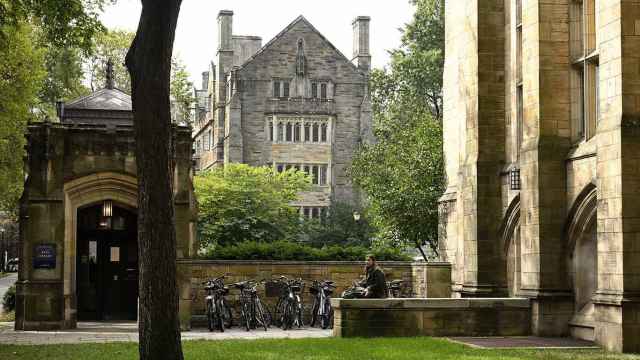
Yale, one of the most prestigious universities in the world, is one of at least 18 Western universities, educational alliances and programs to have been labeled “undesirable” over the past five years, The Moscow Times has calculated.
For the thousands of Russian students studying at these institutions, the designation can make it risky to return to their home country.
“I didn’t know I was leaving [Russia] forever,” said a Russian student at Yale University who asked to remain anonymous. “Now [emigration] is not really my choice, it’s just a reality.”
“I’m not even sure if my parents know what an ‘undesirable organization’ is. It’s a very strange term. I myself don’t fully understand what could formally happen to me,” the student, who left Russia five years ago, told The Moscow Times.
The “undesirable” label bans organizations from operating in Russia and exposes anyone cooperating with them to potential prosecution.
“This is a fight against foreign influence,” said a Russian student at Central European University (CEU), one of the universities deemed “undesirable.”
“The authorities are promoting the idea that we are surrounded by enemies who, through science and NGOs, are trying to destroy the country from within,” the student said.
Tufts University and its Fletcher School of Law and Diplomacy became the latest “undesirable” educational institutions last week, with the General Prosecutor’s Office citing their support of Ukraine and alleged spreading of “unreliable information about Russia.”
Russia’s clampdown on foreign-linked education initiatives started well before the full-scale invasion of Ukraine in 2022.
In 2021, authorities designated the Khodorkovsky Foundation and the Oxford Russia Fund as “undesirable.” In total, 18 organizations were banned in the year leading up to the invasion.
“The work continues. Tasks to strengthen national security and purge collaborators and the infrastructure that serves them have been placed under special control,” Lugovoy wrote on his Telegram channel in late 2025.
The Liberty Forward advocacy group estimates that between 2,000 and 3,000 Russians could face legal risks for involvement with “undesirable” educational institutions, though the real number may be higher.
The measures are already reshaping the plans of high-school students who had been hoping to study in the West.
“The very fact that all ties with these universities are being cut off… It's frightening. I have a feeling that admission is now a one-way ticket,” one Russian applicant who left the country following the invasion of Ukraine told The Moscow Times, speaking on condition of anonymity.
The applicant said they abandoned plans to apply to study in Germany after the Justice Ministry added the DAAD (German Academic Exchange Service) to the registry.
Another student said restrictions on testing providers such as IELTS have forced applicants to travel abroad just to take their exams.
“The EU countries themselves don’t create any obstacles,” said Georgy, a student who enrolled at a university in Italy last year. “The only difficulties are caused by Russia.”
Denis Vavaev, head of advocacy at Liberty Forward, said the designation of smaller academic networks could have an even greater impact than high-profile universities.
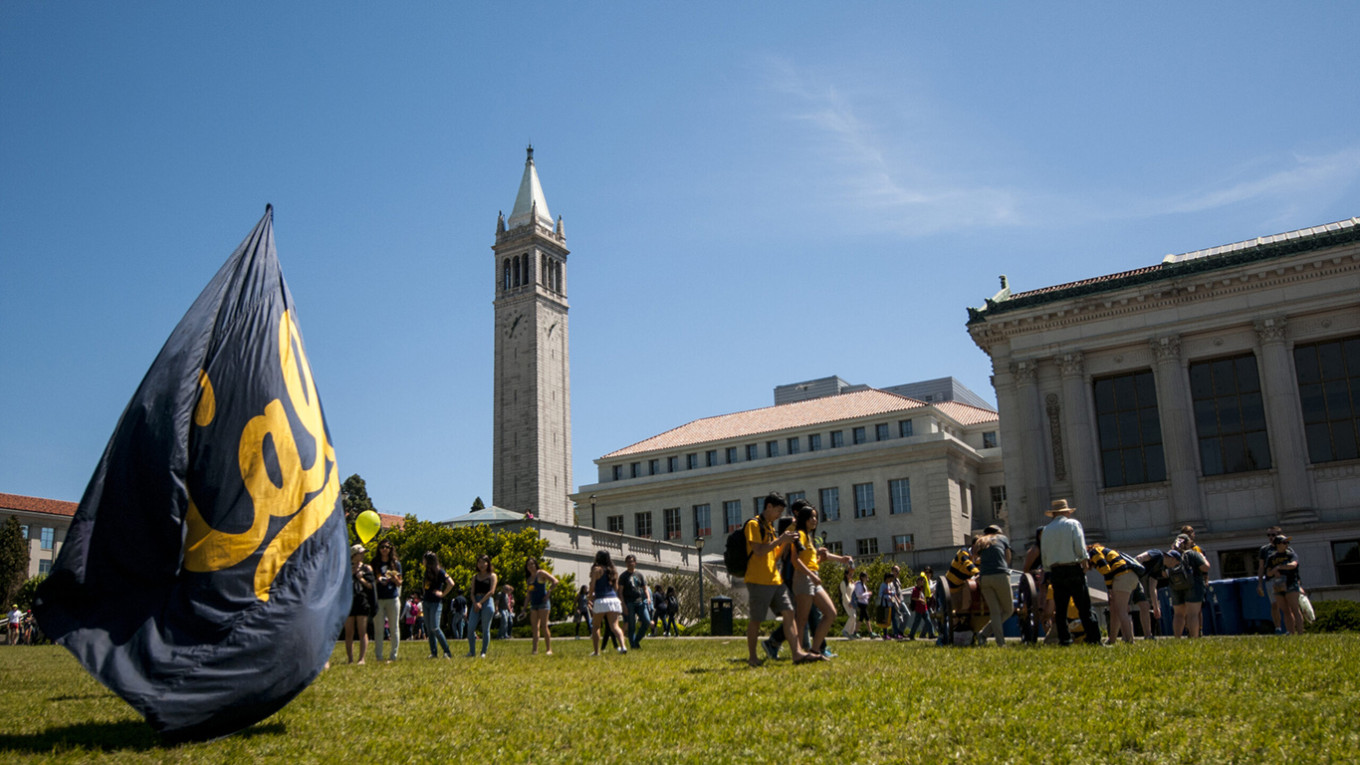
He cited the example of the Russian-American Science Association, which was added to the list on the same day as the University of California at Berkeley in March.
“It brings together Russian-speaking scientists in the United States, mainly in technological fields… For Russian science, it deals a bigger blow than Berkeley,” he told The Moscow Times.
Scientists have been a particular target for the Russian authorities in recent years. Dozens of scientists, researchers and Ph.D. candidates are believed to have faced persecution for opposing the war in Ukraine since 2022.
The Russian student at CEU said Russia interprets the “undesirable” designation very broadly.
“Even sharing a call for future students is treated as the distribution of materials of an undesirable organization,” the student said.
At the same time, students’ space to discuss their school’s “undesirable” status is shrinking.
“Not all immigrants from Russia are open to discussing such issues… For example, at Yale, in the School of Management, there are quite a few students from Russia, but they can have very different political views,” said a Yale student from Russia.
A leading figure in Moscow’s crusade against Western education is Lugovoy, who said in late 2025 that “every sixth undesirable organization” had been designated at his request, including the International Baccalaureate and the British Council.
Britain named the former KGB officer as a suspect in the 2006 poisoning of ex-spy Alexander Litvinenko. Moscow has denied involvement.
While Lugovoy campaigns against Western institutions, the exiled youth news outlet DOXA reported that his wife has traveled across Europe and tried to build a singing career while posting about designer fashion on Instagram.
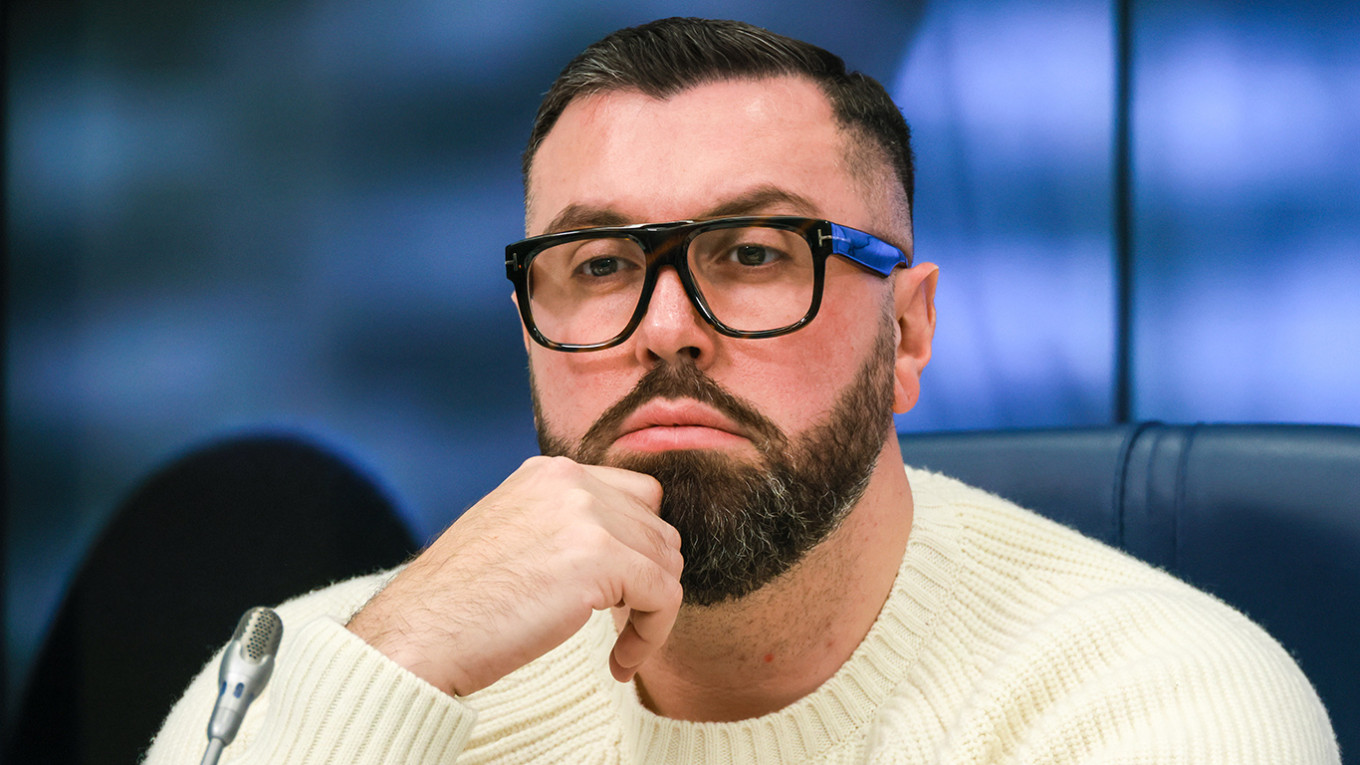
Another figure leading the Kremlin’s crackdown is Alexander Ionov, the head of the Russian Anti-Globalization Movement. Ionov has filed complaints leading to several “undesirable” designations, including Bard College in 2021.
In 2024, the Russian service of Radio Liberty/Radio Free Europe published correspondence it said showed Ionov communicating with the Federal Security Service (FSB) about organizations deemed “hostile” and which allegedly incite “protest sentiment in Russia,” including groups linked to financier George Soros, who invested millions into scientific research and education in Russia in the 1990s.
As the clampdown on Western education spreads, Russian authorities are promoting alternative study destinations, particularly in China.
Education fairs branded “Study in China” are being held in Moscow, and Science Minister Valery Falkov has said Russia and China aim to increase student exchanges to 100,000 by 2030.
“The avenue to study abroad will be the Global South and China,” said Alexander Gabuev, director of the Carnegie Russia Eurasia Center.
About 20,000 Russian students are currently studying in China, a 20% increase from the 2024-2025 academic year, Deputy Prime Minister Dmitry Chernyshenko said.
“China is trying to attract Russians as much as it can: 30 visa-free days, plenty of travel opportunities and scholarships,” Gabuev told The Moscow Times. “It’s much easier [for Russian authorities] to say ‘We are hated by the West’ when there is no one with experience studying abroad.”
A Message from The Moscow Times:
Dear readers,
We are facing unprecedented challenges. Russia's Prosecutor General's Office has designated The Moscow Times as an "undesirable" organization, criminalizing our work and putting our staff at risk of prosecution. This follows our earlier unjust labeling as a "foreign agent."
These actions are direct attempts to silence independent journalism in Russia. The authorities claim our work "discredits the decisions of the Russian leadership." We see things differently: we strive to provide accurate, unbiased reporting on Russia.
We, the journalists of The Moscow Times, refuse to be silenced. But to continue our work, we need your help.
Your support, no matter how small, makes a world of difference. If you can, please support us monthly starting from just $2. It's quick to set up, and every contribution makes a significant impact.
By supporting The Moscow Times, you're defending open, independent journalism in the face of repression. Thank you for standing with us.

Remind me later.