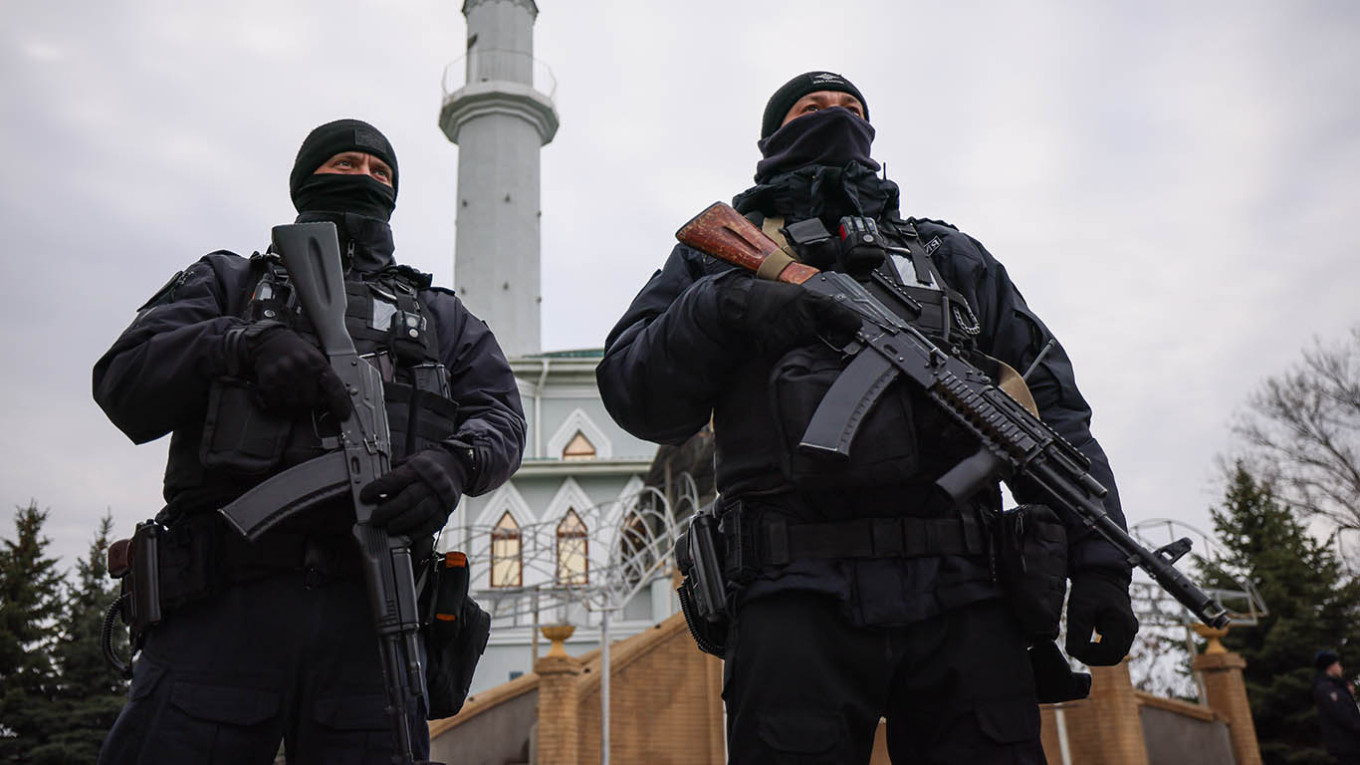
President Vladimir Putin has signed a law allowing private security companies to temporarily use firearms to protect critical infrastructure from drone attacks during the war in Ukraine, the state-run TASS news agency reported Monday, citing official documents.
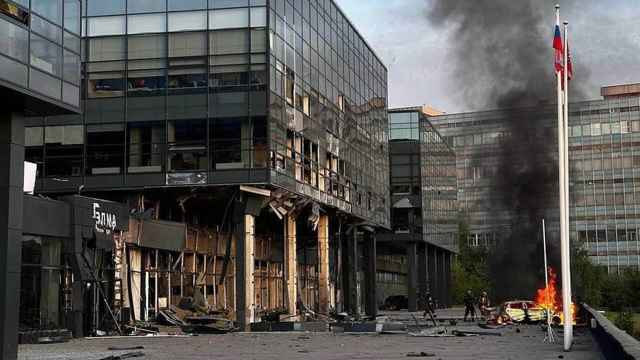
The measure extends to facilities operated by strategic enterprises, state companies, state corporations and natural monopolies, reflecting growing concern in Moscow over the vulnerability of key assets to unmanned aerial strikes.
Under the law, private guards will be able to obtain weapons through Russia’s National Guard (Rosgvardia) and must return them within two weeks after their security contracts end or upon request by the agency.
The legislation also grants security firms the right to purchase service weapons, expanding their capabilities beyond the limited-lethality arms and self-defense tools they were previously restricted to.
Lawmakers who drafted the bill cited a surge in drone strikes on critical infrastructure, including energy sector facilities, as justification for the changes. They argued that automatic firearms are among the most effective means of countering such threats.
More than 80% of Russia’s fuel and energy complex is protected by private security firms, whose personnel have until now faced strict limits on the types of weapons they could carry, the lawmakers said.
“The possibility of obtaining combat firearms for temporary use during the special military operation will significantly improve the protection of critically important facilities,” said State Duma lawmaker Vasily Piskarev, one of the bill’s co-authors.
Read this story in Russian at The Moscow Times' Russian service.
A Message from The Moscow Times:
Dear readers,
We are facing unprecedented challenges. Russia's Prosecutor General's Office has designated The Moscow Times as an "undesirable" organization, criminalizing our work and putting our staff at risk of prosecution. This follows our earlier unjust labeling as a "foreign agent."
These actions are direct attempts to silence independent journalism in Russia. The authorities claim our work "discredits the decisions of the Russian leadership." We see things differently: we strive to provide accurate, unbiased reporting on Russia.
We, the journalists of The Moscow Times, refuse to be silenced. But to continue our work, we need your help.
Your support, no matter how small, makes a world of difference. If you can, please support us monthly starting from just $2. It's quick to set up, and every contribution makes a significant impact.
By supporting The Moscow Times, you're defending open, independent journalism in the face of repression. Thank you for standing with us.

Remind me later.