
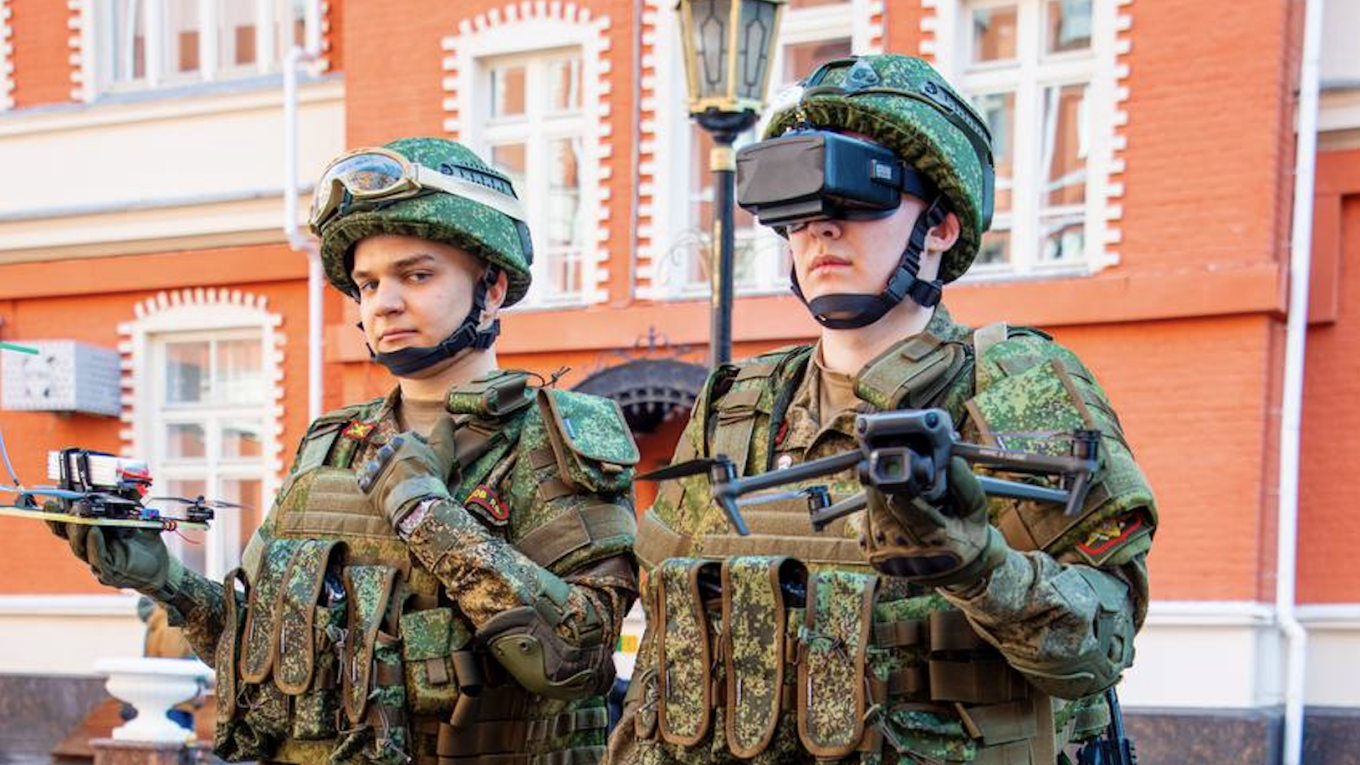
When military recruiters arrived at the Lunin College of Transport Technologies in the Siberian city of Novosibirsk last month, they hoped they would find students willing to enlist as drone operators — but few took up the offer.
College president Maria Kirsanova fumed that she had expected “her kids” — around 400 students over the age of 18 — to be “the first to go and defend their Fatherland.”
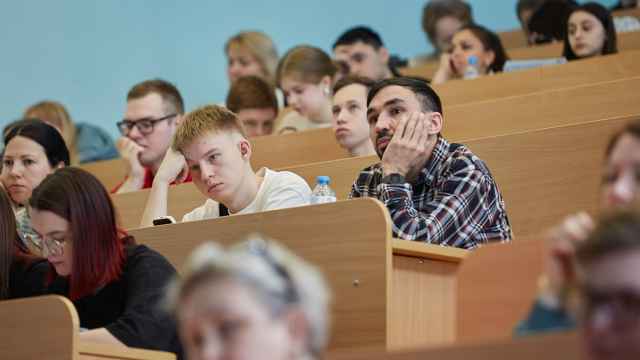
“Who put the fear into you? Who will protect us?” she asked at a meeting with students, which was recorded by one of the attendees and published online.
“Are you all cowards here sitting and being scared for your lives?” she said, scolding students for what she called a fear of returning home “in zinc coffins.”
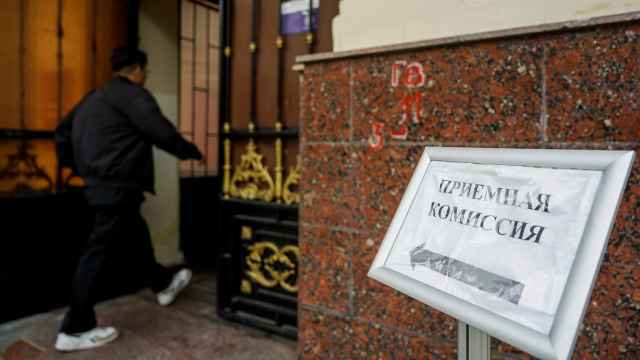
Russia has increasingly turned to universities as a fresh source of recruits for its four-year war in Ukraine as enlistment numbers dwindle and war casualties soar into the hundreds of thousands.
While Russia’s mass army sign-up campaign with promises of high pay started shortly after the full-scale invasion in 2022, efforts targeting students in particular have intensified since January, said Idite Lesom (“Get Lost”), an NGO that helps Russians avoid conscription.
Recruitment сampaigns
The timing of these campaigns is tied to the academic calendar. Military recruiters often use the winter exam season to target students, especially those with low grades or retakes, Idite Lesom spokesperson Ivan Chuviliaev told The Moscow Times.
Efforts to push students into the army can take one of several different forms.
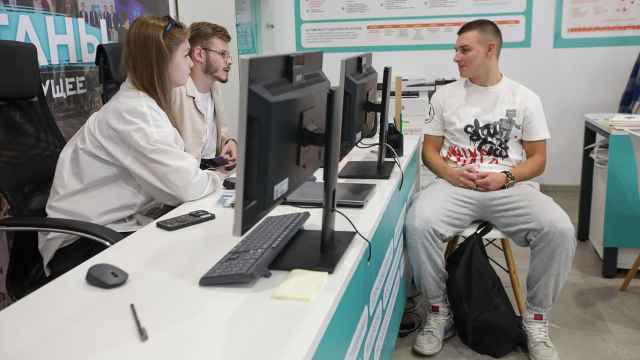
Students are typically called to meetings with army representatives and encouraged to sign contracts with the country's drone forces. In some cases, they are asked to sign attendance sheets or confirm in writing that they have been informed about contract terms.
“One of the arguments they use is: ‘We’ll expel you for poor performance if you don’t sign’,” Chuviliaev said.
Universities have also distributed Defense Ministry leaflets, screened patriotic films and published profiles of students who have already signed up.
Student media outlet Groza estimates that recruitment campaigns have taken place in at least 201 universities and colleges across Russia.
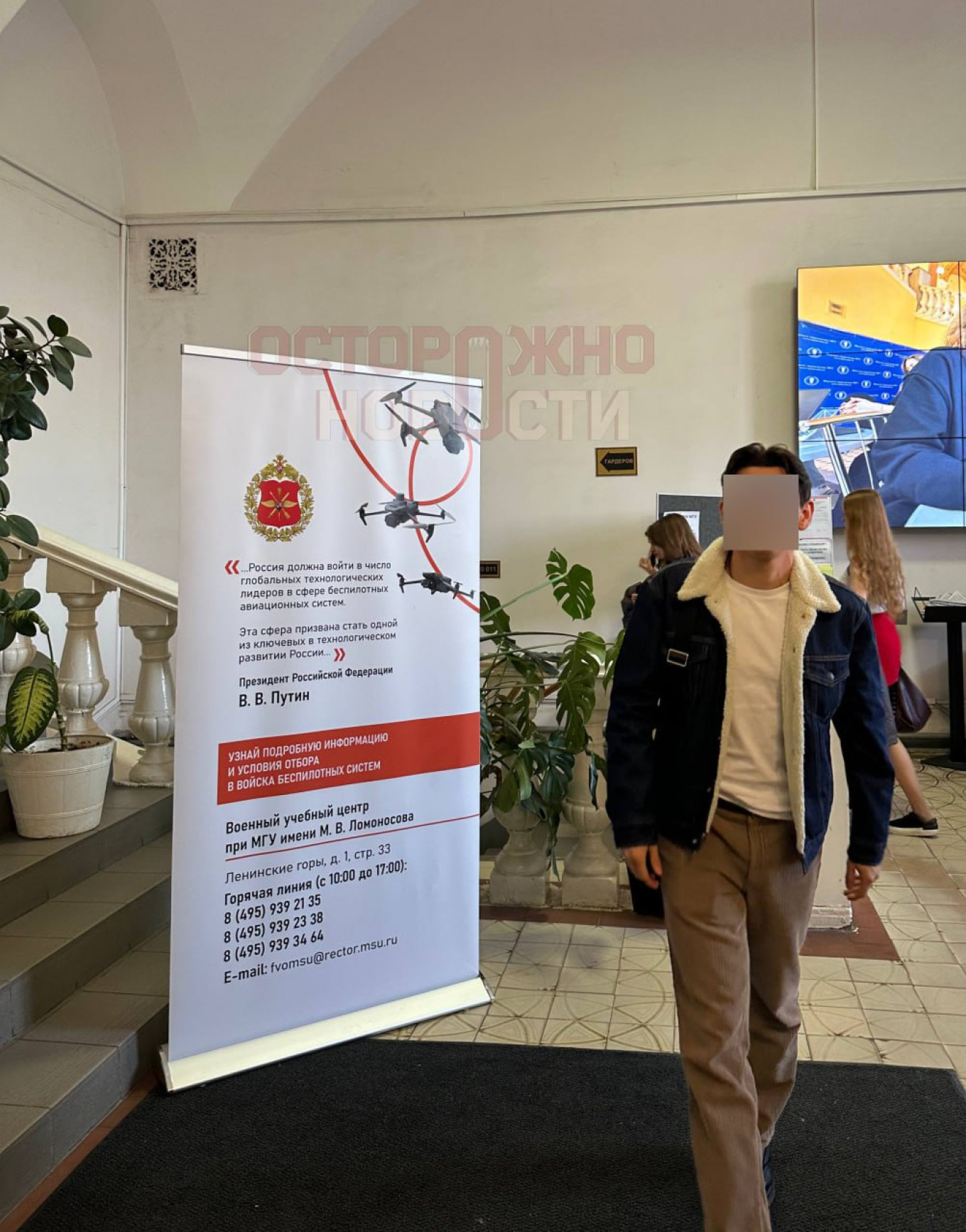
Ads promoting military service appeared this month at Moscow State University’s prestigious Faculty of Journalism located steps away from the Kremlin.
Students at Moscow Medical College No. 2 were told in February that signing a military contract would be a “ticket to life” and that new recruits would not be deployed to the front lines.
One of Russia’s leading law schools, Kutafin Moscow State Law University, published a testimonial by an anonymous student who described enlisting with the army as an “honor.”
“Every day I kept thinking: why am I here and not there?” the student’s statement said. “The opportunity to go and serve through the university became the decisive factor. It is an honor to be among the first from the university to go.”
At Siberian Federal University in Krasnoyarsk, recruiters told students that young people are “most suited” to operating drones because they have been “interested in cellphones and computer games since childhood.”
Some universities have explicitly linked enlistment to academic standing. The Higher School of Economics offered students who had failed their winter exams the chance to sign a military contract, stressing that it was an “alternative to expulsion.”
"You will be granted academic leave for the duration of the contract, after which you may resume your studies… Your expulsion will be suspended for this period," the note said.
At Kazan Innovative University, president Yulia Khadiullina told students who had outstanding debts from failed exams that they were “already expelled,” but that “each of you still has opportunities — the country believes in you."
"The new army will be formed from students who can no longer be considered students. That means you,” she said.
Recruitment quotas
The Defense Ministry appears to be setting quotas for universities in an attempt to recruit the highest possible number of students.
At Far Eastern Federal University in Vladivostok, former rector’s adviser Marina Barinova published internal documents showing that the university was required to provide 32 students for recruitment in February alone.
The independent science outlet T-invariant reported that the Russian State University for the Humanities is expected to provide 200 students to sign military contracts.
A university representative later told T-invariant that the university “is required to inform students about the opportunity … however, this [enlistment] is entirely voluntary."
Novosibirsk State Pedagogical University is reportedly also expected to recruit 109 students by April.
A student from the Urals city of Yekaterinburg told The Moscow Times that administrators at his university had allocated class time for meetings with recruiters but “do not seem very willing to cooperate.”
A Ph.D. student, who requested anonymity for safety reasons, said professors she knew “generally take a cautious approach to political issues and aren’t paid to encourage students to sign military contracts.”
The Moscow Times has sent a request for comment to the Defense Ministry.
Promises and risks
Universities and the military promise just one year of service, often as drone operators away from the front lines, alongside high pay and academic benefits to lure students.
St. Petersburg State University offered a one-time payment of 50,000 rubles ($596) in addition to annual pay of up to 7 million rubles ($81,700) from the Defense Ministry, alongside academic leave and flexible study options.
Other incentives include the possibility of switching to state-funded tuition upon return.
A leaked document published by human rights lawyer Artyom Klyga revealed instructions that the Defense Ministry sends to Russian universities.
The guidelines state that students must be offered “special terms of military service, including guarantees of being discharged from service at the end of the contract term.”
The Kutafin Moscow State Law University also advertised “guarantees of serving exclusively in the Unmanned Systems Forces, as well as the option to be discharged upon the contract’s expiration if there is no desire to sign a new one.”
While students are told they are signing one-year contracts, rules introduced after Russia’s 2022 “partial” mobilization stipulate that military contracts remain in force until the end of the mobilization period, which was never formally lifted.
"They offer a one-year contract, but don’t mention that once the term is up, the contract cannot be terminated by decree," Sergei Krivenko, the head of the human rights group Citizen.Army.Law, told The Moscow Times.
Despite references to “special terms,” the contracts are standard agreements with the Defense Ministry as their conditions cannot contradict presidential decrees or federal law, said Andrei Porodzinsky, a lawyer who assists conscripts.
There is also no guarantee that a student who signs a military contract would not be sent to the front, lawyer Kaloy Akhilgov added.
Sergei, an 18-year-old student from the Leningrad region, said he was initially told he would “be handling security remotely and only in St. Petersburg” and considered enlisting to help his mother pay tuition.
“Now they’re telling us to prepare for deployment as drone operators [to the front],” Sergei said in an interview with the Sibir.Realii news outlet, adding that his mother now “won’t let me go to college."
Yet according to the student from Yekaterinburg, “everyone knew that the contract offered has no real guarantees.”
“The overwhelming majority tend to view such recruitment efforts with either irony or skepticism,” he told The Moscow Times.
A Message from The Moscow Times:
Dear readers,
We are facing unprecedented challenges. Russia's Prosecutor General's Office has designated The Moscow Times as an "undesirable" organization, criminalizing our work and putting our staff at risk of prosecution. This follows our earlier unjust labeling as a "foreign agent."
These actions are direct attempts to silence independent journalism in Russia. The authorities claim our work "discredits the decisions of the Russian leadership." We see things differently: we strive to provide accurate, unbiased reporting on Russia.
We, the journalists of The Moscow Times, refuse to be silenced. But to continue our work, we need your help.
Your support, no matter how small, makes a world of difference. If you can, please support us monthly starting from just $2. It's quick to set up, and every contribution makes a significant impact.
By supporting The Moscow Times, you're defending open, independent journalism in the face of repression. Thank you for standing with us.

Remind me later.