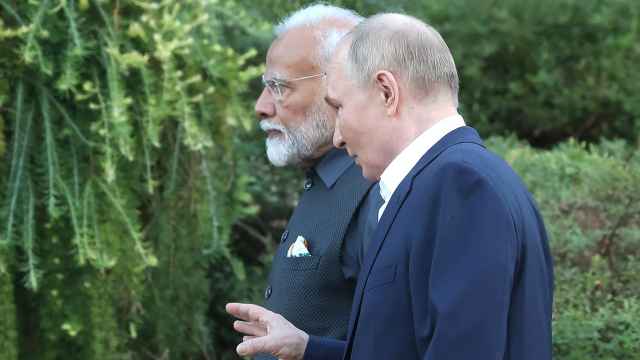
Last week, President Vladimir Putin visited India for the first time since the full-scale invasion of Ukraine began, marking his 10th state visit there in the quarter-century that he has been in power.
Moscow’s “special and privileged partnership” with New Delhi has always been transactional. For decades, defense cooperation had been the mainstay of this alliance of convenience. Russia accounted for more than 70% of the South Asian giant’s weapons arsenal and, as such, enjoyed leverage over the latter’s national security.
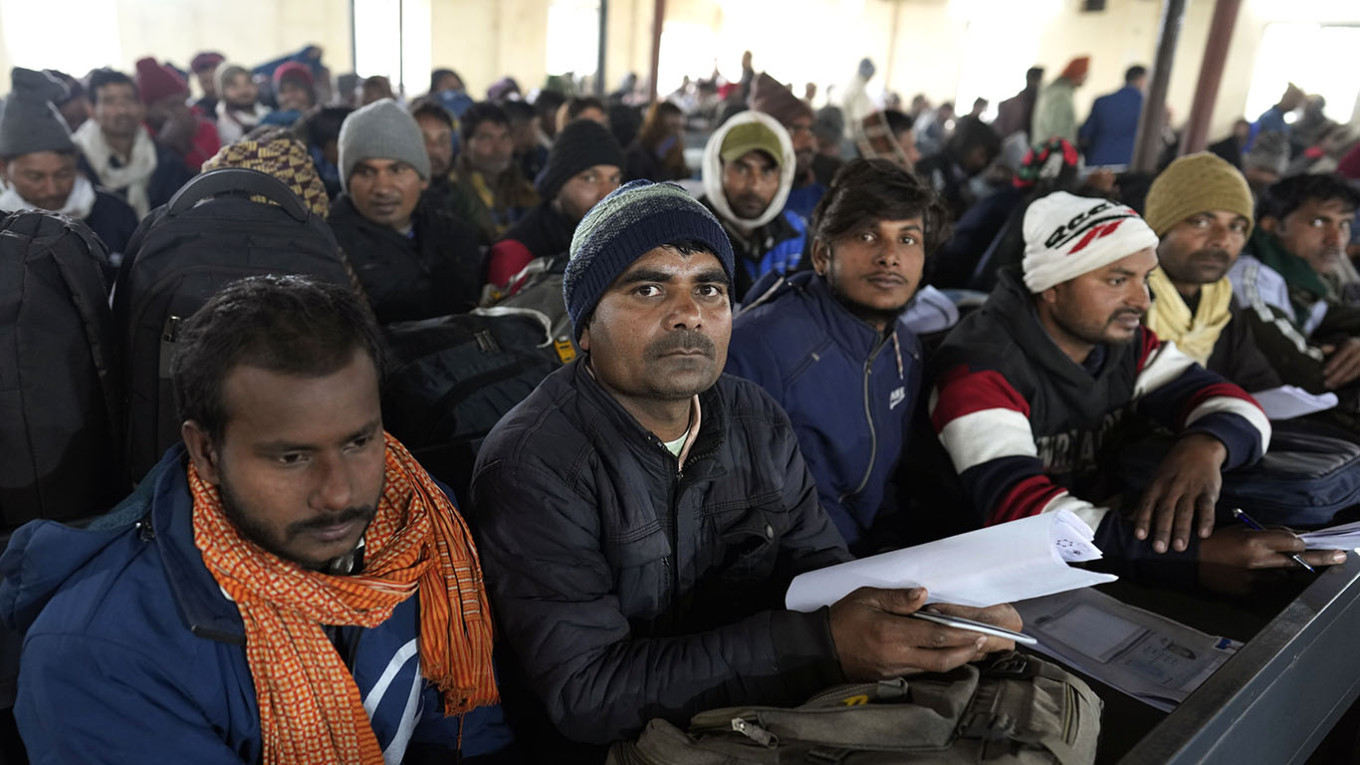
Unlike previous Indo-Russian annual summits, the topic of labor mobility featured prominently on this year’s agenda. Russia is projected to need a further 10 million workers by 2030. Having hemorrhaged a chunk of its economically active, taxpaying population who went to the front line or fled the war and made matters worse by hounding out Central Asian guest workers following the March 2024 Crocus City Hall terrorist attack, Russian authorities seem to believe that shortage could be eased by bringing in able-bodied labor migrants from a “friendly” non-CIS state. Russia’s Labor Ministry allocated nearly a third of the slots available (71,817) in its overall quota for foreign workers (234,900) to Indian passport holders, reflecting the Kremlin’s desperation for a quick fix to a nationwide crisis of its own making.
Tapping India’s huge population with a median age of just 28.4 is a no-brainer for Russia, which is grappling with a shrinking population and a 200-year-low birth rate.
At the same time, the Modi administration is all too keen to offload surplus Indian youth to strategic allies facing a manpower crunch instead of fostering domestic job creation. When Israel stopped issuing work permits to Palestinians in response to Hamas’ Oct. 7 massacre, India sent 20,000 workers to help plug Israel’s ensuing construction worker deficit.
A similar argument applies to New Delhi facilitating the outflow of working-age Indians to Russia amid the ongoing Russo-Ukrainian conflict, not least because several Indian jobseekers and medical students have been duped into joining the Russian army against their will by bogus recruitment agents. At least 44 Indian victims of this elaborate bait-and-switch are believed to still be on active duty in Ukraine, and the Foreign Ministry downplays the potential of any blowback after their deaths. Around 60 affected families staged demonstrations in the heart of the Indian capital just days before Putin’s trip, demanding the whereabouts and safe repatriation of their immediate male relatives who are often the household’s sole breadwinners.
If anything, the disproportionate enlistment of Central Asian laborers in exchange for fast-track naturalization ought to have given New Delhi significant pause before entering into a migration pact with Moscow. At the same time, the post-Crocus collective punishment that migrants from Central Asia have been subjected to across Russia spells trouble for newcomers from India. Since nativist sentiment is rife within Russian society, Indians who face language barriers and struggle to assimilate will likely emerge as soft targets for xenophobes and ultra-nationalists.
Currently, there are just 14,000 non-resident Indians living full-time in Russia, which helps explain why locals maintain an overwhelmingly favorable view of this community. Nonetheless, opening the floodgates to Indian “specialists” in large numbers is likely to breed resentment toward what could soon become an overrepresented diaspora of economic migrants looked down on by ethnic Russians as working-class opportunists.
For India’s ruling Bharatiya Janata Party (BJP), it is also worth wondering whether their countrymen could end up on the receiving end of racial profiling and mudslinging that Central Asians have endured this past year and a half if an Indian expatriate is implicated in an SBU-directed sabotage attack on Russian soil or other criminal case.
Social tensions aside, there are serious doubts as to how financially lucrative a future in the most sanctioned nation on earth actually is. The fact that impoverished post-Soviet republics like Kyrgyzstan and Tajikistan — where remittances constituted 30% and 45% of total GDP, respectively, in 2024 — have warned their nationals against traveling to or pursuing careers in Russia should offer outbound Indians lured by a potential pay bump or a marked upgrade in their quality of life serious food for thought.
Sberbank — Russia’s largest lender, which has offices in New Delhi and Mumbai and runs an IT Hub in Bangalore — is an integral part of the Kremlin-backed PR push to attract more Indian workers. Whereas Russia remains largely cut off from international capital, Indian woorkers will need reassurance they can concerns transfering funds back to India.
Ultimately, the Indians accepted to undertake menial work shunned by ordinary Russians will find themselves at the Kremlin’s mercy to sustain their livelihoods overseas will, in due course, allow Russia to wield the kind of influence over India that the Gulf Cooperation Council monarchies enjoy as neither big-ticket arms deals nor discounted oil are surefire means for Putin to continue holding Modi over a barrel.
A Message from The Moscow Times:
Dear readers,
We are facing unprecedented challenges. Russia's Prosecutor General's Office has designated The Moscow Times as an "undesirable" organization, criminalizing our work and putting our staff at risk of prosecution. This follows our earlier unjust labeling as a "foreign agent."
These actions are direct attempts to silence independent journalism in Russia. The authorities claim our work "discredits the decisions of the Russian leadership." We see things differently: we strive to provide accurate, unbiased reporting on Russia.
We, the journalists of The Moscow Times, refuse to be silenced. But to continue our work, we need your help.
Your support, no matter how small, makes a world of difference. If you can, please support us monthly starting from just $2. It's quick to set up, and every contribution makes a significant impact.
By supporting The Moscow Times, you're defending open, independent journalism in the face of repression. Thank you for standing with us.

Remind me later.