
In 2017, as Russia’s intervention in the Syrian Civil War was at its height, Moscow’s Defense Ministry mistakenly reported that Syrian rebel leader Abu Mohammed al-Jolani had “lost” an arm in a Russian airstrike.
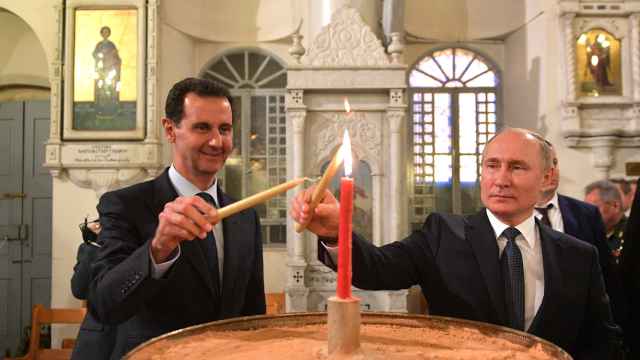
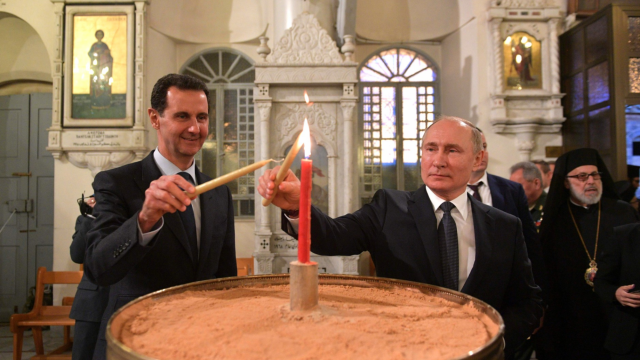
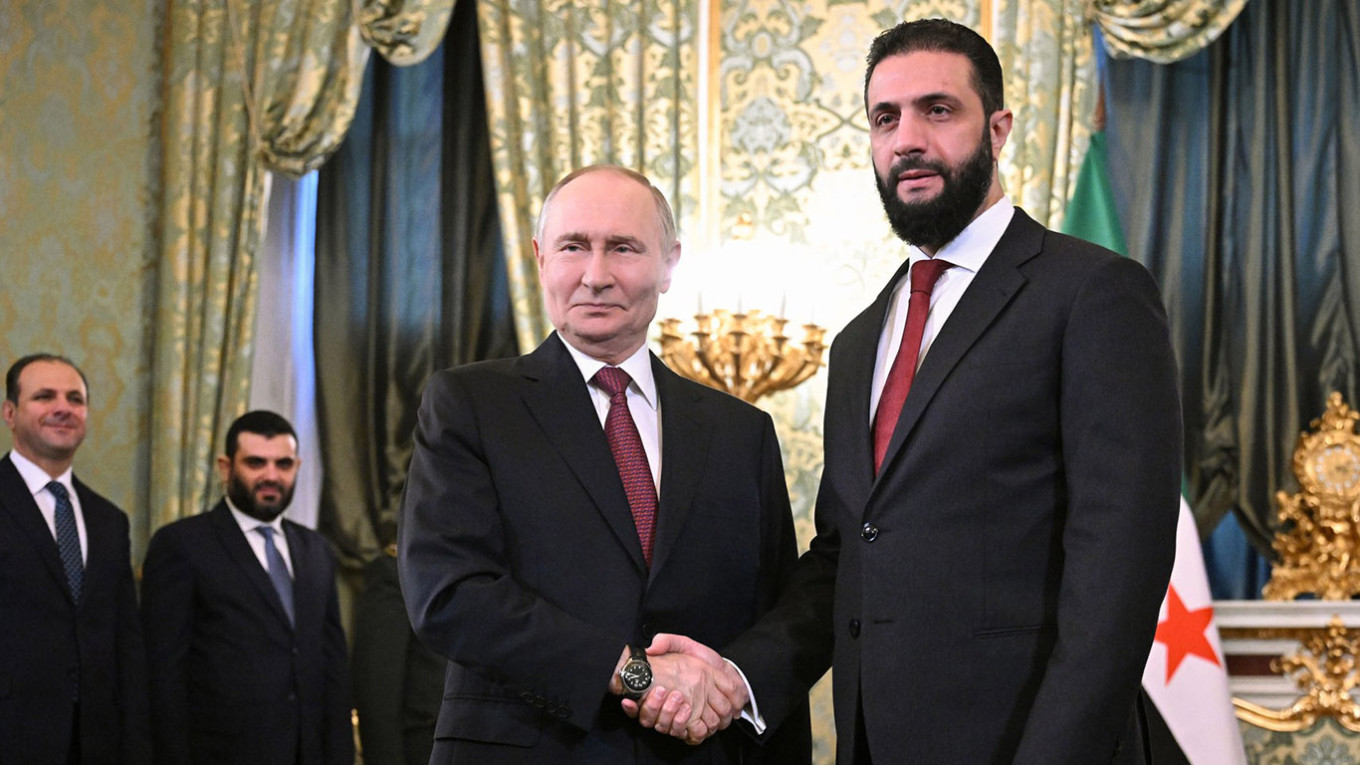
By October 2025, that same rebel leader — now ascended to the Syrian presidency and using his real name, Ahmed al-Sharaa — was shaking President Vladimir Putin’s hand in the Kremlin with both arms intact.
Al-Sharaa came to power on Dec. 8, 2024, after his Islamist militant group Hayat Tahrir al-Sham (HTS) overthrew longtime Kremlin ally Bashar al-Assad and ended more than 60 years of Assad family rule.
In the year since, Moscow has been forced to re-evaluate its approach to its erstwhile ally that had long provided it with a strategic foothold in the Middle East.
“Russia has come to terms with the fact that its influence in Syria will no longer be what it once was and it’s ready to accept this reduced, fragmented presence,” Nikita Smagin, an expert on Russia’s Middle East policy, told The Moscow Times.
Yet the country of 25 million remains strategically important for Russia, both as a way to preserve its regional influence and to secure military routes toward Africa.
Russia’s new ‘allies’
HTS remains banned as a terrorist group in Russia despite the U.S. lifting its own designation in July 2025.
That did not stop Putin from speaking with Al-Sharaa, a former al-Qaeda militant, for two and a half hours in October, saying that Russia was always guided by “the interests of the Syrian people.”
Middle East expert Ruslan Suleymanov said this reflects the speed at which Russia has recalibrated its strategy on Syria.
“Moscow did not insist that Bashar al-Assad was a legitimately elected president [after he was ousted], even though Putin had congratulated him on his victory in May 2021 following the presidential elections,” he said.
Russian authorities appear to have opened channels with militants loyal to Syria’s new leadership — either directly or via Turkey — even before they seized full control of Syria.
One telling indicator, Suleymanov said, is that HTS fighters did not approach Russia’s military bases in Khmeimim and Tartus during their lightning offensive against Assad’s forces in the lead-up to his overthrow.
Al-Sharaa’s visit to Moscow was driven by mutual interests, experts say.
The new Syrian government’s priorities were legitimacy and access to Russian economic support, including fuel, diesel, and assistance with restoring the country’s devastated energy sector.
In July, Moscow and Damascus agreed to review all previous agreements and contracts, and Russia pledged to help rebuild Syria’s war-shattered economy. Russia also continues to print Syria’s currency.
From Moscow’s perspective, accepting a reduced footprint in Syria was worth it in order to retain access to its military bases, which are crucial to Russia’s operations in Africa, Smagin said.
Military presence
In 2017, Russia and Syria signed a 49-year agreement granting Moscow access to the Tartus naval facility and the Khmeimim airbase until 2066.
Built by the Soviet Union in the 1970s and modernized in the 2010s, the Tartus port long served as Russia’s key logistical hub in the Mediterranean, enabling Russian ships to refuel, resupply and undergo repairs.
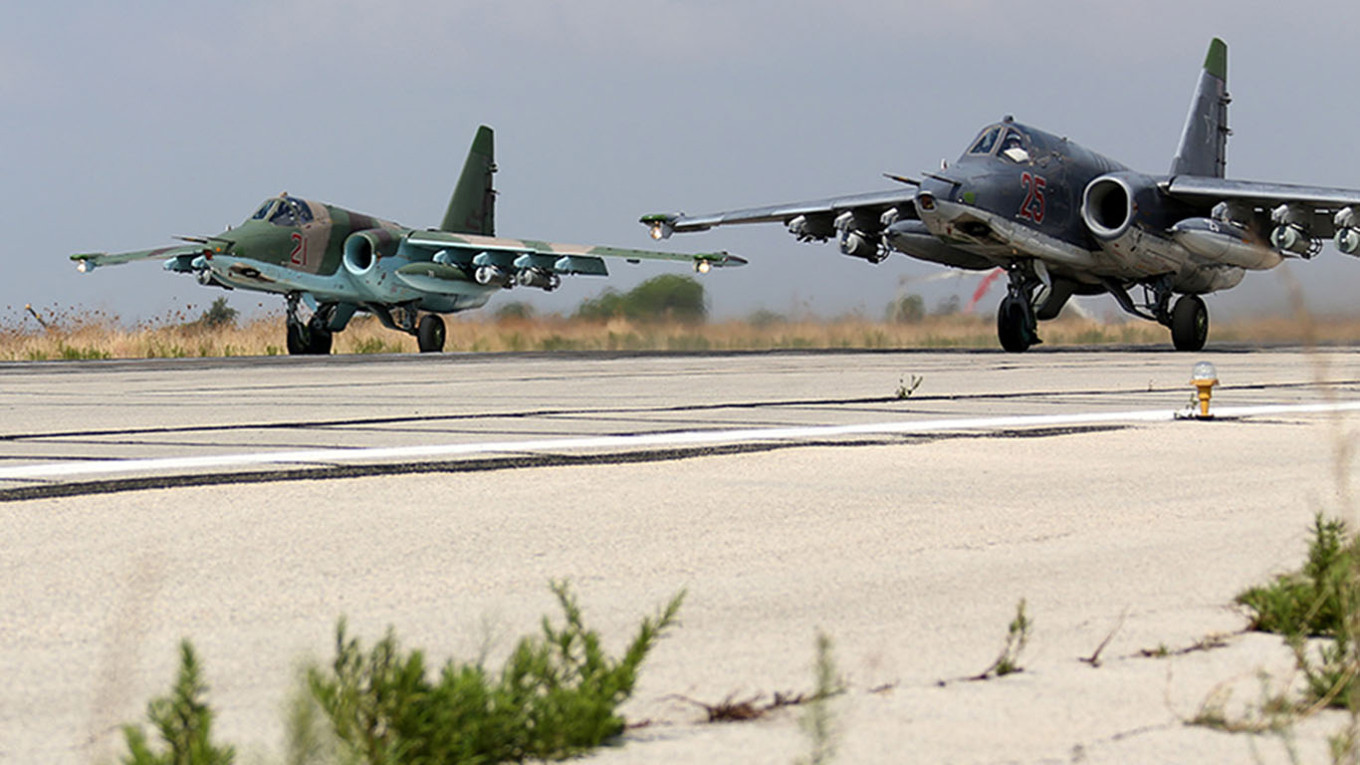
Khmeimim, opened in 2015, became the launchpad for Russian airstrikes against Assad’s opponents and the Islamic State.
But in early 2025, Syria’s transitional government said it would only keep Russian military bases if they served the interests of Damascus. Syria subsequently revoked a 2019 agreement on operating Tartus’ civilian section.
Much of Putin’s closed-door meeting with al-Sharaa reportedly focused on the future of those bases, with the Syrian leader promising to keep them in place.
Even so, Russia’s overall military footprint in Syria is now “nominal,” Suleymanov said.
Assad in Moscow
Russia had been Assad’s main foreign ally during the Syrian Civil War, which began in 2011 and killed more than 300,000 civilians.
Human rights groups accused Assad of systematic repression, torture and indiscriminate attacks on civilians.
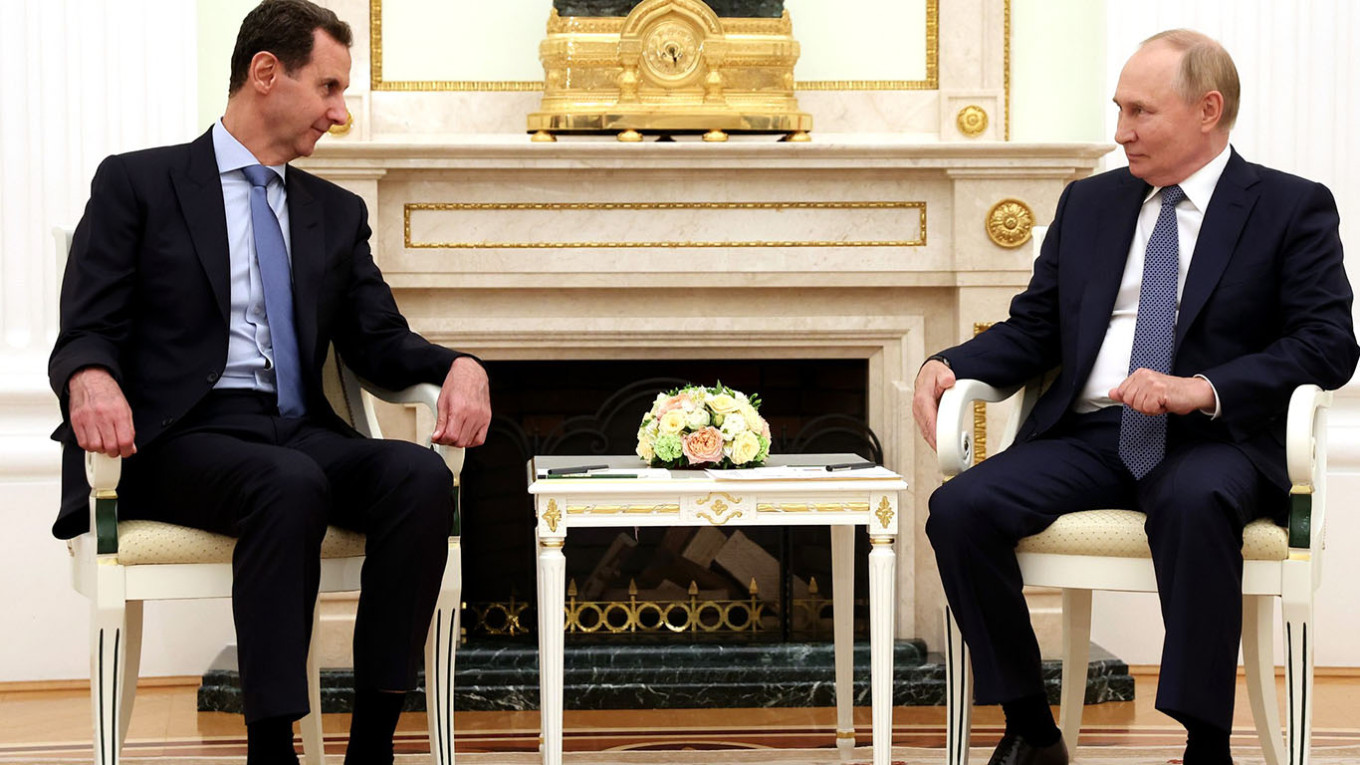
Russia granted Assad and his family asylum following his regime’s overthrow but did not disclose any details.
Al-Sharaa has repeatedly pressed Moscow to extradite Assad, and Syria’s new government issued an arrest warrant for him in September.
Kremlin spokesman Dmitry Peskov declined to say whether Putin and al-Sharaa discussed Assad’s fate during their meeting in October.
Whatever his future fate, Assad is hardly living a life of hardship in his current exile.
The Assad family reportedly started buying property in Russia in 2013 and now owns at least 18 luxury apartments in Moscow. Assad is also believed to have moved at least $250 million in cash from Syria to Russian banks, the Financial Times reported.
Around 1,200 former Syrian officers are also reported to have fled to Russia after Assad’s fall. According to Reuters, Assad’s former military intelligence chief and an Assad cousin, both exiled in Moscow, have been funneling millions of dollars to potential fighters in Syria who they hope will rise up against Damascus’ new government and help them regain their lost influence.
Suleymanov said the Kremlin has “simply chosen to forget about Assad,” who is said to be keeping a low profile and spending hours playing online video games.
“Assad does not give any interviews, not even to Russian state outlets. He has simply been kept out of sight,” Suleymanov said. “What happened to Assad last year represents a personal setback for Putin, who invested significant effort and resources to keep Assad in power.”
Staying in power
While Russia and Syria say Moscow “will play a major role in the development of a new Syria,” analysts note that this also helps Damascus maintain a certain balance among other key players in the region.
“There is Turkey, there are the United States and Israel. Russia, in a way, balances these three countries, all of which have a military presence in the region. In this sense, closer ties between Moscow and the new authorities in Damascus are mutually beneficial,” Suleymanov said.
Still, Russia’s standing in the region is not what it was a decade ago, as the invasion of Ukraine has diverted its attention and exposed its geopolitical missteps, he noted.
“Putin personally can no longer come to the aid of their allies or protect them as they did 10 years ago, when the Kremlin launched its military operation in Syria,” Suleymanov said, adding that Syria’s transitional leaders at the same time acknowledge Russia’s continued importance.
Moscow, said Smagin, “has nevertheless managed to adapt its approach and today it remains an important and a legitimate actor in the region in the eyes of the regional states.”
A Message from The Moscow Times:
Dear readers,
We are facing unprecedented challenges. Russia's Prosecutor General's Office has designated The Moscow Times as an "undesirable" organization, criminalizing our work and putting our staff at risk of prosecution. This follows our earlier unjust labeling as a "foreign agent."
These actions are direct attempts to silence independent journalism in Russia. The authorities claim our work "discredits the decisions of the Russian leadership." We see things differently: we strive to provide accurate, unbiased reporting on Russia.
We, the journalists of The Moscow Times, refuse to be silenced. But to continue our work, we need your help.
Your support, no matter how small, makes a world of difference. If you can, please support us monthly starting from just $2. It's quick to set up, and every contribution makes a significant impact.
By supporting The Moscow Times, you're defending open, independent journalism in the face of repression. Thank you for standing with us.

Remind me later.