

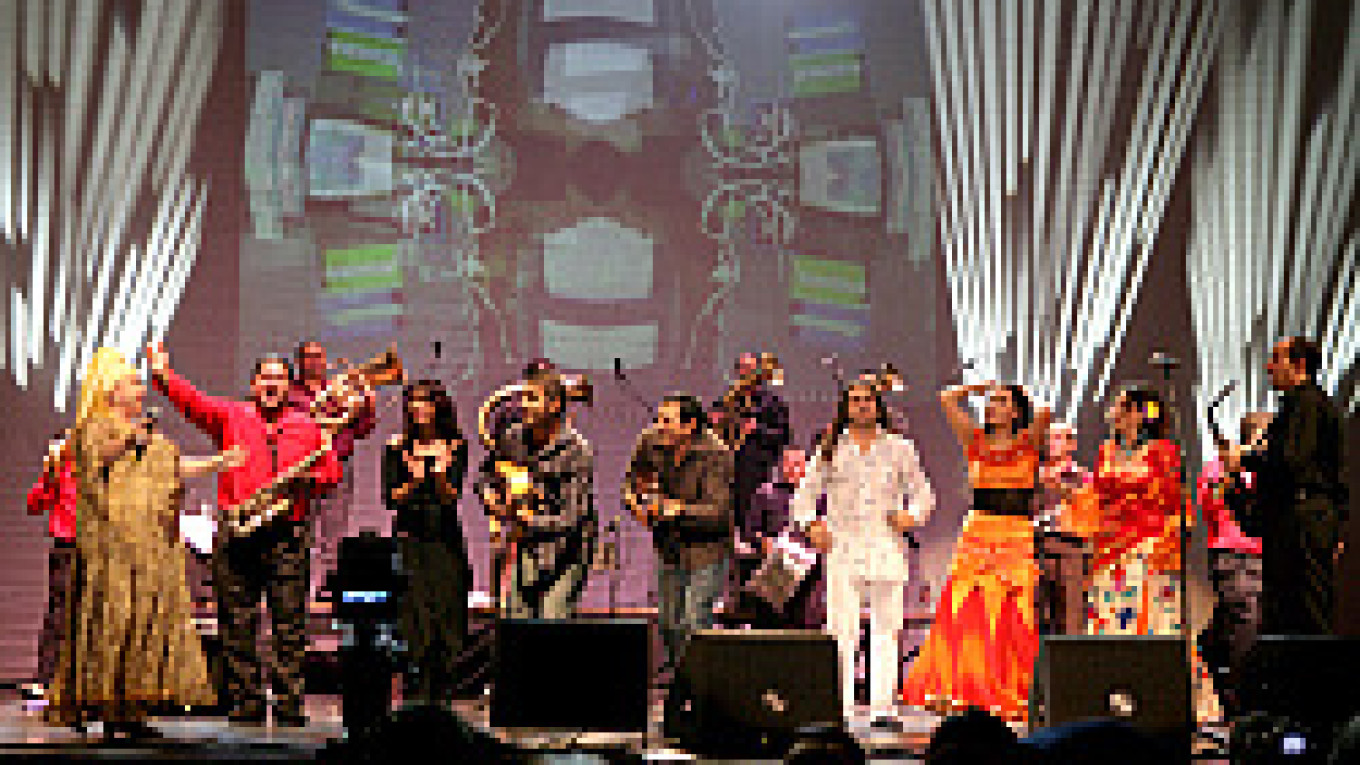
Their new life of world tours and music awards has not, however, brought about any seismic shifts in their lifestyles.
"There have been no big changes," said Costica "Cimai" Trifan, trumpet player for Fanfare, which will showcase its 2007 album "Queens and Kings" at the International House of Music Sunday night. "Of course, we live better economics-wise, but the traditional life is still the same."
This is surely no accident -- the Balkan-brass beats that grew out of this traditional lifestyle are what gained them their stardom in the first place.
On a fateful day 12 years ago, a German sound engineer, Henry Ernst, discovered the north Romanian village of Zece Prajini, hometown of the future members of Fanfare. The area had long been known as the country's best place to find good musicians, and almost every man there plays an instrument. Ernst, now the band's manager and co-founder of their record label Asphalt Tango, quickly convinced them to form a touring band.
"We definitely have more fun playing at concerts, as there, we are the stars, and our music is really appreciated," Cimai said. "At weddings, we play what the people want us to play. Sometimes it's a lot of fun, especially when performing at Gypsy weddings, and sometimes it's terrible."
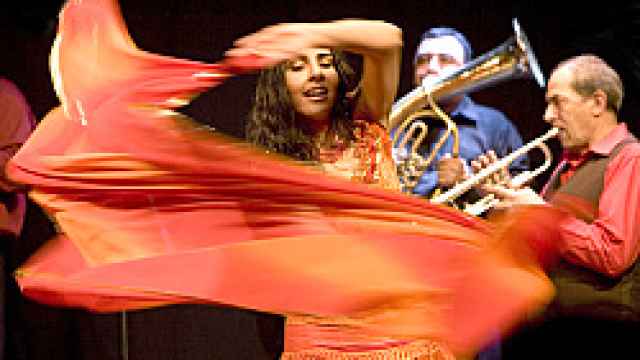
Fanfare Ciocarlia
Dancers often perform with the musicians onstage for Fanfare's shows.
|  |
| |
Fanfare's performance vibe is deeply marked by the experience playing Romanian and Gypsy weddings, which can last anywhere from all day and night to an entire week.
Besides high velocity and marathon energy, Gypsy music is most marked by extreme diversity of influence. Its deepest roots lie in Turkish military bands from a century ago, but since then the genre has crossed virtually every national border in southern Europe, picking up additional shades of international flavor.
"[Gypsy music] is music made by Romani people from across Europe -- so the Gypsy jazz of Django [Reinhardt] in France, flamenco of Spain, Balkan brass of the Balkans, et cetera," noted Garth Cartwright, author of "Princes Amongst Men," a book on Gypsy music and the post-communist Balkan states. "The only connection these disparate musicians have is a willingness to break the rules of music and entertain. And [they all] play brilliantly."
Fanfare has expanded even outside the boundaries of the European continent, borrowing from Brazilian batucada, Cuban rumba, some Arab music and even the James Bond theme, a long-distance range they condense down in defining Gypsies as "the original internationalists."
The band has put out five albums, the last of which sold about 130,000 copies. Their many notable moments include winning the Europe category at the BBC Radio 3 Awards for World Music in 2006, being featured in the acclaimed German-Turkish film "Gegen Die Wand" ("Head On") and creating an astonishing version of "Born to be Wild" for Sascha Baron Cohen's satirical movie "Borat."
Their real reputation, though, comes from their performances on stage.
"Fanfare are awesome live," Cartwright said. "They play with such power and groove -- organic East European dance music."
Fanfare Ciocarlia will headline the "Gypsy Kings and Queens" performance Nov. 30 at 7 p.m. at the International House of Music, 58 Kosmodamianskaya Naberezhnaya. M. Paveletskaya. 730-1011. www.mmdm.ru.
A Message from The Moscow Times:
Dear readers,
We are facing unprecedented challenges. Russia's Prosecutor General's Office has designated The Moscow Times as an "undesirable" organization, criminalizing our work and putting our staff at risk of prosecution. This follows our earlier unjust labeling as a "foreign agent."
These actions are direct attempts to silence independent journalism in Russia. The authorities claim our work "discredits the decisions of the Russian leadership." We see things differently: we strive to provide accurate, unbiased reporting on Russia.
We, the journalists of The Moscow Times, refuse to be silenced. But to continue our work, we need your help.
Your support, no matter how small, makes a world of difference. If you can, please support us monthly starting from just $2. It's quick to set up, and every contribution makes a significant impact.
By supporting The Moscow Times, you're defending open, independent journalism in the face of repression. Thank you for standing with us.

Remind me later.