

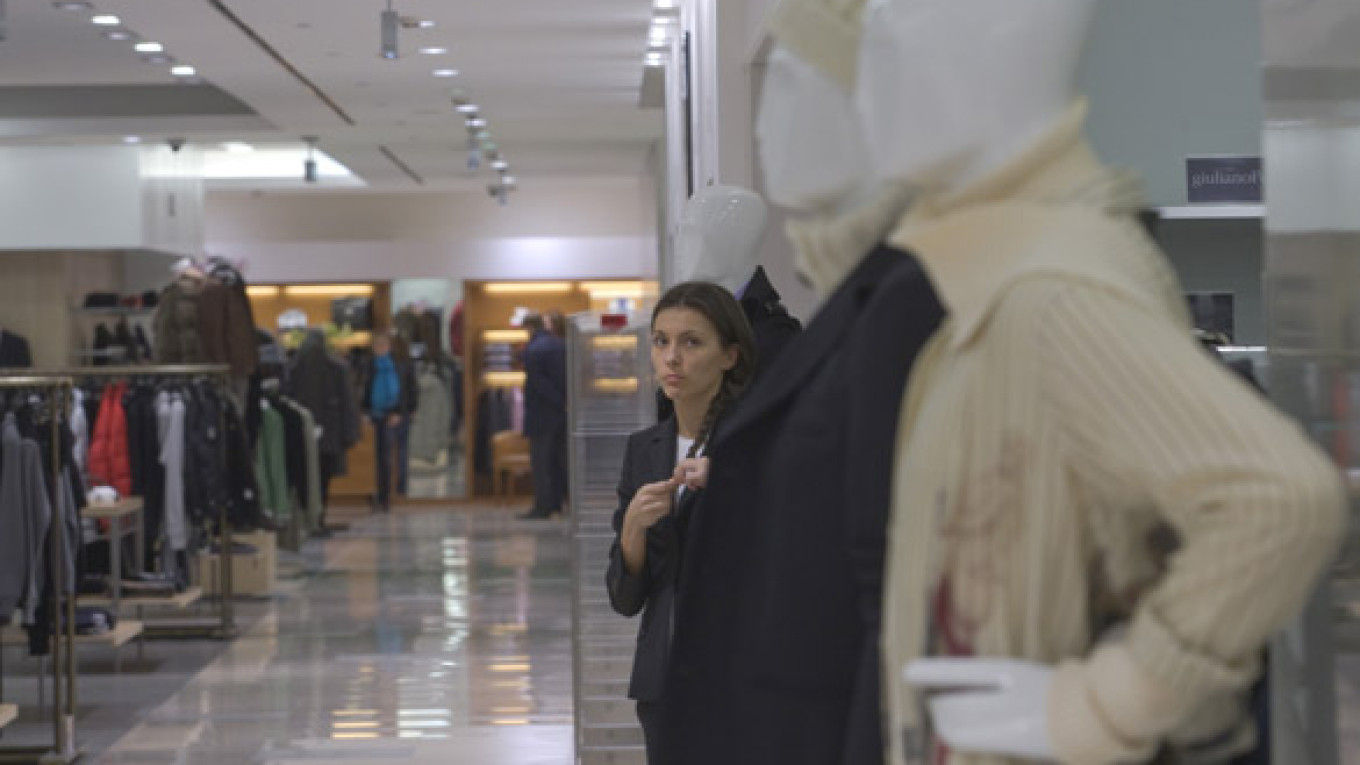
As shoppers return to discount stores and markets, developers of some shopping malls scheduled for completion this year are looking to either push the date back or open at half capacity.
“One-third of Russian food retailers are already using the discounter format, and it is becoming increasingly attractive for clothing and footwear outlets,” said Natalya Davidenko, of consulting company Astera.
The trend has already borne fruit for those retailers, with grocery discounters Magnit, Kopeika and Lenta, as well as the inexpensive clothing chains in Inditex Group, seeing increases in profit in the first half, said Veronika Mann, director of strategic consulting at Bridge Consulting.
Lending problems and lower demand have led many retailers to call off their development programs or leave the market altogether. Developers with malls under way don’t have many choices: either open the properties with the tenants they already found — and risk having them flee the mall if they don’t get enough shoppers — or freeze a nearly finished project and possibly wind up with an unneeded property.
Murat Gursei, of AFI Development, said that if the number of renters is lower than a certain level, it’s impossible to open the center because it would be considered unsuccessful and the remaining 50 percent of space would have to be rented out for nothing. For AFI Development’s Mall of Russia, that level is 80 percent, he said.
Even so, some shopping complexes are throwing open their doors despite being half full, said Alexander Sharapov, president of Becar Realty Group. For example, the children’s shopping center Aerobus on Varshavskoye Shosse, which is operated by Becar, started working with 55 percent of its space occupied.
The RIO shopping and entertainment complex on Dmitrovskoye Shosse opened in January with a 65 percent occupancy, Davidenko said. Irina Kagramanova, a spokeswoman for Tashir Group, RIO’s developer, said that not all of the renters had time to move in, including Sedmoi Kontinent, which started working there several months after the mall opened. Now no more than 2 percent of the complex is vacant.
“Anchor tenants are beginning to trade at least a month after the official opening of a mall,” analysts from Jones Lang LaSalle wrote in research.
As a result, the real estate market has gained another new term: the working opening. Anzori Khasia, of Otkritie-Nedvizhimost, said this could ultimately become the norm. Shopping malls can always make use of their layouts and close part of the facility, grouping tenants around the anchors, said Andrei Vasyutkin, from real estate firm GVA Sawyer.
The Darya mall, which opened this month in Moscow’s western Strogino district, has kept its third floor closed, but it will eventually have a home appliances store, said Anastasia Balmochnykh, of LCMC, the project’s broker.
“There aren’t many people who can afford to delay an opening when the outlook for demand for commercial real estate is so unclear,” Vasyutkin said. “Of course, not everyone feels comfortable buying things in a half-empty shopping mall, but in some cases, opening on the planned date is unavoidable.”
Often the overriding concern is generating quick cash flow to cover debt payments, he said.
A Message from The Moscow Times:
Dear readers,
We are facing unprecedented challenges. Russia's Prosecutor General's Office has designated The Moscow Times as an "undesirable" organization, criminalizing our work and putting our staff at risk of prosecution. This follows our earlier unjust labeling as a "foreign agent."
These actions are direct attempts to silence independent journalism in Russia. The authorities claim our work "discredits the decisions of the Russian leadership." We see things differently: we strive to provide accurate, unbiased reporting on Russia.
We, the journalists of The Moscow Times, refuse to be silenced. But to continue our work, we need your help.
Your support, no matter how small, makes a world of difference. If you can, please support us monthly starting from just $2. It's quick to set up, and every contribution makes a significant impact.
By supporting The Moscow Times, you're defending open, independent journalism in the face of repression. Thank you for standing with us.

Remind me later.