

It all started in the early 1900s, when literary celebrities of the first rank -- Marina Tsvetaeva, Osip Mandelstam, Nikolai Gumilyov, Alexei Tolstoy and Maxim Gorky -- began flocking to Koktebel to stay at the summer house of poet, artist and philosopher Maximilian Voloshin. Discussions on the windy veranda continued long into the night, love affairs sparkled and the names of Voloshin and Koktebel were memorialized in verse by some of the greatest writers of the 20th century.
Just before the Revolution, the nomadic Voloshin settled in Koktebel for good. Civil war soon broke out in the Crimea, and platoons of armed soldiers -- Reds and Whites alike -- swept through the town demanding to requisition his house. Huge in stature, with a leonine mane of hair and spade beard, Voloshin would approach the soldiers unarmed and always talk them into a peaceful settlement. He somehow managed to stay friendly with both sides, saving countless lives by gently persuading generals to cross out or at least abridge their execution lists. "I pray for these and those alike," he wrote in one of his poems.
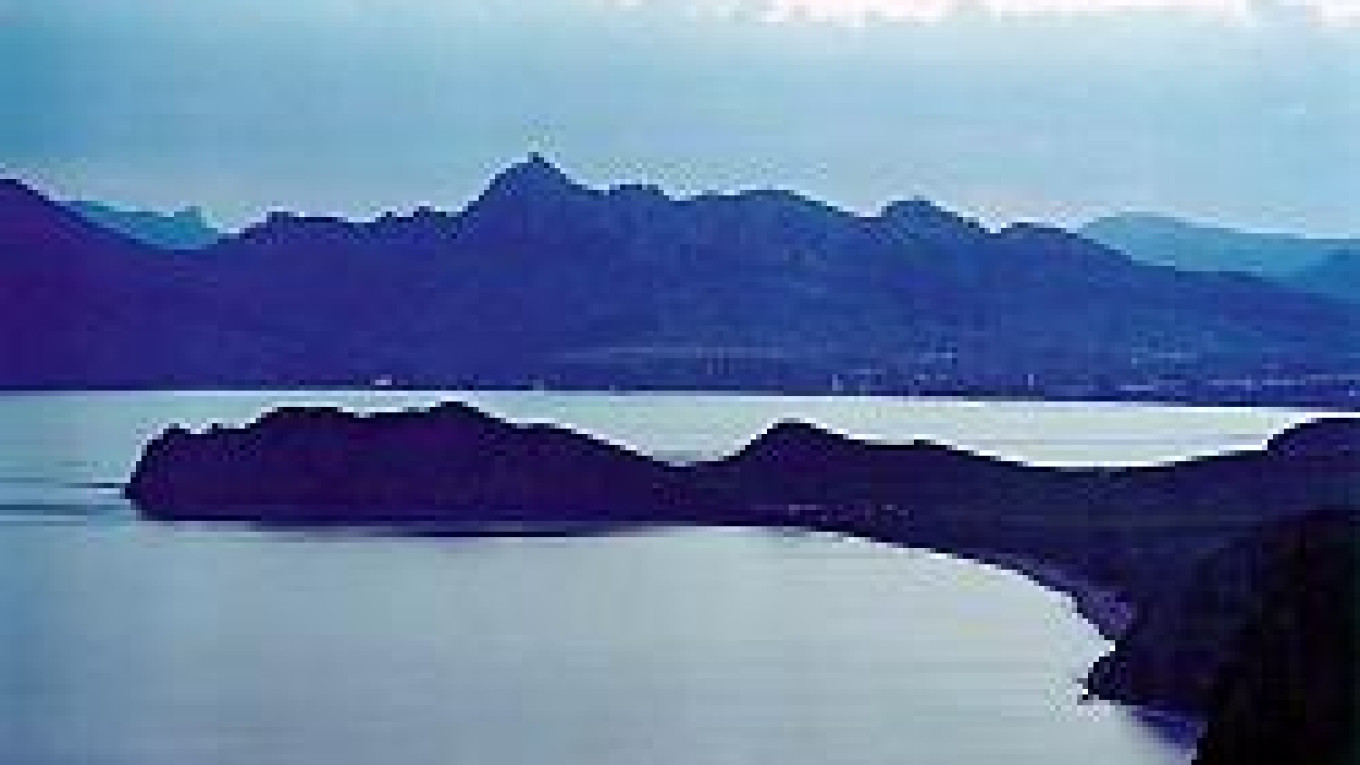
Voloshin died in 1932 and was buried on top of the hill where his house still stands, overlooking the Koktebel bay and a seaside cliff that bears an uncanny resemblance to his bearded profile. Thanks to his charismatic widow, Maria, or "Marusya," Voloshina, however, the house continued to draw crowds until her death in 1976 -- future Nobel laureates Alexander Solzhenitsyn and Joseph Brodsky and pianist Svyatoslav Richter among them. The most distinguished guests were awarded the honor of sleeping under the sculpted image of the Babylonian dragon goddess Tiamat; Voloshin had a thing for esoteric religions and Oriental relics.
In Soviet times, Koktebel housed a writers' rest house and a paragliding club, and fast-food venues and noisy discos now adorn its beaches. However, even though the Crimea is less affordable these days than resort areas in Turkey or Cyprus, many vacationers from Moscow and St. Petersburg -- mostly of the intelligentsia persuasion -- faithfully go there every summer. Voloshin's house may have turned into a museum, but as the poetry festival showed last month, it's still an active player in literary life.
A Message from The Moscow Times:
Dear readers,
We are facing unprecedented challenges. Russia's Prosecutor General's Office has designated The Moscow Times as an "undesirable" organization, criminalizing our work and putting our staff at risk of prosecution. This follows our earlier unjust labeling as a "foreign agent."
These actions are direct attempts to silence independent journalism in Russia. The authorities claim our work "discredits the decisions of the Russian leadership." We see things differently: we strive to provide accurate, unbiased reporting on Russia.
We, the journalists of The Moscow Times, refuse to be silenced. But to continue our work, we need your help.
Your support, no matter how small, makes a world of difference. If you can, please support us monthly starting from just $2. It's quick to set up, and every contribution makes a significant impact.
By supporting The Moscow Times, you're defending open, independent journalism in the face of repression. Thank you for standing with us.

Remind me later.