

Brodsky paid great attention to the selection process, which was to be carried out by an independent panel of world-renowned artists and scholars. He also focused on the difficult logistics of the procedure, not forgetting the mundane requirements of running water and laundry service. The financing of the venture had to be private, he wrote, and "the involvement of the Russian state during this initial period -- of, let's say, five years -- should be nil."
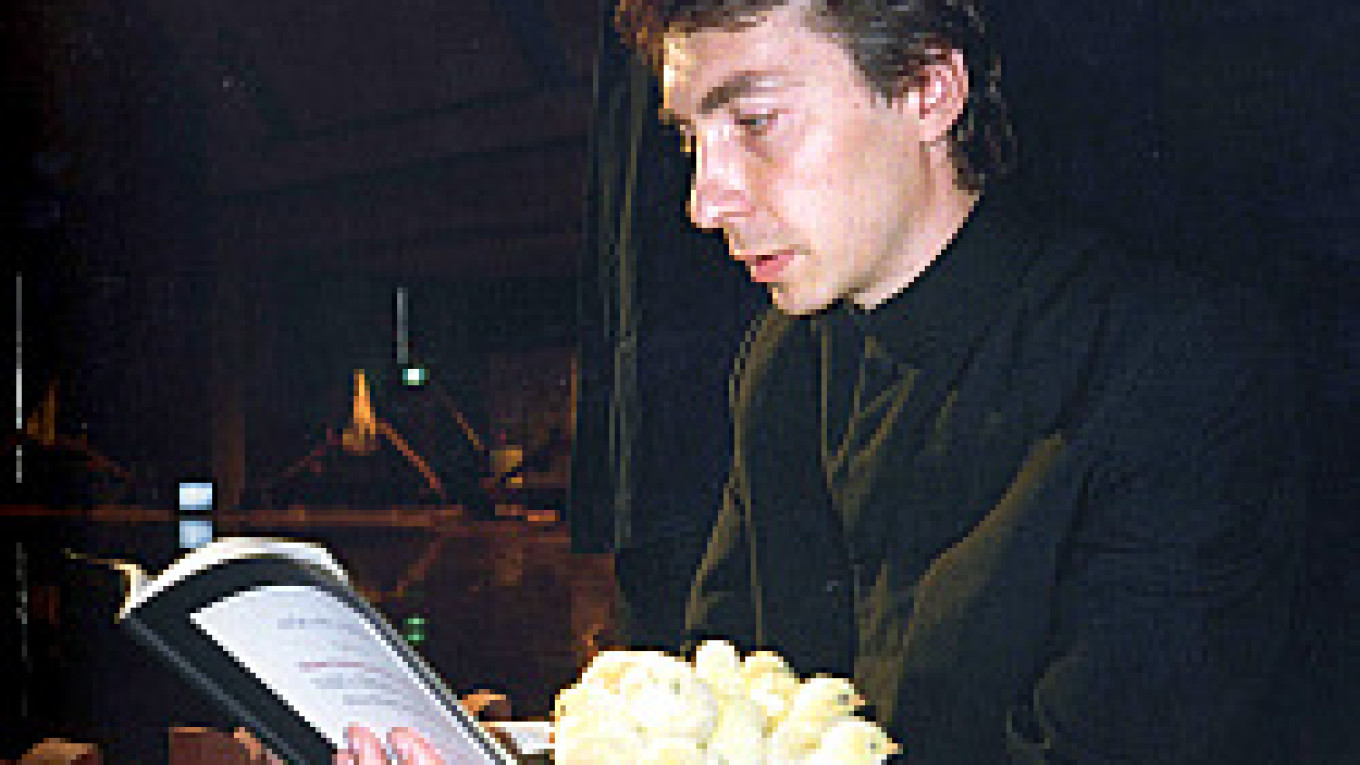
After Brodsky's death, his friends established a foundation called the Joseph Brodsky Memorial Fellowship Fund and the Russian Academy began to function, at first sending writers to Rome, and then including visual artists. Last week, two new laureates of the Brodsky Memorial Fellowships were announced: poet Nikolai Baytov and artist Vadim Zakharov, pictured above.
Baytov, a computer scientist by training, started his literary and publishing activities in the 1980s. He has published several collections of poetry and short prose and has been compared to such masters of intellectual fiction as Jorge Luis Borges and Umberto Eco. Zakharov has been active on the Moscow conceptualist scene since the late 1970s. Dividing his time between Moscow and Germany, the artist includes numerous homages to Dante, Miguel de Cervantes, Marcel Proust, Paul Cezanne and other European masters in his work.
The members of the jury were indeed internationally acclaimed and impartial: Mikhail Aizenberg, a brilliant poet and essayist; Natalya Gorbanevskaya, a poet with a long history of human rights campaigning back in the Soviet times (which cost her several years of forced psychiatric treatment), who now lives in Paris; and sociologist Boris Dubin, a translator of seminal European culturological treatises.
The laureates' tenure in Rome will be only three months, instead of a year as Brodsky hoped, and the Russian Academy still doesn't have a building of its own; nevertheless, the links that were, in the poet's words, "artificially severed," are being reconnected -- and that's a start.
A Message from The Moscow Times:
Dear readers,
We are facing unprecedented challenges. Russia's Prosecutor General's Office has designated The Moscow Times as an "undesirable" organization, criminalizing our work and putting our staff at risk of prosecution. This follows our earlier unjust labeling as a "foreign agent."
These actions are direct attempts to silence independent journalism in Russia. The authorities claim our work "discredits the decisions of the Russian leadership." We see things differently: we strive to provide accurate, unbiased reporting on Russia.
We, the journalists of The Moscow Times, refuse to be silenced. But to continue our work, we need your help.
Your support, no matter how small, makes a world of difference. If you can, please support us monthly starting from just $2. It's quick to set up, and every contribution makes a significant impact.
By supporting The Moscow Times, you're defending open, independent journalism in the face of repression. Thank you for standing with us.

Remind me later.