

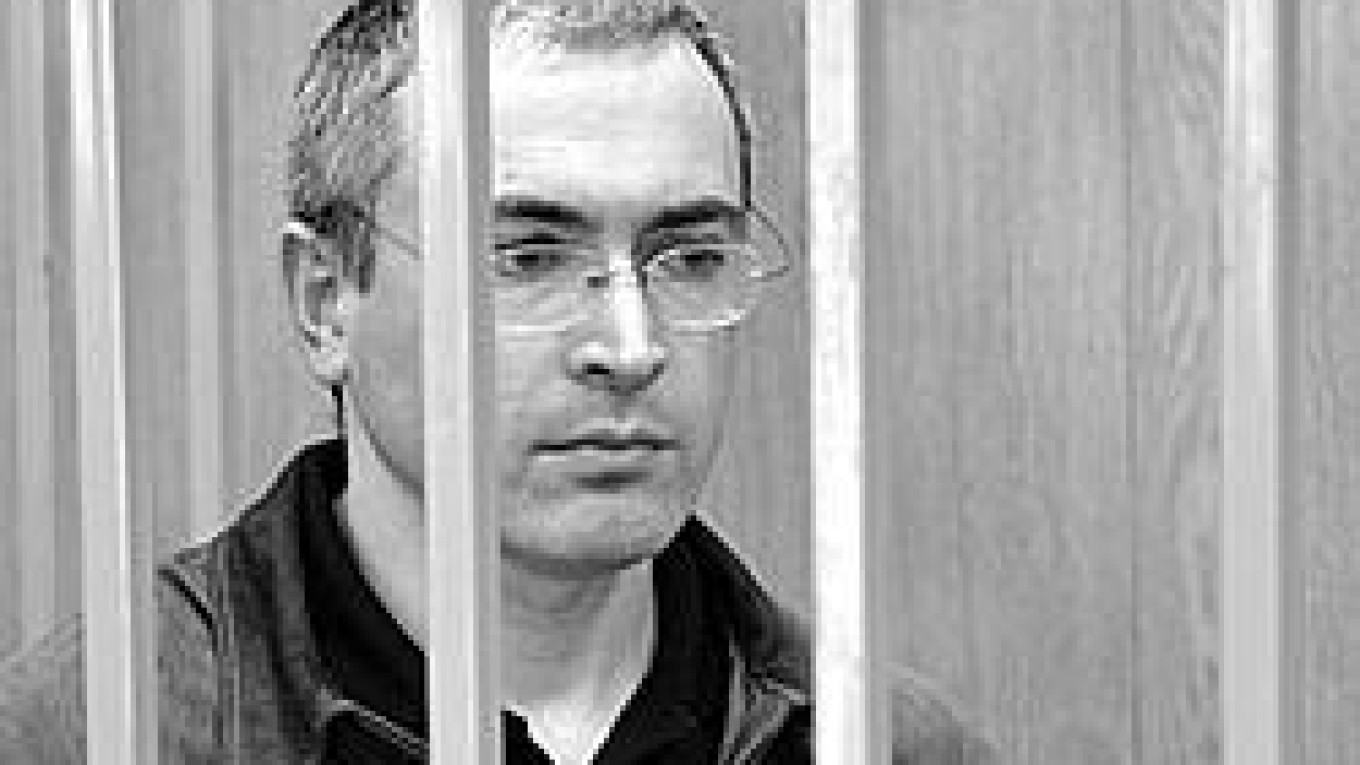
Of course, there is nothing uniquely Russian about being repressed by the state, which has been a noble theme in world literature since at least Ovid's time. In Russia, however, it seems to have become almost a necessary stage in the development of literary talent. Alexander Pushkin, the father of modern Russian literature, spent most of his adulthood under state surveillance; Mikhail Lermontov, his successor in poetry, was exiled to the Caucasus. As a young man, Fyodor Dostoevsky was sentenced to death. He was awaiting execution when his punishment was suddenly commuted to penal labor, a surprise that spared his life but left the future writer spiritually scarred for the rest of his life. Later, he became one of the first authors to turn his prison experiences into literature with "Memoirs From the House of the Dead."
After the Revolution, things only got worse. The number of writers forced to leave Russia was vast; Vladimir Nabokov was one of them. In 1921, Nikolai Gumilyov -- a poet, socialite and African explorer -- was executed by firing squad for participating in an alleged anti-Soviet conspiracy. Osip Mandelstam, another poetic genius of the 20th century, was sentenced twice: first in 1934 for writing an epigram against Stalin, then again in 1938, leading to his nearly immediate death. Even in the seemingly more lenient postwar period, poet Anna Akhmatova and satirist Mikhail Zoshchenko were castigated by the authorities and lost almost all means of subsistence.
One of the first authors to bring the prison camp topic back into literature was Alexander Solzhenitsyn with the publication of his short novel, "One Day in the Life of Ivan Denisovich," in 1962. Another future Nobel laureate, Joseph Brodsky, was sentenced to forced labor in a remote northern village in 1964 for "parasitism." "I worked," he said in his defense. "I wrote poetry." Meanwhile, Akhmatova -- who kept a close eye on the young poet and understood how lucky he was to be exiled just temporarily -- commented, "It's quite a biography they're writing for our Redhead."
Now, the sentencing of Khodorkovsky makes one wonder if it will have any effect on literature. The ex-oligarch is known for his support of culture; his Open Russia foundation sponsors Russia's Booker prize. During the trial, he was writing a column for the newspaper Bolshoi Gorod, which was praised by many for its depth and style. Perhaps we are witnessing the first stages of a successful literary career.
A Message from The Moscow Times:
Dear readers,
We are facing unprecedented challenges. Russia's Prosecutor General's Office has designated The Moscow Times as an "undesirable" organization, criminalizing our work and putting our staff at risk of prosecution. This follows our earlier unjust labeling as a "foreign agent."
These actions are direct attempts to silence independent journalism in Russia. The authorities claim our work "discredits the decisions of the Russian leadership." We see things differently: we strive to provide accurate, unbiased reporting on Russia.
We, the journalists of The Moscow Times, refuse to be silenced. But to continue our work, we need your help.
Your support, no matter how small, makes a world of difference. If you can, please support us monthly starting from just $2. It's quick to set up, and every contribution makes a significant impact.
By supporting The Moscow Times, you're defending open, independent journalism in the face of repression. Thank you for standing with us.

Remind me later.