

It was early June 1989. Vaclav Havel had been released from jail only days before, yet he was full of what now seems an almost prophetic certainty. Thousands of his countrymen had written letters petitioning for his release at a time when declaring solidarity with Czechoslovakia’s most famous dissident was a clear and dangerous act of civil disobedience.
“We Czechs are finally finding our courage,” he said, as if sensing the people’s new readiness to confront the guardians of their Communist police state. “Sooner or later, they will make a mistake, perhaps by beating up some people. Then 40,000 people will fill Wenceslas Square!”
Four months later, one week after people power brought down the Berlin Wall, revolution came to Prague. Students organized a small rally in the old Vysehrad cemetery, the burial grounds of composers Bedrich Smetana and Antonin Dvorak in a fortress overlooking the city. As they marched toward Wenceslas Square, bearing candles, riot police cut them off, and many men, women and children were brutally beaten.
Those who fell were kicked and clubbed where they lay. The night of Nov. 17 — “Black Friday” as it quickly came to be known — set Czechoslovakia alight. The next day, thousands of Czechs turned out in the streets. As Havel had foreseen, his job (and that of the small circle of dissidents surrounding him) would then be to fan that spark, stoke the fire and guide it.
Twenty years later, we can only marvel at how brilliantly they performed. Prague was 1989’s happiest revolution, a delirium of good feelings. The Velvet Revolution was sheer theater, a geopolitical spectacular that unfolded in vignettes, scenes and acts, with cameo appearances by famous faces from the past, including Prague Spring reformer Alexander Dubcek and U.S. singer Joan Baez.
Dissidents just released from jail and eminent emigres suddenly returned home. The main stage was Prague, impossibly beautiful, impossibly romantic, the city of a hundred spires, tawny ochre houses and churches, shifting late afternoon light, moonlight on the Vltava.
The audience, of course, was the world. We watched it happen on television. We saw the people, assembled in Wenceslas Square, hundreds of thousands of them, jingling their keys and ringing hand bells in their good-humored farewell to communism: “Your time is up.” It was so pure, so clean. It was the climax of the story, a turning point in history, cliche transmuted into truth.
We knew our heroes would win. Everyone swept up by it felt young again, as though the world had suddenly, mysteriously, euphorically been made new. Disney could not have worked a more seductive transformation. Here were our children, taking to the streets. Here were our children, bloodied and beaten. Here were our children, finally, victorious.
It helped that this revolution could be counted in days, a miracle of compression. Once confronted, the Communists almost ran from power. Its denouement came on Dec. 29, the day Havel became a free Czechoslovakia’s new president.
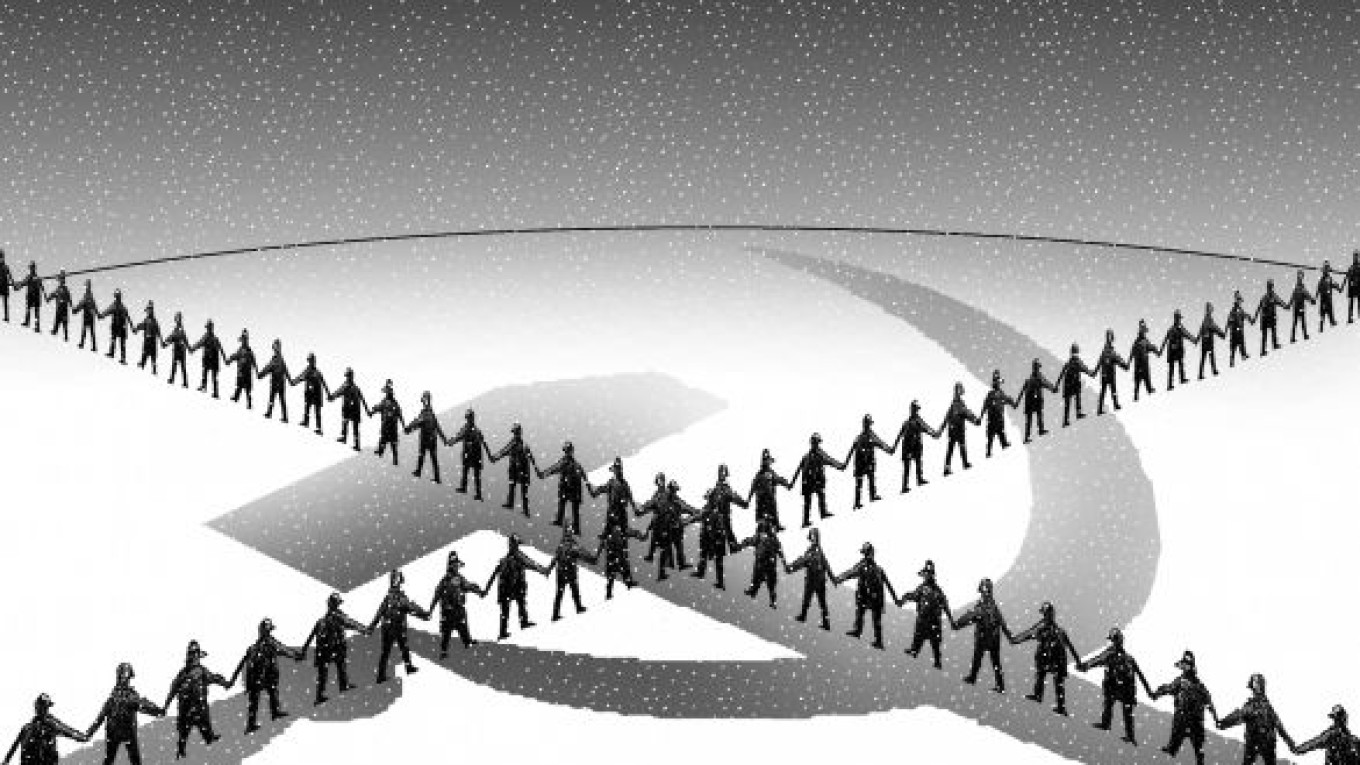
For me, the decisive moment was on Day 11, on Nov. 28. Half a million people had gathered in Prague’s Letna Park to hear Havel speak. To this day, I can hardly remember it without tears. As Havel finished, a light snow began to fall, and as if on cue his listeners took their places. One by one, in single file, hand-in-hand, they began to march toward Wenceslas Square, more than a mile and a half away, following a rickety horse-drawn cart bedecked with the wings of angels.
It was so very gentle, so strong and irresistible. Slowly, the procession wound its way along paths through Letna’s woods, now covered in white. Slowly, it snaked down the medieval streets behind Prague Castle and into the square in front of the president’s palace. There were no chants, no cheers and no hints of confrontation. Just the unbroken line of people, holding hands and passing silently in the white darkness, the line looping back and forth outside the forbidding gates.
From the castle, the line wound down the steep hills of Mala Strana, past the great Baroque cathedral, its ornate spires lighted in the snowy night, down Mostecka Street with its cafes and restaurants, across the shimmering Vltava at Charles Bridge, with its 400-year-old statues of Czech kings and religious saviors and through the narrow streets of the Old Town. The line of people finally made its way to Wenceslas Square, where I watched three policemen join the procession, their caps set at jaunty angles, dancing along in tall black leather boots.
Still the procession came, weaving through the snow, everyone swinging their arms, skipping, happy, joyous. The first of the marchers had reached the square. The last still waited patiently in the park. Hand-in-hand, they bisected the city and drew a line. Here, the people stood on one side, and their oppressors stood on the other. This was the moment. Everyone had to choose.
From high above the city, I looked out at these people dancing through the streets. Prague lay away in the distance, lighted and luminous in the snow. Never in my life have I seen anything so beautiful. I doubt I ever will again.
Michael Meyer, Newsweek’s bureau chief for Eastern Europe in 1989, is the author of “The Year That Changed the World.” © Project Syndicate
A Message from The Moscow Times:
Dear readers,
We are facing unprecedented challenges. Russia's Prosecutor General's Office has designated The Moscow Times as an "undesirable" organization, criminalizing our work and putting our staff at risk of prosecution. This follows our earlier unjust labeling as a "foreign agent."
These actions are direct attempts to silence independent journalism in Russia. The authorities claim our work "discredits the decisions of the Russian leadership." We see things differently: we strive to provide accurate, unbiased reporting on Russia.
We, the journalists of The Moscow Times, refuse to be silenced. But to continue our work, we need your help.
Your support, no matter how small, makes a world of difference. If you can, please support us monthly starting from just $2. It's quick to set up, and every contribution makes a significant impact.
By supporting The Moscow Times, you're defending open, independent journalism in the face of repression. Thank you for standing with us.

Remind me later.