

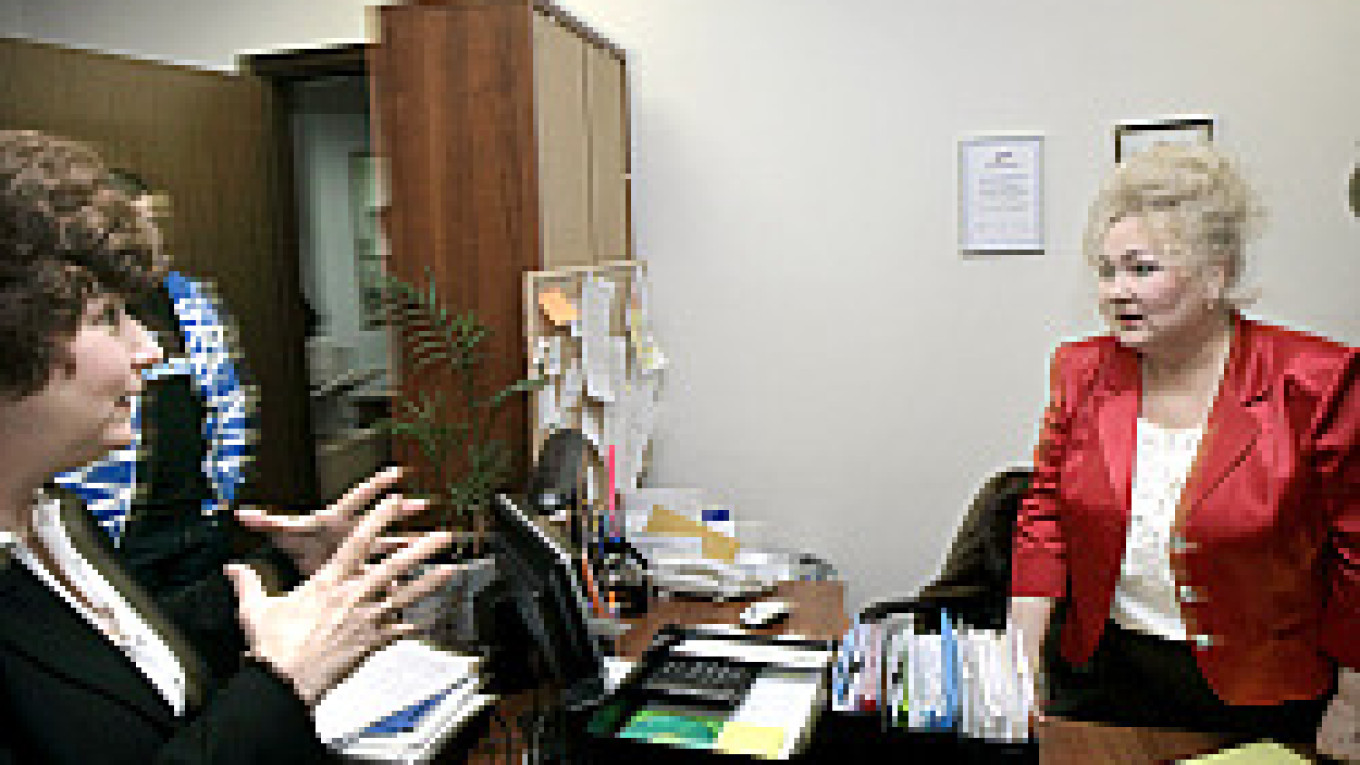
"I hope the decision will become a step toward the independence of Russian judges," Kudeshkina said at a Moscow news conference attended by several other judges who left their posts under similar circumstances.
The court ruled 4-3 that Kudeshkina's dismissal violated Article 10 -- freedom of expression -- of the European Convention on Human Rights.
Kudeshkina was dismissed in 2004 after publicly complaining of facing pressure from superiors in the case of Interior Ministry investigator Pavel Zaitsev, who headed a fraud probe connected to the Tri Kita furniture store.
Kudeshkina said Thursday that Moscow City Court's chief judge, Olga Yegorova, had pressed her to falsify documents in the Zaitsev case and halt the proceedings.
Yegorova, who remains the head of the city court, could not be reached for immediate comment Thursday. She has denied wrongdoing in the past.
The Strasbourg court said Kudeshkina's dismissal was too severe a penalty for her statements.
Kudeshkina said Thursday that her family has been under pressure from the Prosecutor General's Office since she took her case to Strasbourg about 18 months ago.
She and her lawyers believe that the government will appeal to the Grand Chamber of the Strasbourg court, which consists of 17 judges.
"And we will be even pleased about an appeal," said Karina Moskalenko, Kudeshkina's lawyer in the court, speaking about the importance of the case for the whole Russian judiciary.
"Many judges are frightened," Kudeshkina said. "I know many good judges who have quit the Moscow City Court because of Yegorova and the constant pressure."
The government has three months to decide whether it will appeal, said Russia's envoy to the Strasbourg court, Georgy Matyushkin, Interfax reported.
Kudeshkina said she hoped to be offered her job back. "I'm going to continue my work as a judge if Russia's Supreme Court rules to restore me to my position," she said.
A Message from The Moscow Times:
Dear readers,
We are facing unprecedented challenges. Russia's Prosecutor General's Office has designated The Moscow Times as an "undesirable" organization, criminalizing our work and putting our staff at risk of prosecution. This follows our earlier unjust labeling as a "foreign agent."
These actions are direct attempts to silence independent journalism in Russia. The authorities claim our work "discredits the decisions of the Russian leadership." We see things differently: we strive to provide accurate, unbiased reporting on Russia.
We, the journalists of The Moscow Times, refuse to be silenced. But to continue our work, we need your help.
Your support, no matter how small, makes a world of difference. If you can, please support us monthly starting from just $2. It's quick to set up, and every contribution makes a significant impact.
By supporting The Moscow Times, you're defending open, independent journalism in the face of repression. Thank you for standing with us.

Remind me later.