

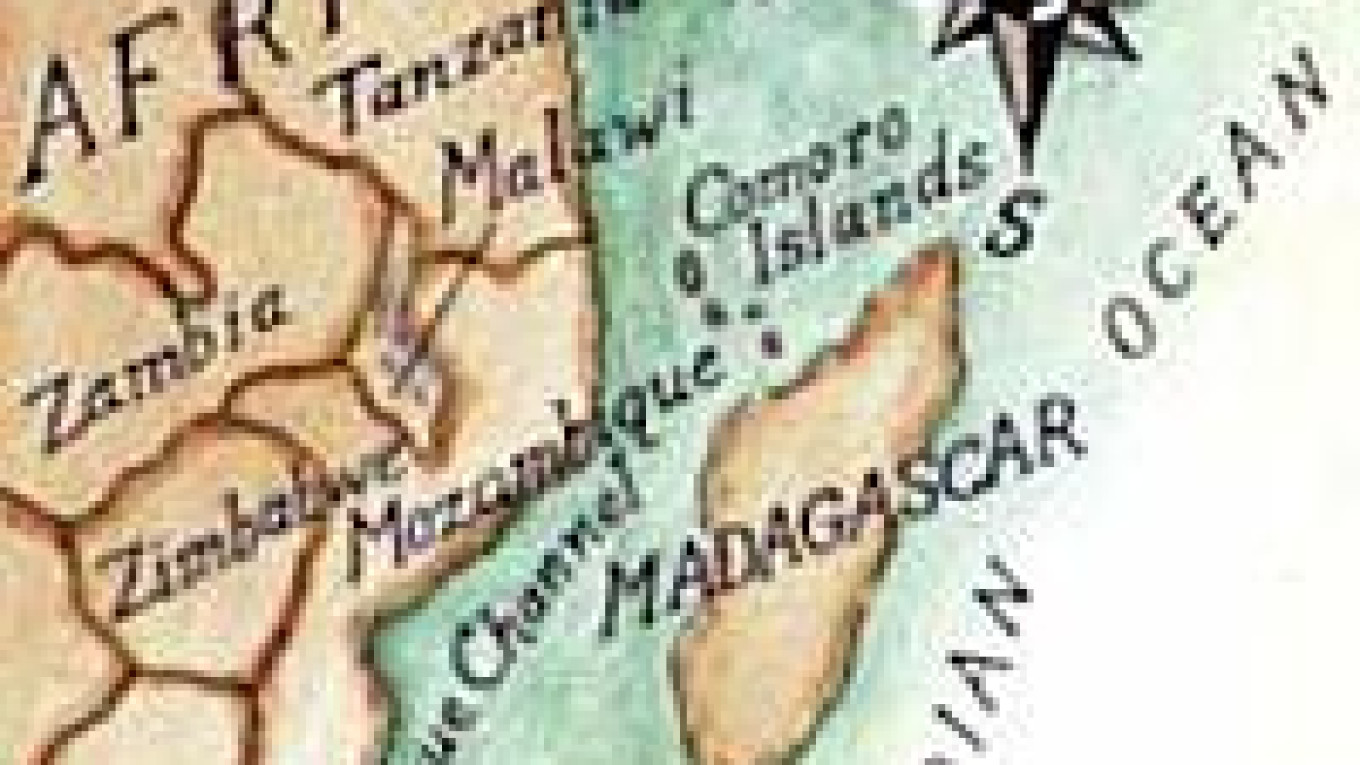
True, openness to other cultures sometimes gets forgotten in the search for national identity, but thankfully there are people like Igor Sid who won't let it expire. Just the other day, he and his colleagues sent out a notice for an upcoming book of Russian texts about the island of Madagascar.
Sid, whose real last name is Sidorenko, is a marine biologist from the Crimea. In his youth, he participated in several academic expeditions as a researcher and nature artist, sailing the southern seas aboard Soviet research ships to exotic African destinations, Madagascar among them. These days, he is an active player on the literary scene, moonlighting as the creator and manager of Moscow's Crimean Club and the coordinator of the Internet resource Africana.ru. A book about Madagascar seems to fit right in.
But Sid takes the concept of Madagascar much further than its watery borders. Admission requirements aren't limited to mention of the island itself or its inhabitants. Anything even remotely connected with the idea is fair game, from the giant Epiornis bird of lore (or even its fairy tale counterpart, the Roc) to Madagascan lemurs and kalanchoe plants.
There's a precedent for the project: Early 20th-century poet Nikolai Gumilyov, who was probably the first Russian traveler to visit many African countries, wrote about Madagascar, as did Vladimir Nabokov in his novel "The Defense." But one of the most striking references to the African island comes from a scene in "War and Peace." The irrepressible heroine, Natasha Rostova, is listening to her governesses compare living costs in Moscow and Odessa when she suddenly stands up and says, "The island of Madagascar. Ma-da-ga-scar." Without another word, she leaves the room.
The idea of a Russian book about Madagascar is as absurd and brilliant as Natasha's remark.
A Message from The Moscow Times:
Dear readers,
We are facing unprecedented challenges. Russia's Prosecutor General's Office has designated The Moscow Times as an "undesirable" organization, criminalizing our work and putting our staff at risk of prosecution. This follows our earlier unjust labeling as a "foreign agent."
These actions are direct attempts to silence independent journalism in Russia. The authorities claim our work "discredits the decisions of the Russian leadership." We see things differently: we strive to provide accurate, unbiased reporting on Russia.
We, the journalists of The Moscow Times, refuse to be silenced. But to continue our work, we need your help.
Your support, no matter how small, makes a world of difference. If you can, please support us monthly starting from just $2. It's quick to set up, and every contribution makes a significant impact.
By supporting The Moscow Times, you're defending open, independent journalism in the face of repression. Thank you for standing with us.

Remind me later.