

In Russia, people perceive the United States as a country at war, though few Americans would be reminded of Iraq if they didn't take a look at the newspapers. The reverse is also true. The war in Chechnya quickly springs to Western minds in connection with Russia, though over here we tend to forget about it until a terrorist attack kicks us right in the face.
But Russia is at war, and memoirs of recent Chechen campaigns are fast becoming a fact of literature. To cite just one example, recently linked to Maxim Moshkov's widely read online archive Lib.ru, a site called "Art of War" gathers military-themed fiction and nonfiction together.
As always with accounts of recent warfare, emotions overwhelm literary merit. But common themes do emerge: death, blood, mud, angst and other one-syllable horrors, made worse by a fuzzy chain of command, confusion and corruption. There are no submissions from the Chechen point of view. Still, the archive is a candid reminder that nothing even remotely close to the Geneva Conventions has been adopted by either side.
"The Chechen snipers turned out to be kids, no more than 13 to 15," writes Vyacheslav Mironov, one of the most observant authors in the collection, and a former lieutenant colonel in the Russian Army. "One of them was still alive and moaned, having lost his hand. He couldn't be expected to live, so I ordered my boys to finish him off." Also present is Arkady Babchenko's short-story collection, "Ten Episodes of War" (Desyat Serii o Voine), which received an award for courage in literature from the Debut Prize committee in 2001.
Just as with Afghanistan some 20 years ago, none of the writers seems to understand why Russia is fighting. For territory? To snuff out separatism? For oil? Politicians may think in these categories, but soldiers rarely do. Committing wartime memories to the page is a far better thing than taking out one's trauma on family or passersby. But it would be even better not to have had to experience the trauma in the first place.
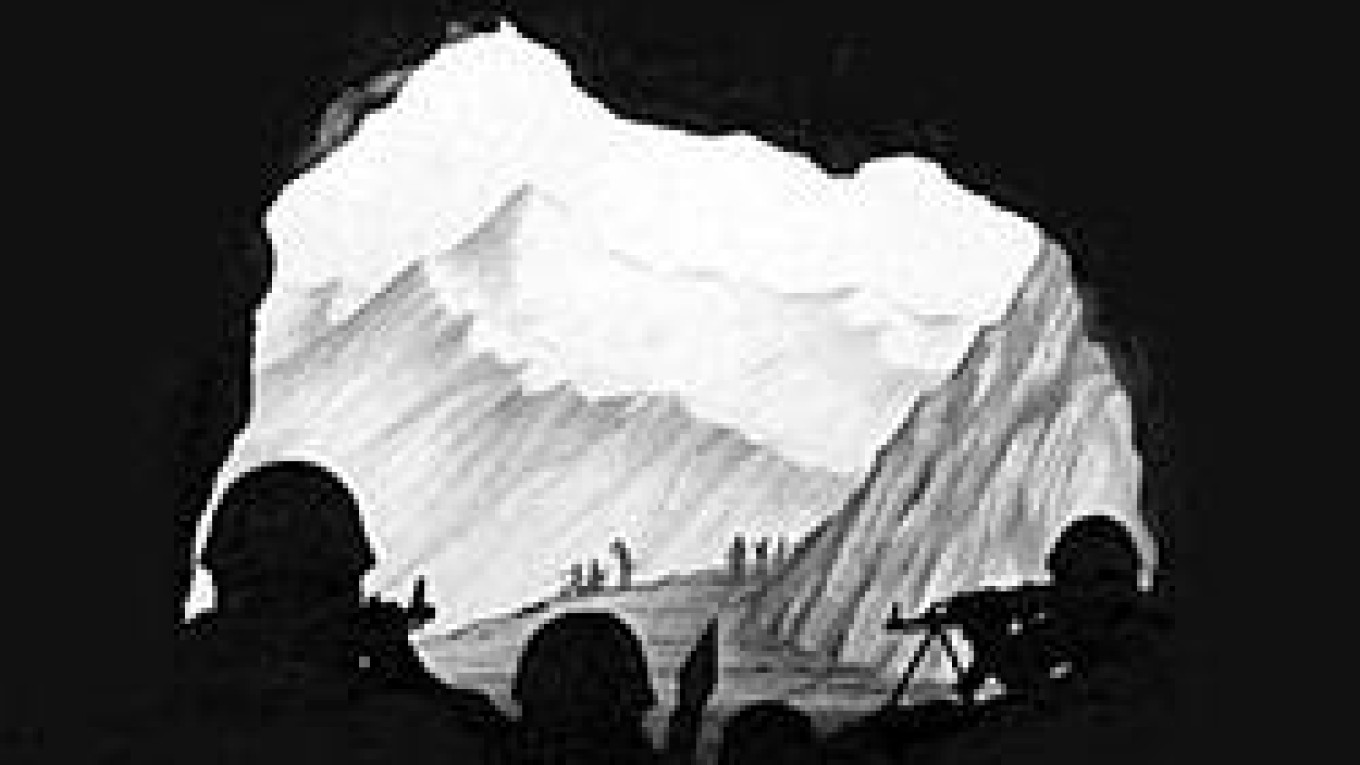
Sergei Vizitov's illustration "The Ambush," from www.artofwar.ru.
A Message from The Moscow Times:
Dear readers,
We are facing unprecedented challenges. Russia's Prosecutor General's Office has designated The Moscow Times as an "undesirable" organization, criminalizing our work and putting our staff at risk of prosecution. This follows our earlier unjust labeling as a "foreign agent."
These actions are direct attempts to silence independent journalism in Russia. The authorities claim our work "discredits the decisions of the Russian leadership." We see things differently: we strive to provide accurate, unbiased reporting on Russia.
We, the journalists of The Moscow Times, refuse to be silenced. But to continue our work, we need your help.
Your support, no matter how small, makes a world of difference. If you can, please support us monthly starting from just $2. It's quick to set up, and every contribution makes a significant impact.
By supporting The Moscow Times, you're defending open, independent journalism in the face of repression. Thank you for standing with us.

Remind me later.