

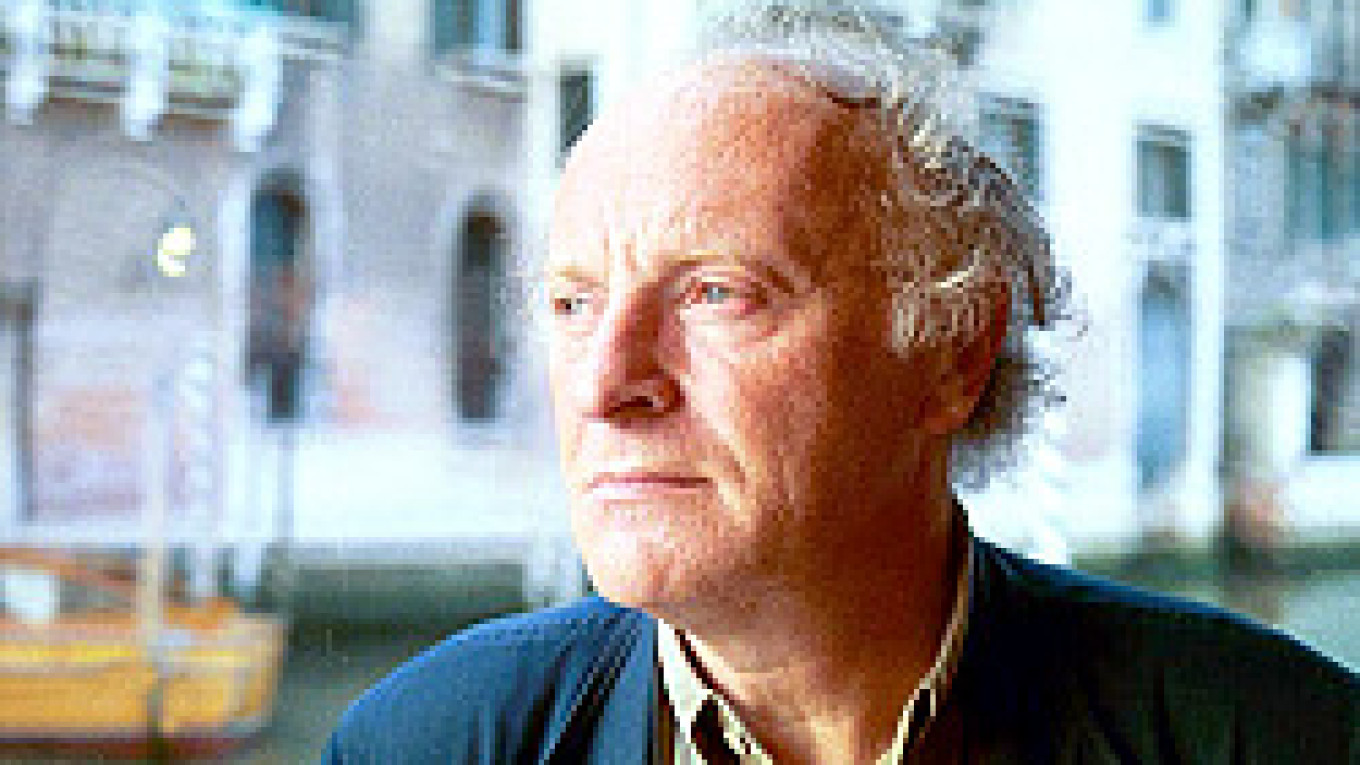
Brodsky was singled out as a "parasite" under a decree targeting "persons avoiding socially beneficial labor and leading an antisocial, parasitic form of life." The proceedings received some publicity at the time -- with many Leningrad newspapers applauding the guilty verdict -- but of course, the facts were carefully doctored, and the only factual account of the trial was a bootleg record kept by journalist Frida Vigdorova (until the judge noticed and ordered her to stop). This record, which quickly became a samizdat hit, makes an eerie impression: It's as if everyone in the courtroom is operating in a totally different reality than the poet himself. Several times, accused of freeloading, Brodsky stubbornly repeats: "I worked. I wrote poetry." In the end, the punishment was light. Brodsky was sentenced to exile in a northern village, and his term was later reduced. Some claimed this leniency was the result of protests by several prominent Soviet writers; others thought that negative publicity in the West led the authorities to back down.
Now it seems that things were not so straightforward. Last month, historian Olga Edelman published a new account of the trial in the journal Novy Mir, based on recently discovered archival materials. The most fascinating document in the collection is a memorandum compiled soon after the trial by a special governmental interagency committee and addressed to prosecutors, the KGB and the Supreme Court. The memo basically says that Brodsky was a law-abiding citizen, didn't write any anti-Soviet poetry and his "inflated literary ego and apolitical stance" did not constitute any felony under the law.
As it turns out, Brodsky's case was the initiative of local authorities; the poet was a pawn in an intricate KGB game at the time of the uneasy transfer of power from Khrushchev to Brezhnev. What was typical about it, though, was how eagerly his fellow writers and the general public supported the accusations. Most of the time, the Soviet authorities could count on unfeigned popular support.
The trial ended up playing an important role in Brodsky's future career. The poet himself avoided talking about it; in one interview, when asked about the trial, he only said, "It was a kind of zoo." It also prompted a nice bit of creative copy-writing. One glasnost-era poster took a photo of Brodsky receiving the 1987 Nobel Prize for Literature from the king of Sweden, and juxtaposed it with a huge, post-trial headline from a Soviet newspaper of 1964: "The Parasite Gets His Due."
A Message from The Moscow Times:
Dear readers,
We are facing unprecedented challenges. Russia's Prosecutor General's Office has designated The Moscow Times as an "undesirable" organization, criminalizing our work and putting our staff at risk of prosecution. This follows our earlier unjust labeling as a "foreign agent."
These actions are direct attempts to silence independent journalism in Russia. The authorities claim our work "discredits the decisions of the Russian leadership." We see things differently: we strive to provide accurate, unbiased reporting on Russia.
We, the journalists of The Moscow Times, refuse to be silenced. But to continue our work, we need your help.
Your support, no matter how small, makes a world of difference. If you can, please support us monthly starting from just $2. It's quick to set up, and every contribution makes a significant impact.
By supporting The Moscow Times, you're defending open, independent journalism in the face of repression. Thank you for standing with us.

Remind me later.