

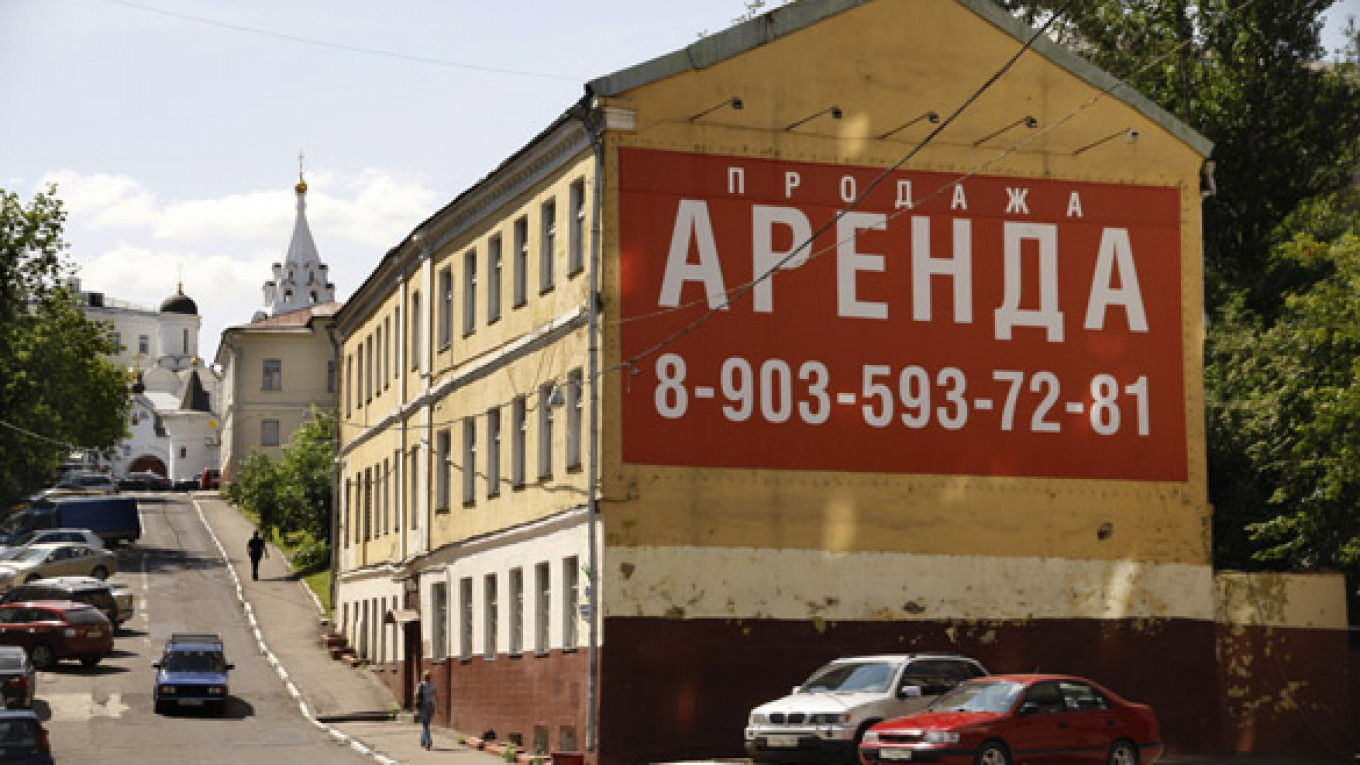
Rental prices in Moscow grew as much as 23 percent in August, the DOKI rental agency said on its web site, but there will be few tenants willing to rent at such high prices.
“The prices have grown because of the expectations of new potential tenants such as students and labor migrants coming to Moscow in August,” the agency’s chief executive, Valery Barenets, said on its web site last week.
The rental price of a one-room, economy-class apartment rose 13 percent to 24,900 rubles ($790) a month in August, DOKI said. Business-class one-room apartments were up 14.3 percent to 40,000 rubles, while elite one-room apartments soared 23 per cent to 70,000 rubles a month.
The cheapest housing was in the Perovo region, with one-room apartments averaging 17,000 rubles a month, while the most expensive one-room apartments were located near Pushkinskaya, where they averaged 238,000 rubles a month.
“We have seen a 5 to 10 percent growth in rental prices in Moscow,” said Oleg Repchenko, head of IRN, a real estate analytical center. “But we see no rush on the customers’ side, so we expect the market to roll back its positions over the next two months.” In previous years, seasonal growth in rental prices seen during the fall was 5 percent to 20 percent, IRN said.
“Students and migrants who came to Moscow this fall won’t be able to afford renting at higher prices,” Repchenko said. “So the landlords will have to pull the prices back down.”
DOKI spokesman Ruslan Barabash agreed that the higher-priced apartments might not find many takers.
“We expect the prices to retreat by at least half of their current growth rate by mid-September,” he said, adding that new residents in the capital preferred to split the rent with their friends or colleagues.
A Message from The Moscow Times:
Dear readers,
We are facing unprecedented challenges. Russia's Prosecutor General's Office has designated The Moscow Times as an "undesirable" organization, criminalizing our work and putting our staff at risk of prosecution. This follows our earlier unjust labeling as a "foreign agent."
These actions are direct attempts to silence independent journalism in Russia. The authorities claim our work "discredits the decisions of the Russian leadership." We see things differently: we strive to provide accurate, unbiased reporting on Russia.
We, the journalists of The Moscow Times, refuse to be silenced. But to continue our work, we need your help.
Your support, no matter how small, makes a world of difference. If you can, please support us monthly starting from just $2. It's quick to set up, and every contribution makes a significant impact.
By supporting The Moscow Times, you're defending open, independent journalism in the face of repression. Thank you for standing with us.

Remind me later.