

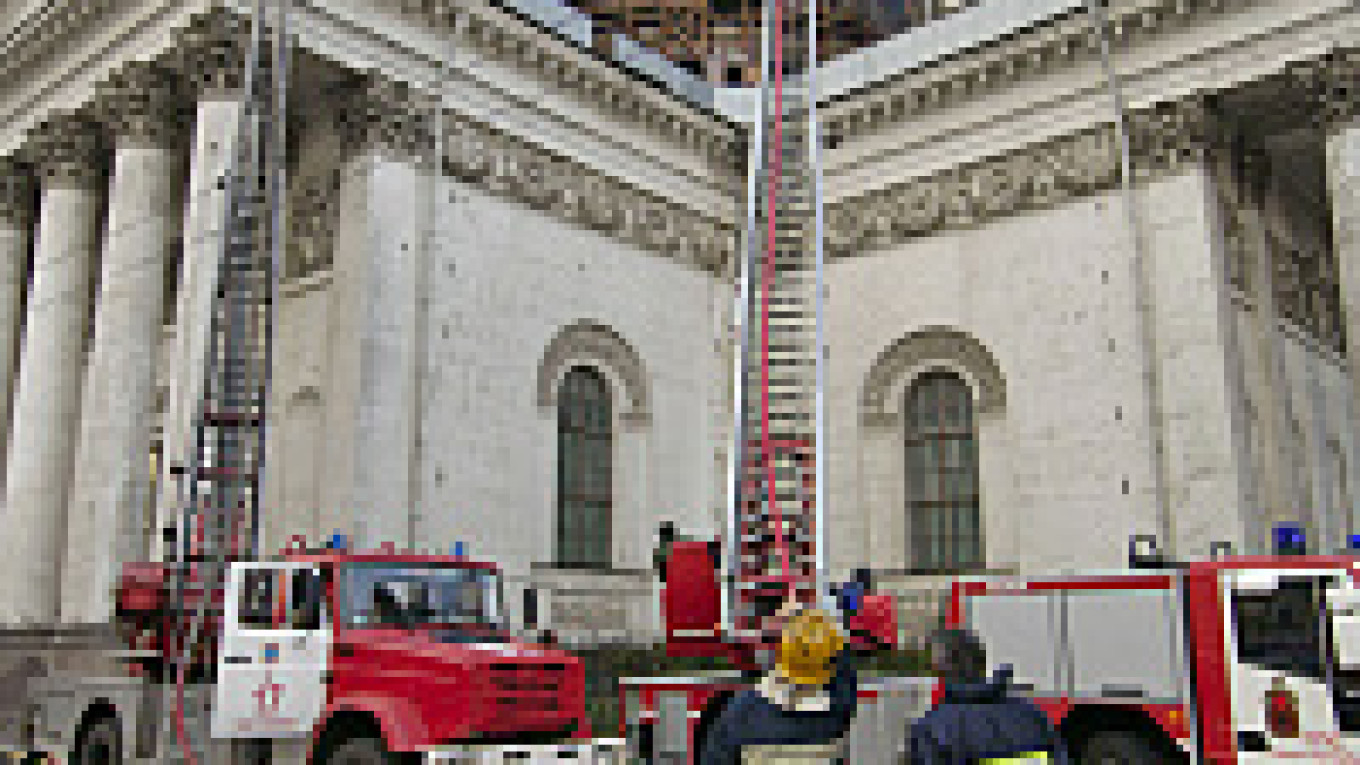
The blaze erupted in the early evening and burned through scaffolding outside the soaring blue central dome of the cathedral. The central dome collapsed, and one of four smaller cupolas surrounding it -- painted a striking light blue and in some cases spangled with gold stars -- was also destroyed by the fire, St. Petersburg emergency department spokeswoman Lyudmila Rubasova said.
There were no reports of injuries, she said.
After the main dome collapsed, flames leaped up from the rim where it had stood.
Firefighters battled to save the other three domes as emergency workers and church employees removed icons and other religious articles from the Russian Orthodox cathedral. A helicopter brought in to fight the blaze dumped water on the historic structure.
Before the fire, the domes towered from a solid base marked by classical columns.
The 80-meter-high cathedral was consecrated in 1835 and is considered an architectural monument. Rossia state television said the main dome was the second-largest wooden cupola in Europe, and Channel One said that writer Fyodor Dostoevsky had been married there. It was used as a storehouse during the Soviet era and was returned to the Russian Orthodox Church in 1990.
The cause of the fire was not immediately known, but acting St. Petersburg emergency department chief Leonid Belyayev said it apparently started on the scaffolding on the outside of the church, which was undergoing restoration.
He said the most valuable of the icons and other items from the cathedral had been saved, and that structural damage beneath the roof area was minor.
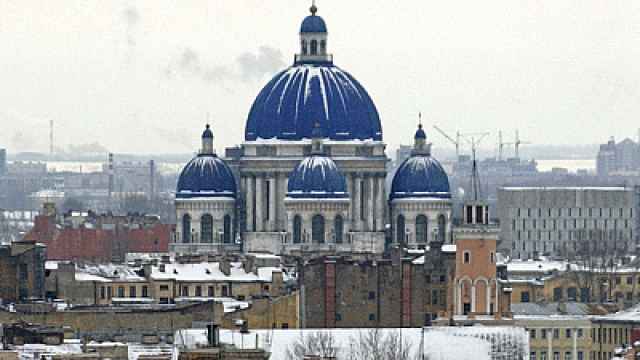 Dmitry Lovetsky / AP The Trinity Cathedral, pictured in February 2004, was consecrated in 1835. |  |
| |
A Message from The Moscow Times:
Dear readers,
We are facing unprecedented challenges. Russia's Prosecutor General's Office has designated The Moscow Times as an "undesirable" organization, criminalizing our work and putting our staff at risk of prosecution. This follows our earlier unjust labeling as a "foreign agent."
These actions are direct attempts to silence independent journalism in Russia. The authorities claim our work "discredits the decisions of the Russian leadership." We see things differently: we strive to provide accurate, unbiased reporting on Russia.
We, the journalists of The Moscow Times, refuse to be silenced. But to continue our work, we need your help.
Your support, no matter how small, makes a world of difference. If you can, please support us monthly starting from just $2. It's quick to set up, and every contribution makes a significant impact.
By supporting The Moscow Times, you're defending open, independent journalism in the face of repression. Thank you for standing with us.

Remind me later.