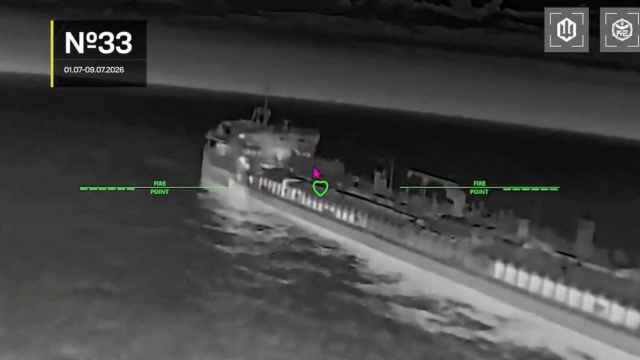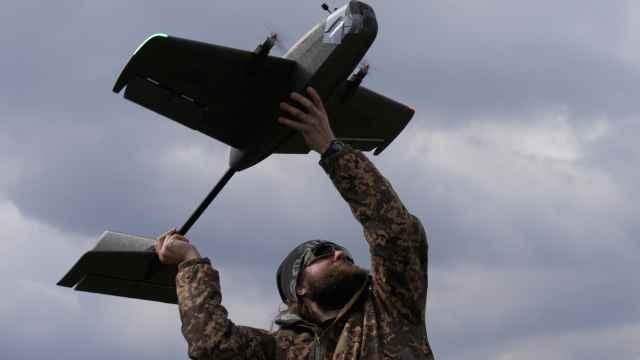

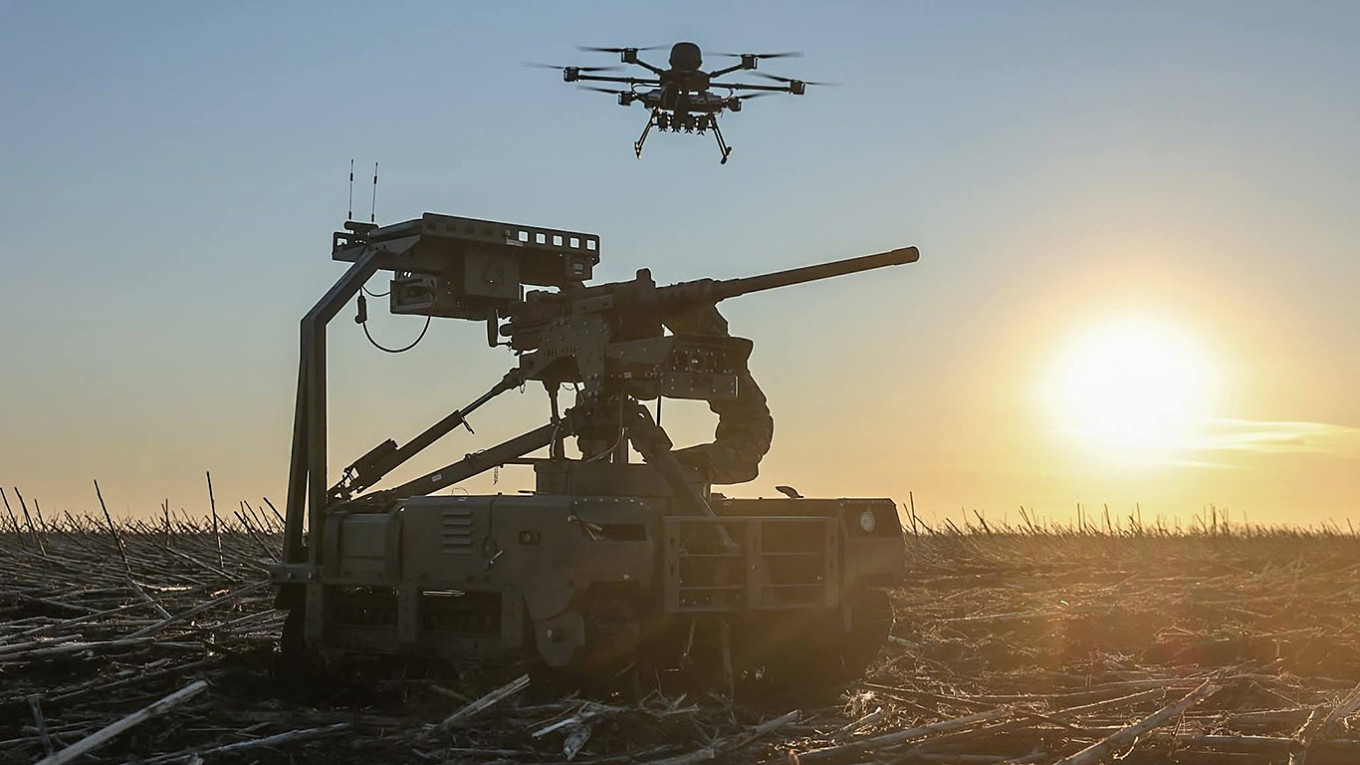
Ukrainian President Volodymyr Zelensky has said that Kyiv’s forces had, for the first time, captured a Russian position using drones and unmanned ground vehicles (UGVs) only.
“For the first time in the history of this war, an enemy position was taken exclusively by unmanned platforms — ground systems and drones,” he said on Monday, adding that unspecified number of Russian troops surrendered.
“The operation was carried out without infantry and without losses on our side,” Zelensky added.
While experts told The Moscow Times that Zelensky’s statement was mainly a PR move, it also highlights how unmanned systems “are already transforming both tactics and strategy” in the war.
“It was likely not a major breakthrough — probably the capture of a small, secondary position,” Ukrainian military analyst and former SBU security service officer Ivan Stupak told The Moscow Times. “However, the broader point is valid: we may be witnessing a significant shift.”
Zelensky did not provide exact details on the location or scale of the operation.
But “even if this involved capturing a small position, if it was done entirely without human involvement, then the next position that could be taken may be larger in scale,” Stupak said.
Moscow and Kyiv are locked in a competition for drone technology and electronic warfare, with unmanned forces becoming a key tactical tool on the battlefield and beyond as both sides face mounting manpower challenges.
“Ukraine has become something of a pioneer in the use, development and deployment of various types of drones on the battlefield,” Russian military expert Yury Fedorov said.
“In the second half of February and throughout March, Ukraine has sharply increased its use of aerial drones in combat along almost the entire front line,” Fedorov told The Moscow Times. “This, in turn, is reshaping the outlook for the armed confrontation between Russia and Ukraine and putting in question Russia’s ability to achieve its objectives by military means.”
In his statement, Zelensky said that Kyiv’s long-range drones can strike targets up to 1,750 kilometers from the border.
He added that Ukraine’s ground robotic systems had already carried out more than 22,000 missions on the front in three months.
“In other words, lives were saved more than 22,000 times when a robot went into the most dangerous areas instead of a warrior,” Zelensky added.
UGVs are remote-controlled or semi-autonomous machines used for tasks such as reconnaissance, mine-clearing and delivering supplies or explosives, reducing risks to troops on the front line.
Earlier Ukraine’s Commander-in-Chief Oleksandr Syrskyi said that robotic systems carried out 50% more missions last month than in February.
Zelensky on Tuesday visited Germany, his country's biggest military backer, which is increasingly seeking to tap Ukraine's battlefield expertise.
In February, he visited a drone production site in Munich established by a German and Ukrainian joint venture to produce equipment for Ukraine's military.
Germany's Quantum Systems and Ukraine's Frontline Robotics announced the joint venture, Quantum Frontline Industries (QFI), in December.
Quantum Systems said Tuesday that it would announce two new joint ventures with Ukrainian manufacturers during this week’s Berlin talks.
The Middle East war has also given Kyiv an opportunity to showcase its expertise to new partners, with Zelensky dispatching anti-drone specialists and personally visiting Middle Eastern countries targeted by attacks from Russian ally Iran.
In the longer term, Fedorov predicted that Russia would likely try to replicate the systems developed by Ukraine.
“One of Russia’s strengths — and this should not be overlooked — is its ability to rapidly scale up mass production, if it manages to copy or develop something similar domestically. But that takes time,” Fedorov said.
“If the Russians fail to turn the outcome of the summer campaign in their favor, they will have to confront a very serious question — what to do next,” he added.
AFP contributed reporting.
A Message from The Moscow Times:
Dear readers,
We are facing unprecedented challenges. Russia's Prosecutor General's Office has designated The Moscow Times as an "undesirable" organization, criminalizing our work and putting our staff at risk of prosecution. This follows our earlier unjust labeling as a "foreign agent."
These actions are direct attempts to silence independent journalism in Russia. The authorities claim our work "discredits the decisions of the Russian leadership." We see things differently: we strive to provide accurate, unbiased reporting on Russia.
We, the journalists of The Moscow Times, refuse to be silenced. But to continue our work, we need your help.
Your support, no matter how small, makes a world of difference. If you can, please support us monthly starting from just $2. It's quick to set up, and every contribution makes a significant impact.
By supporting The Moscow Times, you're defending open, independent journalism in the face of repression. Thank you for standing with us.

Remind me later.