

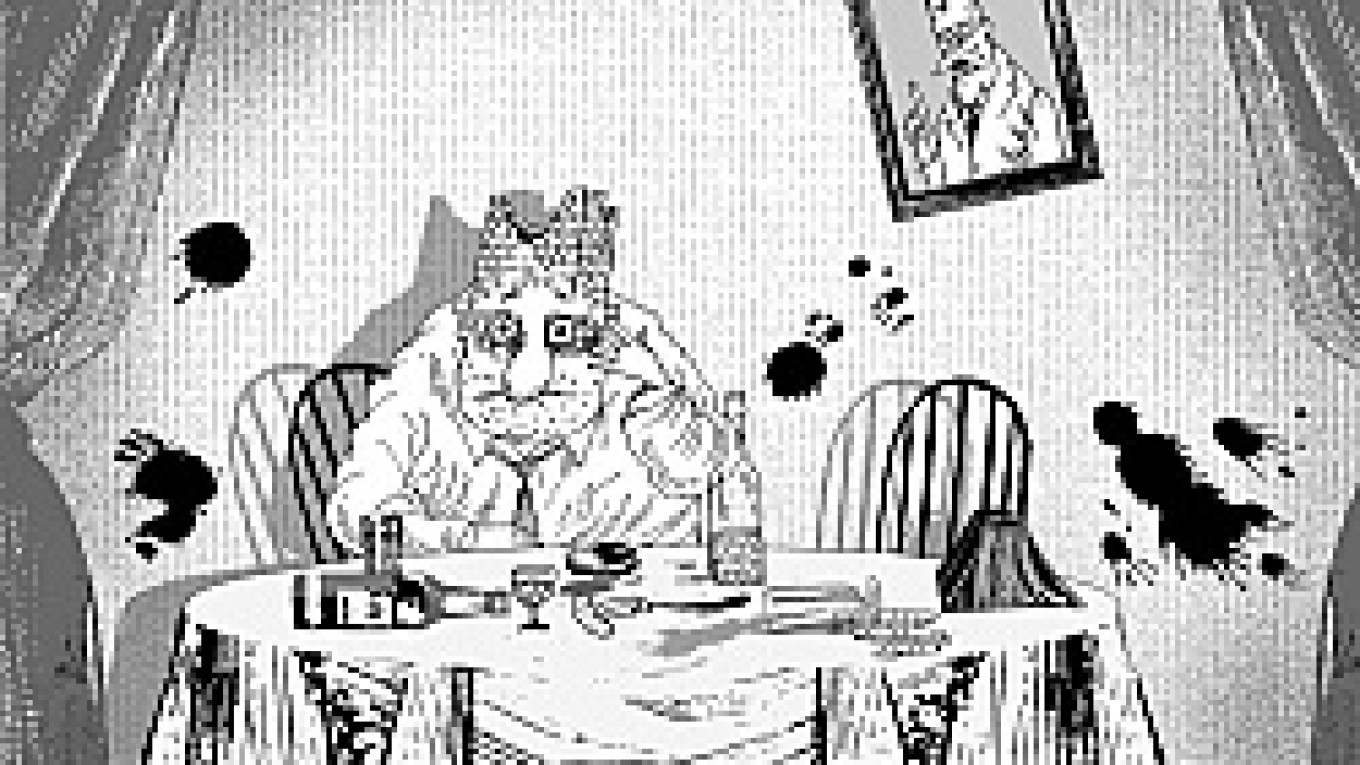
Besart Qerimi, a bartender from southwest London, has seen it all. A shot of tequila, two beers, three shots of vodka -- and you're already smashed. "Don't mix alcohol," he said. "If you start with Sambuca, tequila or vodka, you're sure to be messy drunk in a couple of hours."
"Choose your drink and stick with it for the night," said a 33-year-old Cambridge native, now a transplant Muscovite, who works as an executive headhunter.
"A hangover is essentially toxic poisoning," said Vyacheslav Davydov, a doctor from Preobrazheniye, an alcohol rehab clinic in Moscow. "People start to get severe hangovers when they become addicted or take so much alcohol at a time that the system is unable to deal with its effects."
Food in the stomach, type of drink and weight all affect the level of intoxication. According to the Institute of Alcohol Studies, based in Britain, a 45-kilogram man will have 22.5 milligrams of alcohol in his blood after a glass of wine while someone weighing 115 kilograms will have as little as 9 milligrams.
Scientists have proved that spacing out alcohol intake over a period of time has no effect on a hangover. But your mood while drinking can affect the way you feel in the morning. "Hangover effects may be more pronounced if you are in a highly emotional state," Institute director Andrew McNeill said, quoting a recent study. In general, it? takes as many hours as the number of drinks you had to completely burn up all the alcohol.
Some countries have long-standing traditions of drinking and dealing with its aftereffects. Russians, for example, tend to eat a lot while drinking. "Both quantity and quality of food are important," Davydov said. "I would recommend protein-rich food rather than something fatty." The Russian zakuska would normally be herring, pickles or sauerkraut. "In England, we don't have such a tradition of eating while drinking," the headhunter said. "I did recently experience eating and drinking vodka. It was herring on that browny bread. And actually, the combination worked very well."
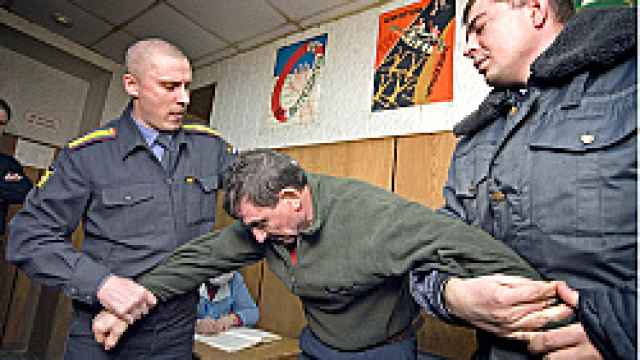 Vladimir Filonov / MT Two officers restraining a man at a sobering-up station in Moscow. Many people overindulge and have hangovers the next day. |  |
| |
The British have their own remedy. "It's a fairly normal situation for an Englishman to have a fry-up, some eggs and bacon the morning after," the headhunter said. "Your body is asking for the things it's lacking."
But doctors say the fry-up is only a step toward complete self-indulgence. "It contains a lot of fat, which is to be avoided unless it's combined with protein-rich foods and fluids," Davydov said.
Davydov said the severity of a hangover depends on the ingredients of the drink: "A hangover is all about the dissimilation of chemicals in the beverage." McNeill said drinks with the largest number of ingredients are likely to cause the severest hangovers. "Drinks such as whiskey or brandy will give you a really bad hangover unlike vodka, for example," he said. "Basically, the darker color your drink is, the heavier hangover you'll have."
In many cases, people who don't feel rough in the morning tend to become addicted, McNeill said. "A hangover is less of a deterrent for them," he said. Davydov, however, said that a hangover may push people to alcoholism. "This fear often causes drinking bouts," he said. "This is when 'hair of the dog' comes in. You feel bad in the morning, and you have a shot of vodka, then another one and then it goes on and on."
But is there really a foolproof remedy?
"A recent review in the British Medical Journal said there is no scientific proof that any cure can treat an alcohol-induced hangover," McNeill said.
But Dr. Davydov thinks he knows of one: "Don't drink!"
A Message from The Moscow Times:
Dear readers,
We are facing unprecedented challenges. Russia's Prosecutor General's Office has designated The Moscow Times as an "undesirable" organization, criminalizing our work and putting our staff at risk of prosecution. This follows our earlier unjust labeling as a "foreign agent."
These actions are direct attempts to silence independent journalism in Russia. The authorities claim our work "discredits the decisions of the Russian leadership." We see things differently: we strive to provide accurate, unbiased reporting on Russia.
We, the journalists of The Moscow Times, refuse to be silenced. But to continue our work, we need your help.
Your support, no matter how small, makes a world of difference. If you can, please support us monthly starting from just $2. It's quick to set up, and every contribution makes a significant impact.
By supporting The Moscow Times, you're defending open, independent journalism in the face of repression. Thank you for standing with us.

Remind me later.