The family mortgage saga has spun out of the regime’s control. With military spending breaking yet another record, Russia tightened the program on October 1, imposing new eligibility requirements based on how many children a family has and their age.
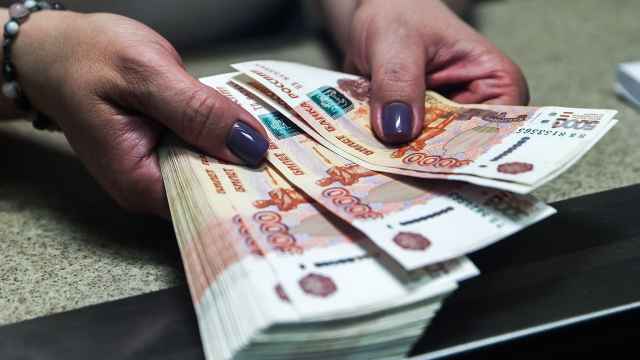
Offering preferential mortgages to young families is one way Moscow has been trying to raise Russia’s stagnating birthrate. Couples with at least one child under seven can access greater sums of money at lower interest rates, with families with five children able to access up to 10 million rubles ($121,692) at 2%.
Payments to families with children from the federal budget and state off-budget funds are rising in line with inflation and the overall increase in government spending, from 1.8 trillion rubles ($21.94 billion) in 2022 to about 2.6 trillion rubles ($61.69 billion) in 2026. This spending has been left alone for now.
But mortgage subsidies are another matter. Government subsidies soared from 0.2 trillion rubles ($2.96 billion) in 2022 to 2 trillion rubles ($24.38 billion) in 2025, or about 1% of Russia’s GDP.
Deputy Prime Minister Anton Siluanov hopes that October’s cuts to the family program will at least bring that spending down to 1.6-1.7 trillion rubles ($19-20 billion) in 2026. By 2029, government finance officials promise to cut it to 0.7 trillion rubles ($8.5 billion), taking the issue off the agenda.
Today, half of Russia’s entire mortgage portfolio consists of loans issued under government support programs since 2018, including, but not limited to, the family mortgage program.
Before the war, 3.1 trillion rubles ($42 billion) in subsidized loans were issued. In just under five years of war, the total was 16.6 trillion rubles ($250 billion), mostly issued in 2025. Ordinary commercial loans fell to 20% of the total, or 0.9 trillion rubles ($11 billion). All the rest went to borrowers eligible for subsidies.
Subsidized mortgages, in a sense, worked against the Central Bank and its extremely high interest rate. The Bank’s governor, Elvira Nabiullina, raised the rate to make the business climate less favorable and thereby curb inflation. Meanwhile, the mortgage climate was kept artificially favorable for developers and borrowers eligible for subsidies. Nabiullina protested, of course, and from time to time she got some of what she wanted.
In mid-2024, the government ended the broad-based subsidized mortgage program. But the targeted family mortgage program proved even more burdensome for the budget, forcing the government to address it.
As with anything artificial, the subsidies failed to produce prosperity in the long run. The consequences of their use are instructive.
In 2018, Russia built 43.3 million square meters of housing in apartment buildings. We leave single-family home construction out of the calculation because the authorities distort those statistics, and there are no reliable figures.
That number rose slightly in 2025 to 44.6 million square meters. The figure for 2026 will almost certainly be lower. That the area of housing has barely risen since the subsidies began suggests that the program hasn’t stimulated supply as could have been expected.
Now let’s compare prices. In 2010, a square meter of newly built housing cost 48,000 rubles ($157.9), 3.2 times the median monthly wage at the time. Rising wages meant that by 2018, the cost per square meter fell to 2.2 times the median monthly wage of 27,000 rubles ($431). In the absence of subsidies, housing became much more affordable.
In the first months of 2026, a square meter of newly built housing cost 220,000 rubles ($2,673), or 3.4 times the median monthly wage, meaning a little 50-square-meter apartment now costs 14 years’ pay, up from nine in 2018.
And finally, for borrowers who didn’t qualify for subsidies, the 2010 rate of 13.1% fell to 9.6% by 2018. This fall, it has almost doubled to 18%. Just try buying an apartment without a subsidy!
There is nothing mysterious about why this has happened. In wartime, most people become worse off than they were in peacetime. Most often, living standards fall because prices rise. But if inflation is kept from running wild and held down by a high interest rate, that rate hits anyone who produces goods or services for the public rather than the war effort.
If exceptions are made for some people, such as developers and borrowers eligible for subsidies, and they are shielded from those blows, everyone else takes an even harder hit. The figures here illustrate this inevitable process.
It remains to be seen how many babies Putin bought with this money. There is evidence that the changed who buys apartments. In 2021, families with children under 18 made up a quarter of Sberbank’s mortgage borrowers. From 2024 to 2026, they made up a clear majority.
But that didn’t shift the birth rate upward. In the year before the war, 1.40 million children were born in Russia. The number fell every year after that, dropping to 1.18 million in 2025. Demographer Alexei Raksha, who forecasts just 1.11 million births in 2026, says that mortgage schemes aren’t effective at shifting demographics because ”It’s mainly banks and developers that benefit.”
Developers are indeed in mourning over the winding down of the family mortgage program. The share of developers expecting conditions in residential construction to worsen rose from 30% last fall to 74% this fall.
That said, it is unlikely that the residential construction industry will collapse, say analysts at Novaya Gazeta. “The industry has a substantial cushion, although the price will be … fewer housing completions in the future.”
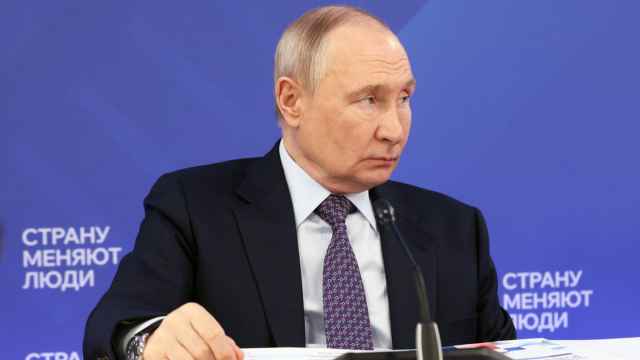
I think they’re right. Putin needs money for a war that hasn’t gone to plan and is trying to wind down a program meant to show his concern for ordinary people.
It’s unclear how quickly the program can be wound down. Subsidized mortgages have become a powerful system, acquiring beneficiaries and defenders in high places who won’t give up without a fight. Previous attempts to rein it in had little success. But that’s what’s happening at the top. But nationwide, the program can’t be said to have increased the sum total happiness of ordinary Russians. What some gained, others lost and
A Message from The Moscow Times:
Dear readers,
We are facing unprecedented challenges. Russia's Prosecutor General's Office has designated The Moscow Times as an "undesirable" organization, criminalizing our work and putting our staff at risk of prosecution. This follows our earlier unjust labeling as a "foreign agent."
These actions are direct attempts to silence independent journalism in Russia. The authorities claim our work "discredits the decisions of the Russian leadership." We see things differently: we strive to provide accurate, unbiased reporting on Russia.
We, the journalists of The Moscow Times, refuse to be silenced. But to continue our work, we need your help.
Your support, no matter how small, makes a world of difference. If you can, please support us monthly starting from just $2. It's quick to set up, and every contribution makes a significant impact.
By supporting The Moscow Times, you're defending open, independent journalism in the face of repression. Thank you for standing with us.

Remind me later.