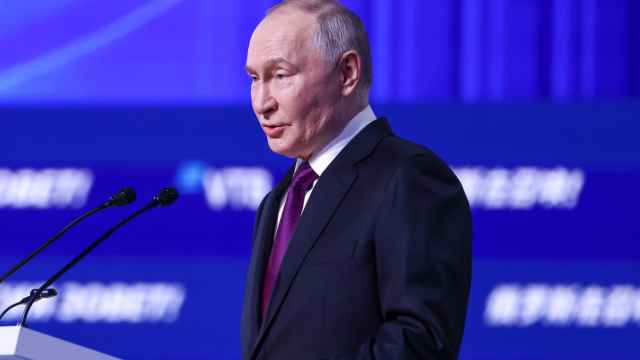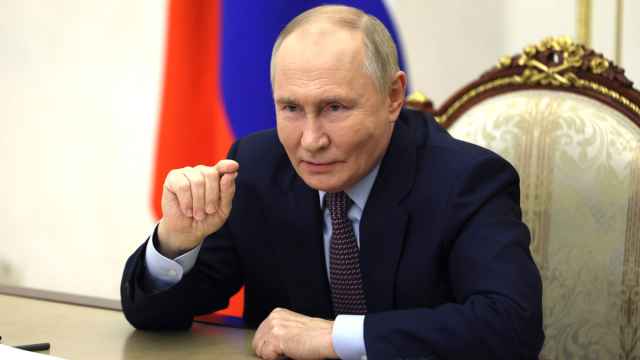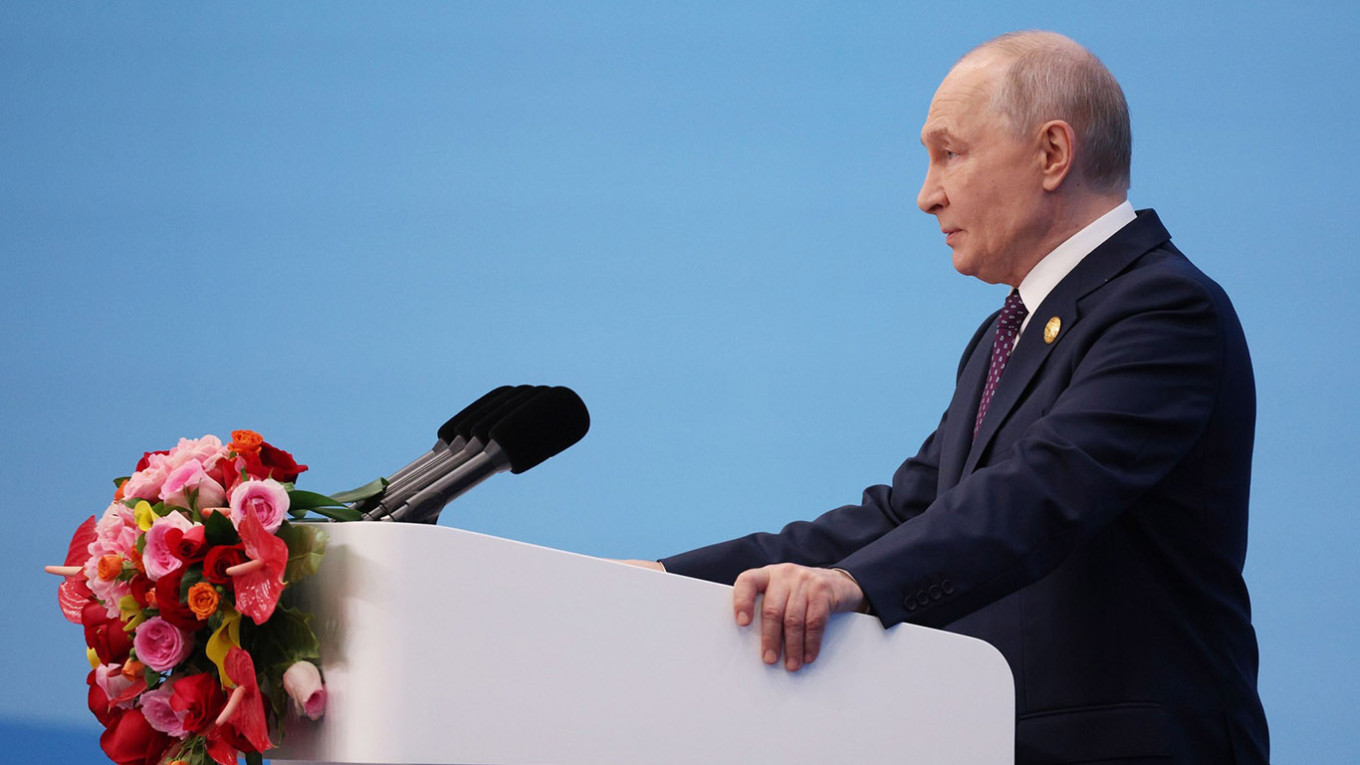
President Vladimir Putin claimed Russia had become Europe’s largest economy despite Western sanctions and offered to share its technology with friendly countries at the Asia-Pacific Economic Cooperation business summit, even as his own government forecasts growth of just 0.4% this year.
Putin told the APEC business summit that outside pressure had pushed Russia to modernize its factories, raise productivity and develop new products. He said the economy had grown by more than 10% over the past three years.
He also claimed Russia was at the forefront of digital transformation, had developed some of the world’s leading language models and was using artificial intelligence and digital platforms to transform education and healthcare.
“We are ready to share our expertise and serve as a reliable supplier of modern solutions,” Putin said, citing digital platforms, online services and satellite communications.
The highest-ranked language models in Stanford University’s 2026 AI Index were developed in the United States and China.
Russia’s economy rebounded after contracting in the first year of the war, growing 4.1% in 2023 and 4.9% in 2024, according to the state statistics agency Rosstat.
A surge in defense production helped drive that recovery, but growth slowed to 1% in 2025. Russia’s Economic Development Ministry forecasts growth of just 0.4% this year.
The International Monetary Fund projects that the global economy will grow 3%, with China expanding 5% and India 6.4%.
Russia’s share of global invention patents also fell to 0.8% in 2025, half its level in 2010 and the lowest in its modern history, according to calculations by Moscow’s Higher School of Economics.
China accounted for 46.5% and the United States for 14.8%.
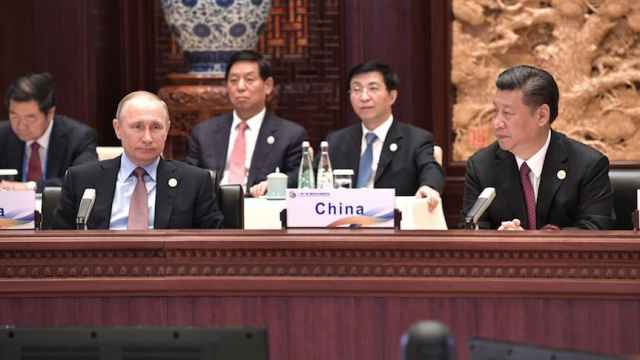
The remarks come as Moscow seeks closer ties with Beijing following the breakdown of relations with European countries over Russia’s full-scale invasion of Ukraine.
In a separate speech at a joint Russian-Chinese university in Shenzhen, Putin pointed to growing student exchanges and said more than 100,000 Russians were learning Chinese.
Speaking at a university founded by Moscow State University and the Beijing Institute of Technology, Putin said more than 60,000 Chinese students were studying in Russia and more than 20,000 Russians were pursuing university degrees in China. He called cooperation in science and education a priority for both countries.
Russia approved federal school curricula for Chinese as a first or second foreign language in 2023. Demand for Chinese tutors in Moscow and the surrounding region rose nearly 39% this year, according to the online services platform Profi.ru. In St. Petersburg, the classifieds site Avito reported a 79% increase in searches for Chinese tutors.
The push has met some resistance. In 2023, the Moscow Institute of Physics and Technology backed away from plans to replace German, French and Spanish classes with Chinese after students objected. It later made Chinese a compulsory second foreign language for students with advanced English.
Russia’s Science and Higher Education Ministry said around 200 joint Russian-Chinese education programs had been registered in China as of April. In February, Putin designated 2026 and 2027 as years of educational cooperation between the two countries.
This article was translated with the help of artificial intelligence and was reviewed by a Moscow Times editor before publication. Learn more about our newsroom's AI policy here.
Read this article in Russian at The Moscow Times' Russian service.
A Message from The Moscow Times:
Dear readers,
We are facing unprecedented challenges. Russia's Prosecutor General's Office has designated The Moscow Times as an "undesirable" organization, criminalizing our work and putting our staff at risk of prosecution. This follows our earlier unjust labeling as a "foreign agent."
These actions are direct attempts to silence independent journalism in Russia. The authorities claim our work "discredits the decisions of the Russian leadership." We see things differently: we strive to provide accurate, unbiased reporting on Russia.
We, the journalists of The Moscow Times, refuse to be silenced. But to continue our work, we need your help.
Your support, no matter how small, makes a world of difference. If you can, please support us monthly starting from just $2. It's quick to set up, and every contribution makes a significant impact.
By supporting The Moscow Times, you're defending open, independent journalism in the face of repression. Thank you for standing with us.

Remind me later.