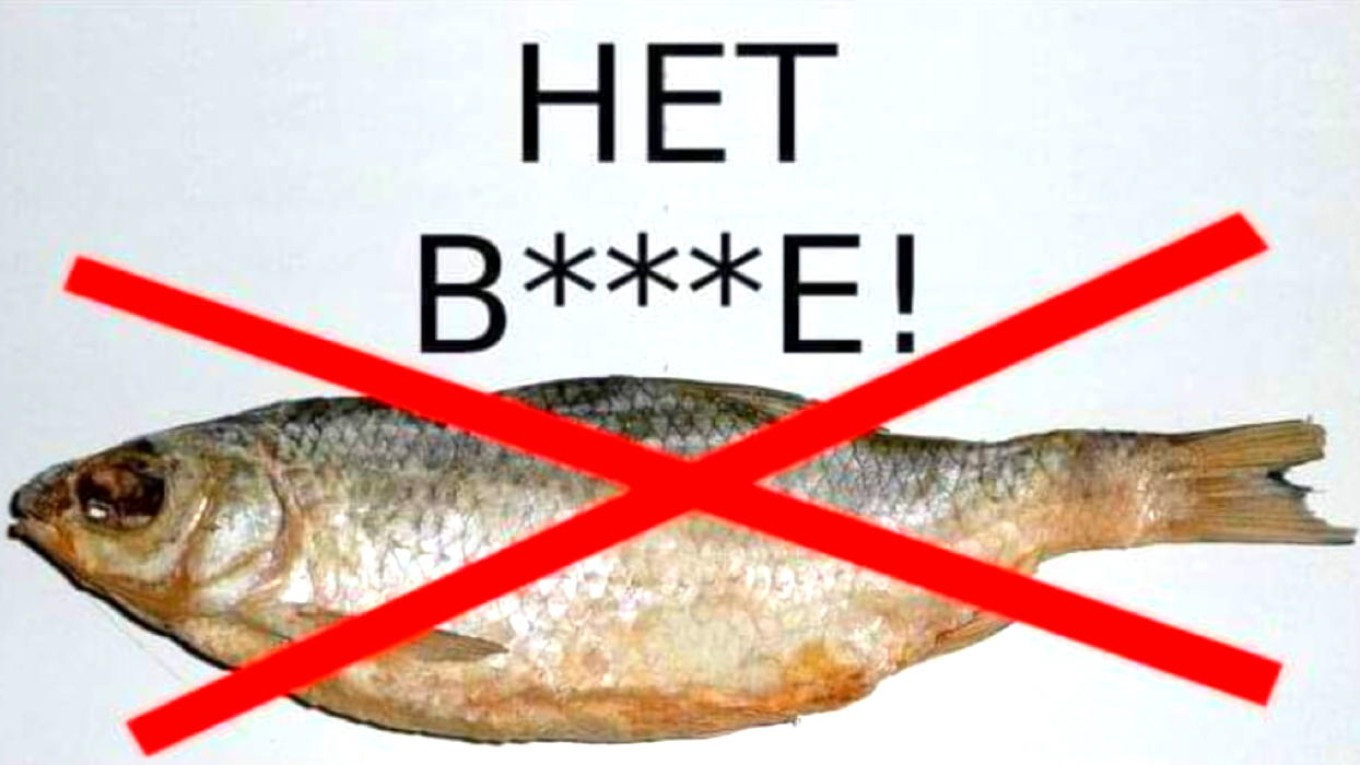
In exile, many of us have come to realize that pacifism is not a universal value. Moving from a country as large as Russia to a small one profoundly changes your perspective. It is one thing to live in an empire with enormous military capabilities that wages wars of aggression. It is quite another to live in Lithuania, Armenia, Georgia or Montenegro, where pacifism is seen as a willingness to surrender, a refusal to resist.
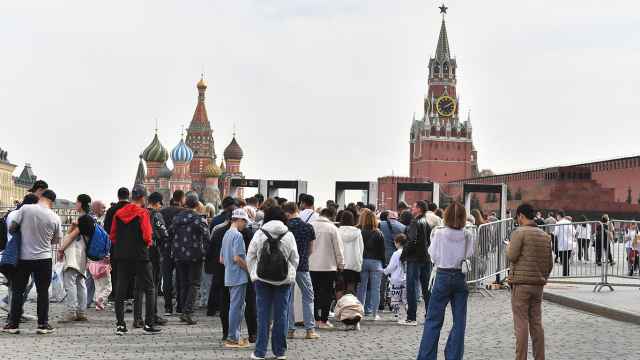
Recently, a large parade of military equipment purchased from India and France took place in Yerevan, where I live. The sight of my street lined with military vehicles, drones and missile launchers brought to mind how I felt watching parades on Red Square. They were frightening spectacles, designed to intimidate.
But this time, my feelings were different. Even I, with my fervent pacifism and history of taking part in anti-war protests, understood that these weapons were there to protect me personally. People wandered among the vehicles, touching them and marveling at them. One person remarked, "If anything happens, fewer Armenians will die."
Perhaps the difference between our perspectives is that, for many decades after the end of World War II, nobody attacked Russia. Instead, it was primarily Russia that did the attacking. While many of us were ashamed of these colonial wars, we never experienced a situation in which we had to defend our country with weapons in our hands. Armenians and Georgians have that experience. We simply do not.
Pacifism reached its peak with the American anti-war movement of the 1960s, particularly the movement against the Vietnam War. But here is something interesting: nobody has ever heard of a Vietnamese anti-war movement, or a Chechen one, or a Georgian one. People in those countries surely want peace, too, but not at the cost of the destruction of their country, their land or their nation.
Abstract humanism is a wonderful thing. But during wartime, it faces a serious test. Yes, of course, people should not kill one another. But if we tell Ukrainians that they must not shoot, and they listen to us, they will simply be killed. Our humanism will have become the cause of their deaths. Peace on the aggressor's terms is simply another form of war. There was even a joke supposedly circulating in Kyiv: "When I hear the word 'peace,' I reach for my gun."
We Russian opposition figures are often criticized, and rightly so, for being afraid or unwilling to take sides. Many of us do not so much support Ukraine as oppose all wars on principle. This was already apparent on February 24, 2022, when thousands of posts appeared online bearing the slogan "No to War!", simple black squares, peace symbols and desperate declarations demanding peace but not explicitly supporting Ukraine.
But their real purpose, of course, was not to bring about peace. People wanted to distance themselves from the evil being committed, to make it clear that they were the good ones and the bad people were over there in the Kremlin or on the front lines. There was even an anti-war placard that read "Not in My Name." In other words: go ahead and wage your war, just don't involve me.
And, of course, it is impossible to stop a war that way. As the poet Alexander Delfinov wrote: "We kept saying 'No to War!' But the war did not end. Instead, it grew fiercer and stronger." When missiles are flying, rhetoric loses its meaning.
During the first years of the war, I regularly reviewed anti-war music, but eventually I stopped. The music added nothing substantial to the news and offered no answers about what should be done. It all boiled down to the same things: we don't need war, war is terrible, people are dying. Nobody can argue with any of that. But apart from the most deranged fanatics, hardly anyone believes that war is a good thing in itself.
Militarists put it differently: once we win, there will be peace. Or: once the West stops helping Ukraine and Ukraine lays down its arms, there will finally be peace. Let me remind you that Russia's 2008 war against Georgia was officially called an operation to "enforce peace." As people used to joke in Soviet times, the struggle for peace will become so fierce that not one stone will be left standing on another.
The word "Ukraine" appears in only a handful of Russian songs from recent years. Ukrainians are right: Russians are entirely focused on themselves and their own feelings. That was true four years ago, and it remains true today.
But we should not imagine that this is a uniquely Russian phenomenon. The ancient Greeks were already thinking about people who refused to take sides during political upheavals. Such people were called idiots. It was not an insult but a designation of their status. Dante even placed such people in one of the circles of his Hell. To him, neutrality was a terrible sin.
It is not difficult to understand where this attitude comes from among Russians. We have been deceived too many times and now trust nobody. How often has someone thrown their support behind what seemed like a righteous cause, only for its champion to turn out to be a scoundrel and a crook? Politics is a dirty business, we think. Better to stay out of it and be pacifists instead: for everything good, against everything bad.
But a genuine pacifist, if you think about it, is not an apolitical idiot at all. A pacifist has a political position. The American pacifist movement was part of the civil rights struggle and reflected the values of a new generation. Yes, its members went on peace marches. But they also clashed with the National Guard.
They did not, of course, stop the war. But they defended their values and, to a considerable extent, transformed their society. America still lives with the achievements of the rebels of the 1960s. You can see their legacy everywhere: in fashion, in music and in companies like Apple.
Russian pacifists were not outside politics either. The dissidents who came out onto Red Square on August 25, 1968, to protest against Soviet tanks in Prague were fighting the entire Communist system, not just the tanks on the street.
We are all ashamed of what our country is doing in Ukraine. But is that really the only thing we are ashamed of? Were we happy with Putin's regime before the war? Was it not criminal back then, or was it merely criminal to a tolerable degree?
Before the first war in Ukraine, pacifism was virtually nonexistent in post-Soviet Russia, even though the former U.S.S.R. was being torn apart by wars.
Artemy Troitsky recalled that when he wanted to release an anti-war album protesting against the war in Chechnya, he could not find enough songs to fill it. Musicians simply were not concerned about these issues. People were struggling to survive and adapt to a harsh new reality, of which war was part. They regarded it as a necessary evil happening somewhere far away.
While studying pacifist movements, I noticed an interesting pattern. Soldiers returning from the fronts of World War I and World War II, for the most part, never wanted to fight again. You know their names: Erich Maria Remarque, Ernest Hemingway and their entire generation. Not everyone, of course, but there were many.
Yet in the second half of the 20th century and the beginning of the 21st, the picture was different. Again, not everyone, but many people who had experienced combat wanted to go on fighting.
I have a hypothesis about why that is.
The two world wars radically transformed the structure of society. Not always for the better, but the changes were enormous. It was no longer possible to live as people had before the wars, so societies forged, or at least attempted to forge, a new social contract.
The smaller wars of the past 70 years, by contrast, have changed very little. We continue living much as we did before. Social injustice has not diminished; if anything, it has increased. Dissatisfaction with civilian life remains, which is precisely what motivates people to fight. Now, when someone does not know how to live, he goes to the front to die. And the pacifist slogan "No to War!" is unlikely to stop him.
The slogan "Down With the Government!", however, stands a much better chance.
The demand to end the war pales beside the more powerful demands for a change of government and the reform of society. Otherwise, war will break out again and again.
A Message from The Moscow Times:
Dear readers,
We are facing unprecedented challenges. Russia's Prosecutor General's Office has designated The Moscow Times as an "undesirable" organization, criminalizing our work and putting our staff at risk of prosecution. This follows our earlier unjust labeling as a "foreign agent."
These actions are direct attempts to silence independent journalism in Russia. The authorities claim our work "discredits the decisions of the Russian leadership." We see things differently: we strive to provide accurate, unbiased reporting on Russia.
We, the journalists of The Moscow Times, refuse to be silenced. But to continue our work, we need your help.
Your support, no matter how small, makes a world of difference. If you can, please support us monthly starting from just $2. It's quick to set up, and every contribution makes a significant impact.
By supporting The Moscow Times, you're defending open, independent journalism in the face of repression. Thank you for standing with us.

Remind me later.