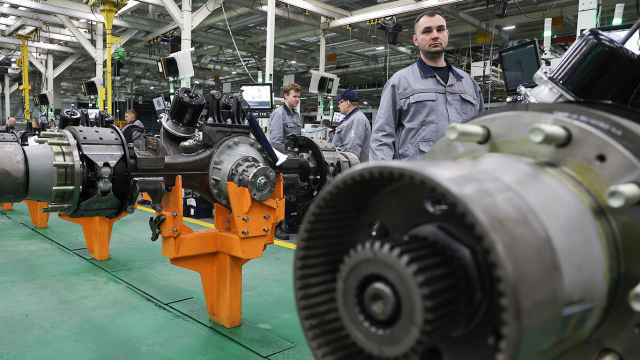
Russia’s largest carmaker AvtoVAZ could see production and sales fall by 20% to 25% by the end of the year after funding ran out for government programs subsidizing car purchases, a senior Industry and Trade Ministry official said.
Dmitry Klementyev, deputy head of the ministry’s automotive and railway engineering department, linked the projected decline to the suspension of subsidized car loans, Interfax reported.
The program offered discounts on Russian-made vehicles ranging from 10% for families with children to 35% for buyers of electric cars.
This year’s allocations of 20 billion rubles ($244 million) for subsidized car loans and 30 billion rubles ($366 million) for vehicle leasing were exhausted in September. No additional funding is planned this year, as military spending puts pressure on the federal budget.
The Industry and Trade Ministry said the programs had supported sales of 178,200 vehicles, including more than 123,000 purchased through subsidized loans, and had met their targets for supporting the market.
Analysts expect AvtoVAZ, which sold 244,600 vehicles in the first nine months of the year, to be particularly exposed to the withdrawal of state support because subsidized purchases account for a larger share of its sales.
The funding shortfall comes as Russia’s car market loses momentum. New passenger car sales fell 7% year on year in August and were virtually unchanged in September. Weekly figures for October also show little sign of a recovery: sales from Oct. 12 to 18 were 9% below the same period last year.
Analysts and dealers say demand is too weak to make up for the loss of government-backed discounts.
The withdrawal of subsidies is pushing manufacturers to offer their own discounts and subsidized loans, potentially bringing down average car prices in October, according to Sergei Tselikov, head of market research agency Autostat.
AvtoVAZ has fewer resources for a price war than its Chinese competitors. During last year’s market downturn, company president Maxim Sokolov complained that Chinese manufacturers were offering discounts approaching 1 million rubles ($12,200), roughly the starting price of a new Lada Granta.
Sokolov called for greater state support. The Industry and Trade Ministry subsequently raised Russia’s vehicle recycling fee again, affecting high-powered foreign cars, including those imported by individuals for personal use.
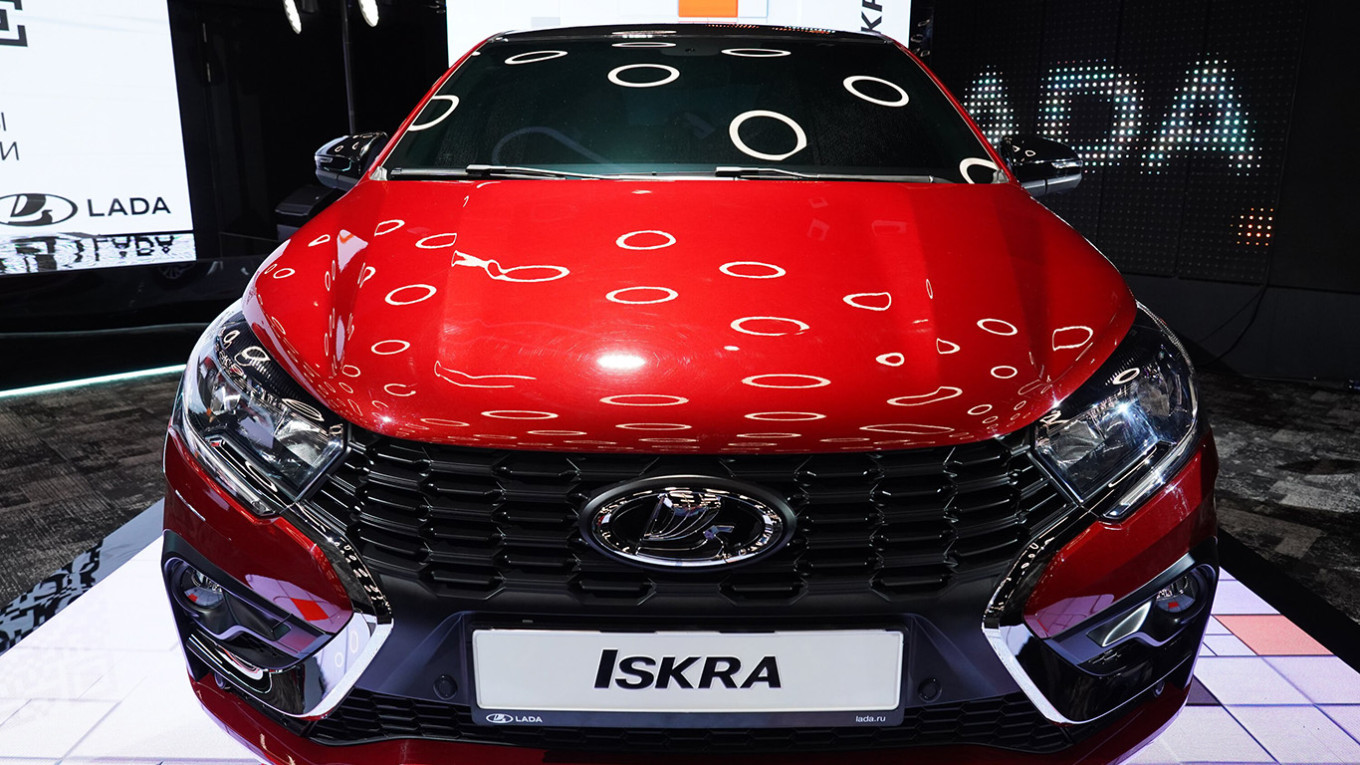
Lada’s share of Russia’s new car market has fallen to about 24% this year, below the 25% threshold Sokolov previously described as critical for the company.
Its market share stabilized at 24.7% in September, when it sold about 30,300 vehicles, according to Avtostat. Overall, Russia recorded 122,800 new passenger car sales that month and about 968,000 in the first nine months of the year.
Analysts say the growing market share of locally manufactured cars has benefited producers assembling Chinese models more than Lada. These include Haval and Tenet, which assembles Chery models in Russia, as well as the Belarusian brand Belgee, a joint venture with China’s Geely.
Russian-made vehicles accounted for 65% of new passenger car sales in September.
State support is set to shrink further. The draft budget allocates 7 billion rubles ($85.4 million) annually for subsidized car loans over the next two years, roughly a third of this year’s funding.
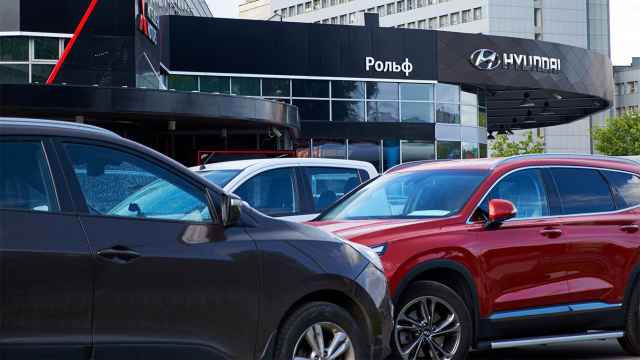
AvtoVAZ is already reducing its Moscow dealership network.
The Industry and Trade Ministry has pledged to seek more funding for automotive support programs, but broader budget cuts leave little room for an increase.
“Everything that could be cut has been cut,” Alexander Ivanov, chief economist at Ingosstrakh Investments, said of the 2027 budget.
This article was translated with the help of artificial intelligence and was reviewed by a Moscow Times editor before publication. Learn more about our newsroom's AI policy here.
Read this article in Russian at The Moscow Times' Russian service.
A Message from The Moscow Times:
Dear readers,
We are facing unprecedented challenges. Russia's Prosecutor General's Office has designated The Moscow Times as an "undesirable" organization, criminalizing our work and putting our staff at risk of prosecution. This follows our earlier unjust labeling as a "foreign agent."
These actions are direct attempts to silence independent journalism in Russia. The authorities claim our work "discredits the decisions of the Russian leadership." We see things differently: we strive to provide accurate, unbiased reporting on Russia.
We, the journalists of The Moscow Times, refuse to be silenced. But to continue our work, we need your help.
Your support, no matter how small, makes a world of difference. If you can, please support us monthly starting from just $2. It's quick to set up, and every contribution makes a significant impact.
By supporting The Moscow Times, you're defending open, independent journalism in the face of repression. Thank you for standing with us.

Remind me later.