
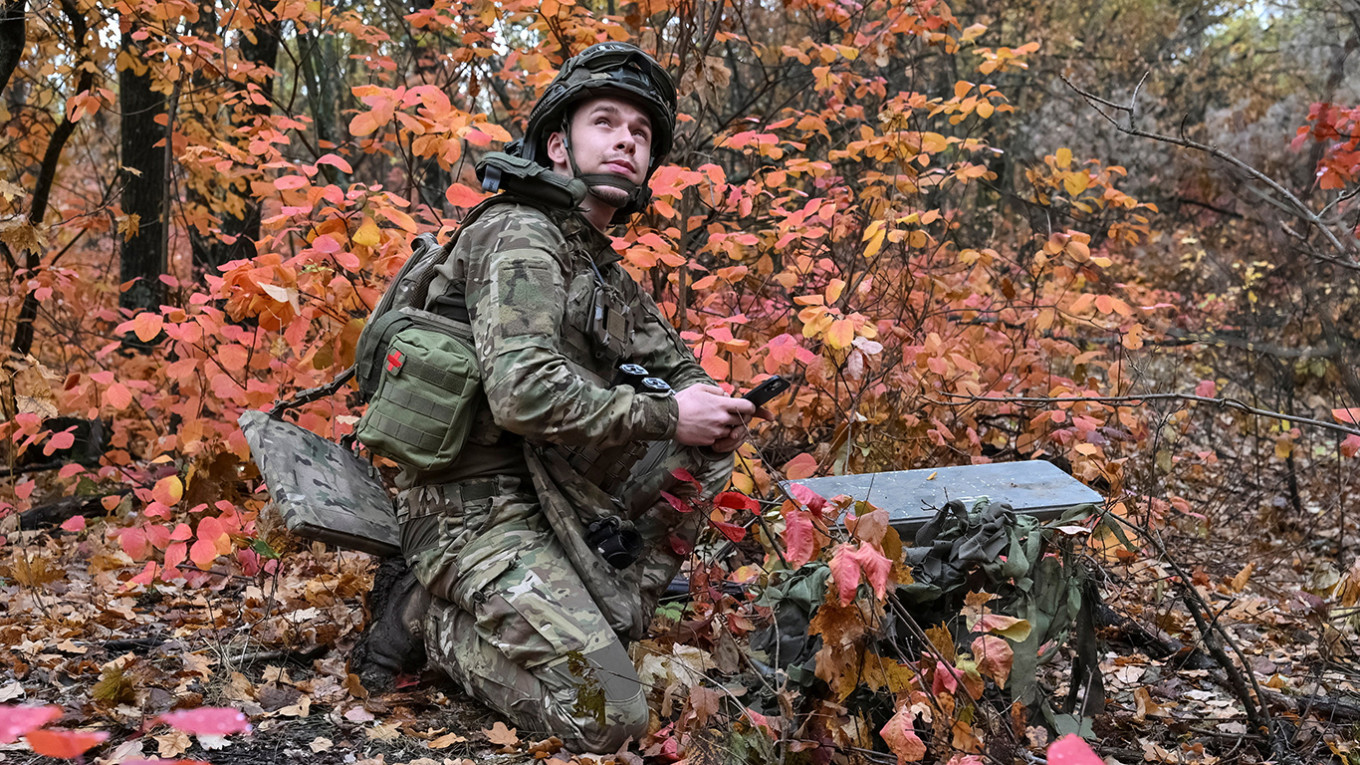
Ukrainian President Volodymyr Zelensky said on Thursday that Ukrainian military units had recorded significant disruptions to the Starshield satellite communications service over the last several days, affecting the entire front line and Russian-occupied parts of Ukraine.
In a post on Telegram, Zelensky said that systemic restrictions were limiting the speed at which Starshield could be used to 161 kph (100 mph). Starshield is the military version of SpaceX's Starlink satellite communications service.
As a result of the restrictions, Ukrainian interceptors could not reach sufficient speed to down Russian jet-powered drones, with some hits already occurring, Zelensky said.
“This helps Russians kill more Ukrainians and carry out more accurate strikes on Ukraine,” Zelensky said. He added that Ukraine was trying to clarify the reasons for the restriction with the U.S. side.
In mid-October, Ukrainian officials said SpaceX had abruptly capped the speed of Starlink and Starshield, cutting off drones and other equipment moving faster than about 160 kph (100 mph) amid tensions with the Trump administration over Ukrainian attacks on Russian oil refineries. Service was restored on October 24.
The new announcement comes a day after the peace talks between Russia and Ukraine concluded in Abu Dhabi. Brokered by the United States, it was the first such meeting since February, when the U.S. war with Iran began. A Ukrainian official said there was no mention of the disruptions during the talks and it was unclear who had made the decision.
Ukraine has carried out a series of strikes against Russian refineries and energy installations in recent weeks, as Moscow has continued to pummel Ukrainian electricity infrastructure and cities with drones and missiles.
A Message from The Moscow Times:
Dear readers,
We are facing unprecedented challenges. Russia's Prosecutor General's Office has designated The Moscow Times as an "undesirable" organization, criminalizing our work and putting our staff at risk of prosecution. This follows our earlier unjust labeling as a "foreign agent."
These actions are direct attempts to silence independent journalism in Russia. The authorities claim our work "discredits the decisions of the Russian leadership." We see things differently: we strive to provide accurate, unbiased reporting on Russia.
We, the journalists of The Moscow Times, refuse to be silenced. But to continue our work, we need your help.
Your support, no matter how small, makes a world of difference. If you can, please support us monthly starting from just $2. It's quick to set up, and every contribution makes a significant impact.
By supporting The Moscow Times, you're defending open, independent journalism in the face of repression. Thank you for standing with us.

Remind me later.