
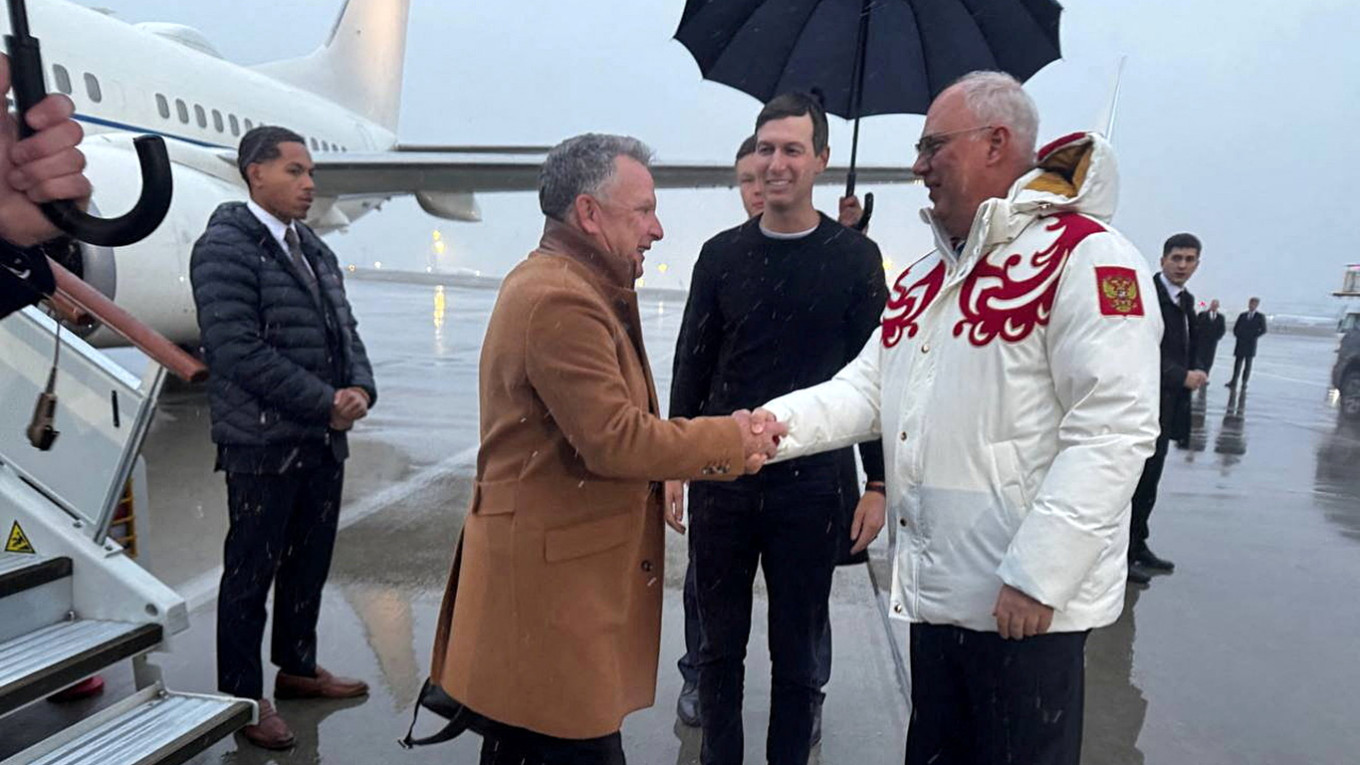
U.S. envoys Jared Kushner and Steve Witkoff arrived in Moscow on Thursday for talks with Russian President Vladimir Putin as part of their latest push for a peace deal in Ukraine.
The Kremlin talks — expected to take place around noon Moscow time — will be the 10th time that Witkoff has met Putin in person, and will follow two days of trilateral peace talks in Abu Dhabi.
The trilateral talks wrapped up on Wednesday with news of another planned major prisoner exchange, but no public breakthrough in the wider negotiation to end the conflict.
Russian special envoy Kirill Dmitriev met Kushner and Witkoff on the runway amid wet snow and accompanied them to central Moscow ahead of their talks with Putin.
This week's Abu Dhabi talks were the first direct negotiations between Russia and Ukraine mediated by the U.S. in nine months, and, although Russian and Ukrainian negotiators reported some progress, the U.S. side said differences remained on major issues, including territory.
Despite public optimism from U.S. President Trump, neither side has shown signs of making major compromises.
Kyiv has strongly rejected Putin's demands to surrender the whole of the eastern Donbas region in return for peace, and with talks deadlocked on land, U.S. mediators have tried to steer discussions towards postwar security guarantees and reconstruction.
A senior Russian diplomat said on Wednesday that Moscow could conclude non-aggression pacts with NATO member states as part of a new security architecture for Europe, though many European politicians say they oppose any discussion of Europe's overall security before real progress on Ukraine — including a ceasefire — is made.
A Message from The Moscow Times:
Dear readers,
We are facing unprecedented challenges. Russia's Prosecutor General's Office has designated The Moscow Times as an "undesirable" organization, criminalizing our work and putting our staff at risk of prosecution. This follows our earlier unjust labeling as a "foreign agent."
These actions are direct attempts to silence independent journalism in Russia. The authorities claim our work "discredits the decisions of the Russian leadership." We see things differently: we strive to provide accurate, unbiased reporting on Russia.
We, the journalists of The Moscow Times, refuse to be silenced. But to continue our work, we need your help.
Your support, no matter how small, makes a world of difference. If you can, please support us monthly starting from just $2. It's quick to set up, and every contribution makes a significant impact.
By supporting The Moscow Times, you're defending open, independent journalism in the face of repression. Thank you for standing with us.

Remind me later.