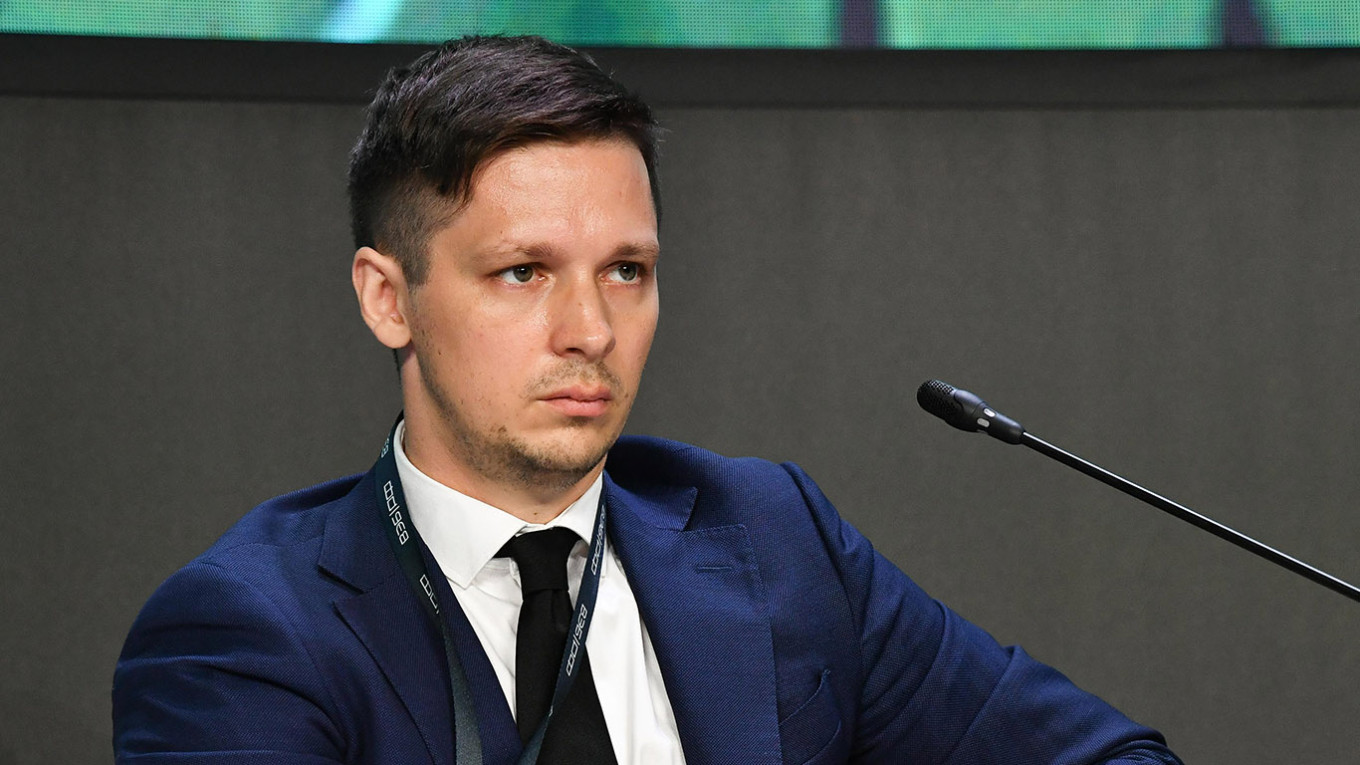
Russia’s expanding state sector is approaching a size that could undermine sustained economic growth, a senior economist warned, as the government prepares further tax increases to help finance rising military spending.
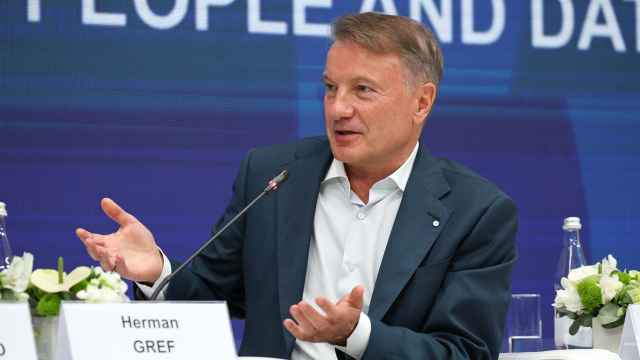
Alexander Isakov, head of Sberbank’s Center for Macroeconomic Research and chief economist at state development bank VEB.RF, said Russia’s consolidated budget now amounts to 39% of gross domestic product, up from 32-33% in 2018-2019.
“International comparisons and our own policy experience suggest that Russia is approaching the upper limit for the size of the state sector compatible with strong, sustained growth,” Isakov told RBC in an interview published Thursday.
He warned against allowing public spending to reach 40% of GDP, saying crossing that threshold would hurt businesses and investment while weakening the government’s ability to collect taxes.
The Finance Ministry forecasts spending across Russia’s budget system at 38% of GDP in 2027. The Economic Development Ministry expects the economy to grow by 1.4% next year, with investment rising just 0.2%.
Isakov said companies were postponing investment because of uncertainty over taxes and broader economic risks. That, in turn, reduces demand and the government’s potential tax base, he said, stressing that businesses need a stable tax system to plan and expand.
His warning comes amid growing concern among business leaders about the state’s role in the economy.
A survey by the Russian Academy of Sciences’ Institute of Economic Forecasting found that 35.1% of senior executives wanted the government to reduce its economic role, the highest share in 25 years. Nearly two-thirds, or 63.9%, wanted lower taxes.
The government has increased the tax burden over the past two years. Corporate income tax rose from 20% to 25% in 2025, while the standard value-added tax rate increased from 20% to 22% this year.
Changes to small-business taxation have also stripped hundreds of thousands of entrepreneurs of access to the simplified tax regime.
Further increases are planned for next year, including a windfall tax on cement, fertilizer and gold producers, a rise in the top personal income tax rate on passive income, including bank deposit interest, to 22%, and a 22% VAT on purchases from foreign online stores.
The measures are expected to raise 1.5 trillion rubles ($18 billion) in 2027.
Even so, the Finance Ministry forecasts a federal budget deficit of 5.5 trillion rubles ($66 billion) next year, equivalent to 2.2% of GDP. That is up from an earlier projection of 3.2 trillion rubles ($38.4 billion).
The wider deficit reflects a planned 6% increase in spending to 48.8 trillion rubles ($585.6 billion), with roughly one in every three rubles allocated to defense.
Spending under the “national defense” budget category is set to rise from 12.9 trillion rubles ($154.8 billion) this year to 17.1 trillion rubles ($205.2 billion) in 2027. Total defense spending over the three years from 2027 through 2029 is projected to reach 50 trillion rubles ($600 billion).
This article was translated with the help of artificial intelligence and was reviewed by a Moscow Times editor before publication. Learn more about our newsroom's AI policy here.
Read this article in Russian at The Moscow Times' Russian service.
A Message from The Moscow Times:
Dear readers,
We are facing unprecedented challenges. Russia's Prosecutor General's Office has designated The Moscow Times as an "undesirable" organization, criminalizing our work and putting our staff at risk of prosecution. This follows our earlier unjust labeling as a "foreign agent."
These actions are direct attempts to silence independent journalism in Russia. The authorities claim our work "discredits the decisions of the Russian leadership." We see things differently: we strive to provide accurate, unbiased reporting on Russia.
We, the journalists of The Moscow Times, refuse to be silenced. But to continue our work, we need your help.
Your support, no matter how small, makes a world of difference. If you can, please support us monthly starting from just $2. It's quick to set up, and every contribution makes a significant impact.
By supporting The Moscow Times, you're defending open, independent journalism in the face of repression. Thank you for standing with us.

Remind me later.