Russia’s Finance Ministry plans to increase its daily foreign currency purchases more than sixfold this month, adding pressure on the ruble, though analysts said that rising oil revenues and exporters’ tax payments could cushion the impact.
The ministry said it would buy 279.4 billion rubles ($3.30 billion) worth of foreign currency between Oct. 7 and Nov. 6 under Russia’s fiscal rule, equivalent to 12.7 billion rubles ($149.9 million) a day.
After accounting for the Central Bank’s daily foreign currency sales of 600 million rubles ($7.1 million) to offset earlier spending from the National Wealth Fund, net purchases will total 12.1 billion rubles ($142.8 million) a day. That compares with current net purchases of 1.9 billion rubles ($22.4 million).
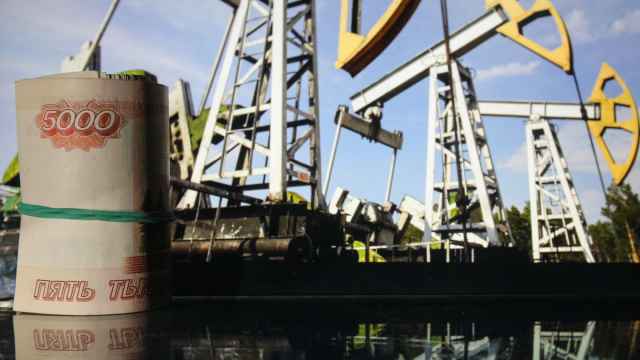
The increase highlights the competing effects of higher oil prices on the ruble. Stronger energy revenues prompt the government to buy more foreign currency under the fiscal rule, which puts pressure on the Russian currency. But they also give exporters more foreign earnings to sell domestically, something that could support the ruble.
Economist Yegor Susin estimated that the increased purchases could weaken the ruble’s average monthly exchange rate by 2 to 3 rubles (2.4 to 3.5 U.S. cents) per dollar. Yaroslav Kabakov, director of strategy at brokerage Finam, described the ministry’s increased purchases as the main factor favoring a weaker ruble.
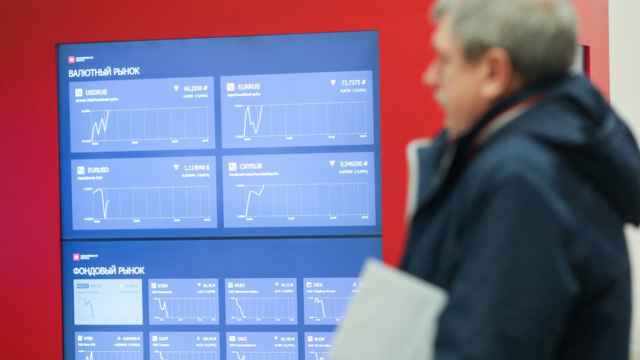
The yuan rose 1.1% on the Moscow Exchange after the announcement, climbing from 12.59 rubles ($0.1486) to 12.73 rubles ($0.1502).
The planned purchases reflect a rise in the oil price used to calculate Russia’s energy taxes, which averaged $92.10 a barrel in September, up from $67.10 in August.
Russia’s mineral extraction tax is calculated using the previous month’s average oil price, meaning September’s increase will boost October tax receipts. The Finance Ministry expects oil and gas revenues to exceed the baseline set under the fiscal rule by almost 290 billion rubles ($3.42 billion).
Gazprombank analysts said the ministry’s plans appeared to suggest it did not expect oil prices to fall sharply.
The support for the ruble from higher export earnings will take longer to materialize. According to Central Bank estimates, oil export revenues reach the domestic currency market with a lag of 1.5 to two months, meaning September’s higher prices will begin influencing the exchange rate only from late October.
Oil companies could nevertheless step up foreign currency sales sooner to meet tax payments. They have accumulated more than $200 billion abroad, and October brings a quarterly payment of Russia’s tax on additional income from hydrocarbon production.
Analysts at Tverdye Tsifry estimated that October oil and gas budget revenues could approach 1 trillion rubles ($11.8 billion), even after substantial payments under the fuel subsidy mechanism that compensates producers for supplying the domestic market.
Susin said meeting those tax obligations would require companies to increase sales of foreign currency earnings, potentially supporting the ruble. By November, revenues from oil sold at $80 to $100 a barrel should also be reaching the market, he said.
Analysts at Vector Capital said exporters’ foreign currency earnings remained high and should soften the pressure from the ministry’s purchases. They did not expect a sharp depreciation, though they also saw little reason for the ruble to strengthen.
Still, the timing of those competing flows could produce volatility. Yuri Kravchenko, head of money market analysis at Veles Capital, said the gaps between changes in oil prices, the receipt and sale of export earnings, and government currency operations could cause sizable swings in either direction.
This article was translated with the help of artificial intelligence and was reviewed by a Moscow Times editor before publication. Learn more about our newsroom's AI policy here.
Read this article in Russian at The Moscow Times' Russian service.
A Message from The Moscow Times:
Dear readers,
We are facing unprecedented challenges. Russia's Prosecutor General's Office has designated The Moscow Times as an "undesirable" organization, criminalizing our work and putting our staff at risk of prosecution. This follows our earlier unjust labeling as a "foreign agent."
These actions are direct attempts to silence independent journalism in Russia. The authorities claim our work "discredits the decisions of the Russian leadership." We see things differently: we strive to provide accurate, unbiased reporting on Russia.
We, the journalists of The Moscow Times, refuse to be silenced. But to continue our work, we need your help.
Your support, no matter how small, makes a world of difference. If you can, please support us monthly starting from just $2. It's quick to set up, and every contribution makes a significant impact.
By supporting The Moscow Times, you're defending open, independent journalism in the face of repression. Thank you for standing with us.

Remind me later.