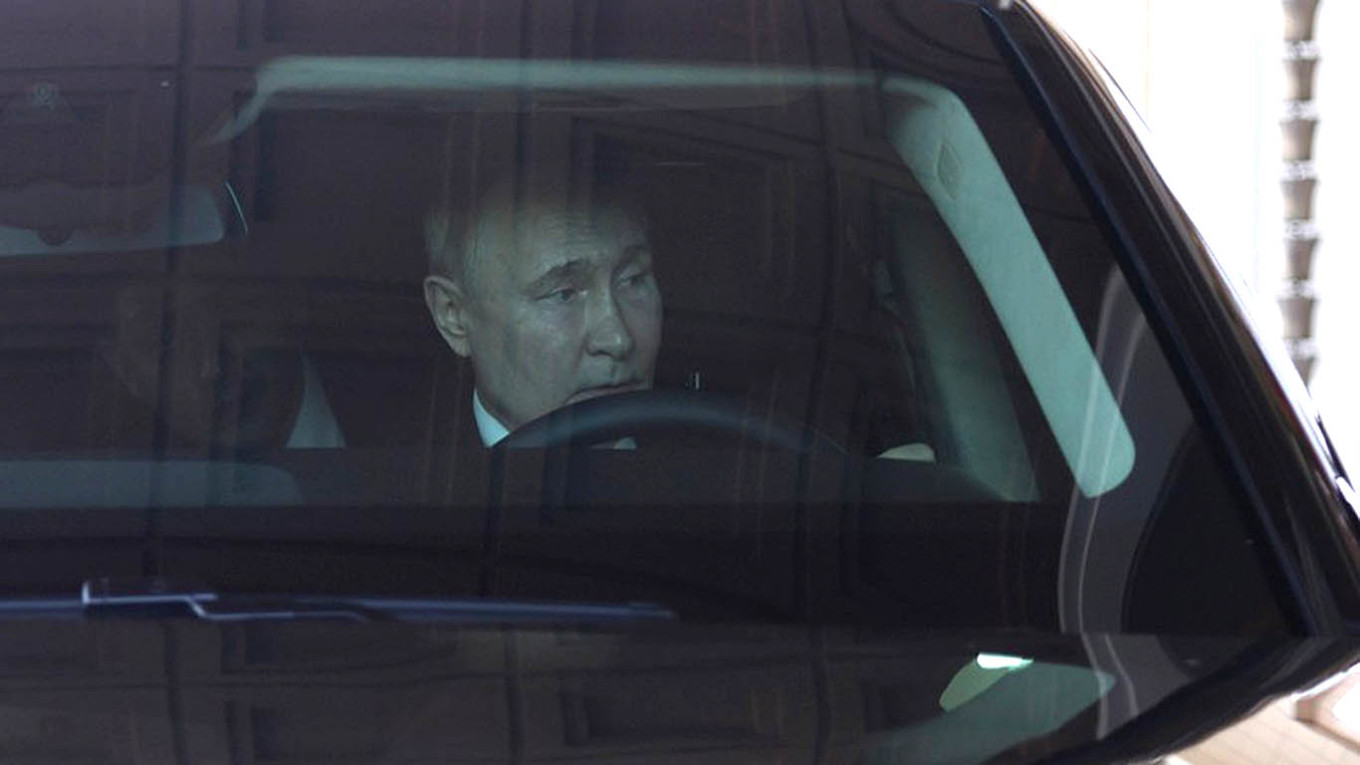
At last week’s meeting of the Valdai Discussion Club, President Vladimir Putin praised Chinese cars and predicted that “we will all soon be driving” them.
“Whether that’s good or bad, I don’t know, but they’re inexpensive and good quality,” he said.
While Chinese manufacturers have filled much of the gap left by Western brands, higher import charges and local assembly costs mean Russian buyers pay more for the vehicles, while further increases in recycling fees will add to prices next year.
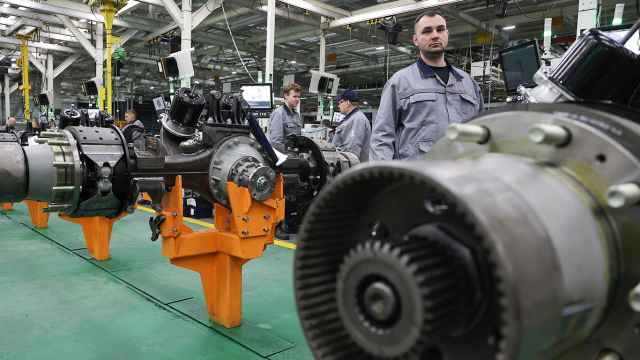
Higher recycling fees imposed in 2024 and 2025 have reduced imports of new cars from China. Chinese manufacturers increasingly supply the market through assembly plants in Russia and Belarus, sometimes selling their models under local brands, according to the analytics agency Avtostat.
A Chinese-Belarusian joint venture assembles Geely models and sells them under the Belgee brand. In Russia, factories owned by AGR assemble Chery models under the Tenet name. AGR, a Russian holding company linked to the owners of dealership group Avilon, operates former Western car plants.
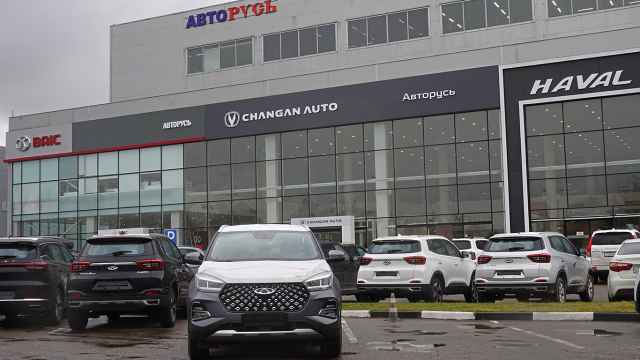
Chinese brands account for more than 40% of Russia’s new-car market, excluding vehicles sold under local names, according to Oleg Moseyev, an auto industry analyst and former president of the Russian Automobile Dealers Association (ROAD).
Lada’s share fell to 25% in the first half of the year, a level its manufacturer, AvtoVAZ, has described as a “critical threshold.”
At the start of the year, the average passenger car cost about $23,000 in China and $45,000 in Russia, according to GlobalData.
Avtostat CEO Sergei Tselikov wrote in February that passenger cars cost roughly twice as much in Russia as in China. Local assembly from imported kits also produces this price gap, he said.
Importers pay other charges and incur local production expenses when they bring in kits, which carry no recycling fee, Tselikov said.
Surveys and reports have also documented quality complaints from private motorists and taxi drivers who drive Chinese models.
Russian consumers retain an attachment to established foreign brands, and the average driver would still choose one if given the opportunity, Tselikov said.
An automotive expert said Russian buyers had little alternative to Chinese manufacturers.
“Without the Chinese, we would have faced shortages and technological decline,” the expert said. “As it is, given the progress Chinese manufacturers have made, we are driving modern cars. We just pay twice the price.”
The cost of importing a budget model illustrates how the charges accumulate.
ROAD CEO Alexei Podshchekoldin used the Jetta VA3 sedan as an example a year ago. At the time, the car cost less than 900,000 rubles ($10,620) in China, but official importers sold it in Russia for 2.56 million rubles ($30,208).
Customs duties and other import charges accounted for 1.03 million rubles ($12,154) of the price, including a recycling fee of 667,400 rubles ($7,875) and 20% value-added tax.
Shipping added 350,000 rubles ($4,130), the distributor’s margin totaled 160,000 rubles ($1,888) and the dealer received 120,000 rubles ($1,416), or about 5% of the final price.
Since that calculation, the recycling fee has risen above 800,000 rubles ($9,440) and VAT has increased to 22%. Other costs have also climbed. A scheduled increase of 10% to 20% in recycling fees at the start of next year will add to those expenses.
The Geely Cityray compact crossover was the most popular new-car model imported into Russia in September, according to Avtostat.
Prices in China start at 85,500 yuan, equivalent to about 1.06 million rubles ($12,508). In Russia, unofficial dealers charge at least 1.8 million rubles ($21,240), and authorized dealerships list prices starting at 2.5 million rubles ($29,500). Promotional offers sometimes reduce the authorized dealer price to about 2 million rubles ($23,600).
For the Jetour G700, a hybrid SUV showcased at the 2026 Beijing auto show, prices in China start at 329,000 yuan, or about 4.08 million rubles ($48,144). The model combines a long driving range and off-road capabilities with a luxury interior.
An unofficial importer bringing the vehicle into Russia for an individual buyer charges at least 7.8 million rubles ($92,040).
“We make very little on it,” a dealer offering the vehicle said. “The price difference is because the recycling fee for the engine and electric motor, with a combined output of 750 horsepower, will be about 3.6 million rubles ($42,480) even for personal use.”
Importing it through a company would push the price well above 8 million rubles ($94,400), the dealer added.
Some customers choose Chinese brands for political reasons, according to another dealer. They include officials who buy luxury vehicles from China to avoid supporting manufacturers in countries Moscow considers “unfriendly.”
“Of course, they buy luxury cars,” the dealer said. “But at least they can’t be accused of supporting the auto industry of ‘unfriendly’ countries.”
This article was translated with the help of artificial intelligence and was reviewed by a Moscow Times editor before publication. Learn more about our newsroom's AI policy here.
Read this article in Russian at The Moscow Times' Russian service.
A Message from The Moscow Times:
Dear readers,
We are facing unprecedented challenges. Russia's Prosecutor General's Office has designated The Moscow Times as an "undesirable" organization, criminalizing our work and putting our staff at risk of prosecution. This follows our earlier unjust labeling as a "foreign agent."
These actions are direct attempts to silence independent journalism in Russia. The authorities claim our work "discredits the decisions of the Russian leadership." We see things differently: we strive to provide accurate, unbiased reporting on Russia.
We, the journalists of The Moscow Times, refuse to be silenced. But to continue our work, we need your help.
Your support, no matter how small, makes a world of difference. If you can, please support us monthly starting from just $2. It's quick to set up, and every contribution makes a significant impact.
By supporting The Moscow Times, you're defending open, independent journalism in the face of repression. Thank you for standing with us.

Remind me later.