
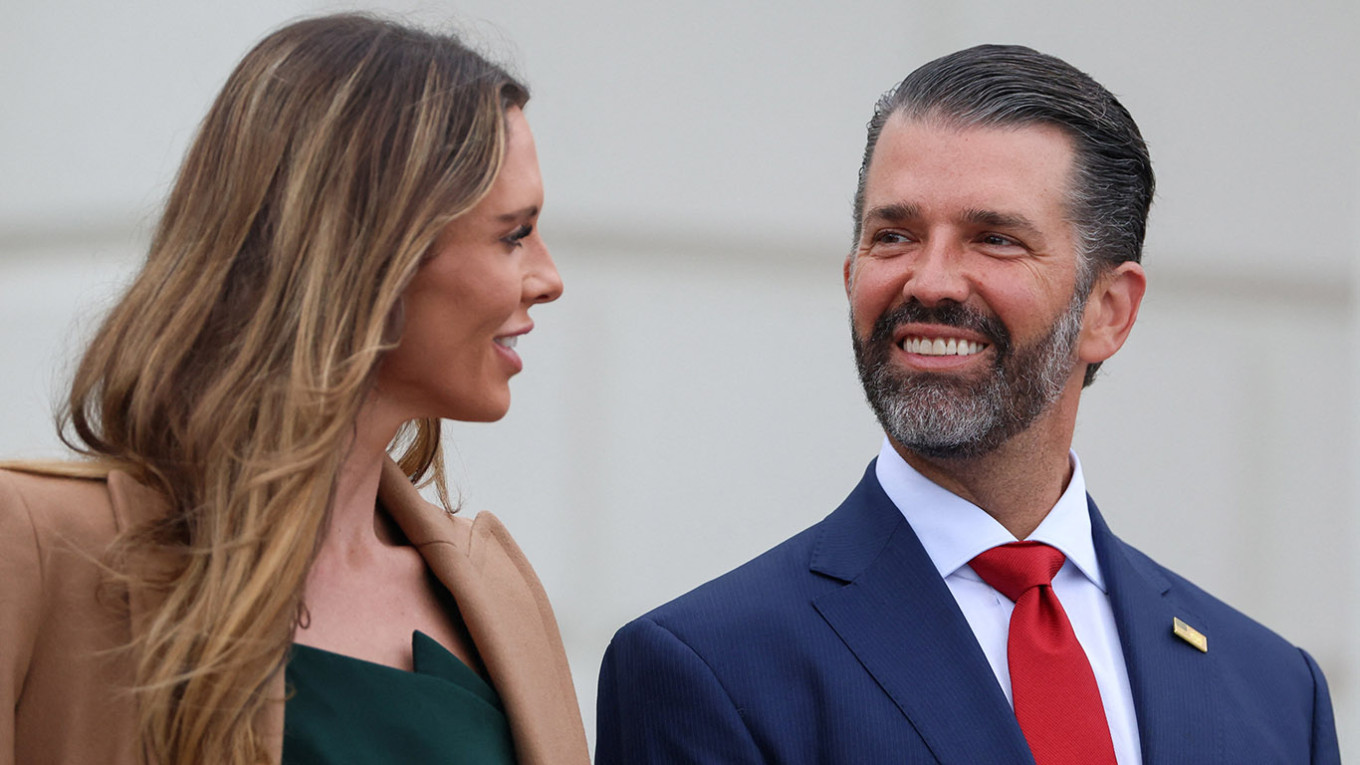
It seems like every week brings a new bombshell report of corruption in the Trump administration. This time, however, the donor belonged to a new generation of Russian oligarchs. In May, Umar Kremlev paid hundreds of thousands of dollars to rent a private island and plan an elaborate wedding celebration, including a $70,000 fireworks display, for Donald Trump Jr. and Bettina Anderson. Beyond the absurdity of the president’s son accepting such a lavish gift from a foreign national, what were the Russians thinking?
Perhaps the simplest explanation is also the correct one: the Russian government has not given up on creating a backchannel to engage with Trump. And unlike past attempts, this approach involves overt gift-giving, a nod to the devolution in ethics practiced by the current U.S. administration. But now that this clumsy overture has been exposed, the Kremlin may have little if anything to show for it.
For the better part of a decade, Russians have tried all sorts of ways to establish informal connections to the Trump family. In 2013 it was the Agalarovs, a father and son with their own Kremlin ties, hosting Miss Universe in Moscow and dangling a Trump Tower project that never materialized. In 2016, a Russian lawyer offered dirt on Hillary Clinton during a meeting in Trump Tower, while a parallel channel through the gun lobby ended with Maria Butina in federal prison.
But with Trump's return to office in January 2025, that entire calculus changed. Trump admitted openly about his family’s foreign business deals that “nobody cared, and I’m allowed to,” opening the door to ever more elaborate displays of obsequiousness from politicians. The Qatari government donated an airplane that was later outfitted to serve as Air Force One notwithstanding the serious security concerns. Swiss executives were able to leverage an actual gold bar presented to Trump for a cut in their country’s tariff rate from 39 to 15%. Julio Herrera Velutini, a foreign billionaire charged with bribing a governor, was pardoned in January after his daughter donated a combined $3.5 million to a Trump super PAC. The list goes on.
Like the rest of the world, Russia picked up on the lax enforcement of the ethical guardrails protecting the U.S. presidency. The Trump administration boasted of impunity and seemingly invited gifts from all emissaries to its court, dangling the expectation of future favors in return. Who were the Russians to sit this opportunity out?
The man at the center of this newest scandal has public and close ties to the Kremlin. A convicted criminal turned boxing promoter, Kremlev catapulted into wealth by virtue of his personal connection to Alexei Rubezhnoy, now head of the Presidential Security Service (SBP). His first riches appear to have come from clearing payments for Russia’s rapidly growing sports betting industry. As a source confided to Proekt, “Rubezhnoi simply had Putin sign all the necessary decisions.” But it was boxing that brought him international prominence and, purportedly, his first contact with Trump Jr.
The coup de grâce was the takeover of Russia’s largest car dealer, Rolf. Its founder, the self-exiled former State Duma lawmaker Sergei Petrov, saw the company placed under “temporary state management” by presidential decree in December 2023. Less than a year later, Kremlev paid about 35 billion rubles ($415 million) to take it off the state’s hands, roughly a third of its pre-war value.
In other words, Kremlev owes his fortune to high-level Russian political connections. It is therefore difficult to separate his “generosity” toward the Trump family from broader Kremlin objectives. In mid-May, Kremlev accompanied Putin on his official trip to China. Just days later, Kremlev and a sizable Russian contingent played the part of gracious hosts at a 50-guest party that included both Trump’s son Eric and son-in-law Jared Kushner, one of the two main U.S. peace negotiators. Kushner had met Putin in Moscow that January and would return to the Kremlin in September.
What is most astonishing is that the Kremlin actually believed such a show of generosity would pay off. Trump’s defining trait in office has been inconsistency. For every donor who bought a pardon, there is a country left in the lurch after bending over backwards to please the president. Saudi Arabia has been left to fight the Houthis on its own, no matter its “great relationship” with Trump. Qatar is likewise paying a steep price for the U.S. decision to strike Iran, having been left a sitting duck with few options for getting its natural gas to market.
Russia started from an even worse position, having been the antagonist for four years of federal investigations into Trump. It was inevitable that Kremlev’s gift would be exposed and make waves. Within a day of publication, the story had been picked up by most major media outlets and ProPublica had racked up over 2 million visits to its original report on the wedding. The fallout is building steam, adding one more accusation of corruption to the mountain surrounding Trump. The fact that Trump is already claiming he has “no idea who Umar is,” and that the gift was only for an “after-party,” indicates the administration is in damage control mode.
Such negative press ties Trump’s hands from returning any favor to Russia, much as the Mueller investigation constrained his first administration’s policy toward Russia nearly a decade ago. This scandal drops exactly at the moment Kushner is helping mediate between Ukraine and Russia. Now any movement toward the Kremlin’s position gives off the impression of payback and jeopardizes the American public’s openness to a deal.
Such negative press could limit Trump’s room to return the favor to Russia, much as the Mueller investigation constrained his first administration’s policy toward Moscow nearly a decade ago. This scandal drops as Kushner and Steve Witkoff are trying to broker a peace deal between Russia and Ukraine that the Kremlin hopes will bring sanctions relief and lucrative business opportunities. That effort was already losing steam before the revelation about Trump Jr.’s wedding. Now, any move toward Moscow’s position risks being seen as payback and could weaken public support for a deal.
The timing could hardly be worse for Moscow. Two days after the ProPublica story, federal prosecutors in Manhattan unsealed an indictment charging five people acting on behalf of Russian intelligence with plotting to murder a prominent Russian dissident in the Washington area. Whatever Kremlev had hoped to purchase, these exposes will make it much harder for the Trump administration to deliver.
Russia has simply misread how the Trump administration works, as well as the current state of American politics. As much power as Trump has asserted for himself, public opinion is still a powerful constraint on U.S. foreign policy.
A Message from The Moscow Times:
Dear readers,
We are facing unprecedented challenges. Russia's Prosecutor General's Office has designated The Moscow Times as an "undesirable" organization, criminalizing our work and putting our staff at risk of prosecution. This follows our earlier unjust labeling as a "foreign agent."
These actions are direct attempts to silence independent journalism in Russia. The authorities claim our work "discredits the decisions of the Russian leadership." We see things differently: we strive to provide accurate, unbiased reporting on Russia.
We, the journalists of The Moscow Times, refuse to be silenced. But to continue our work, we need your help.
Your support, no matter how small, makes a world of difference. If you can, please support us monthly starting from just $2. It's quick to set up, and every contribution makes a significant impact.
By supporting The Moscow Times, you're defending open, independent journalism in the face of repression. Thank you for standing with us.

Remind me later.