This article was first published by VPost.
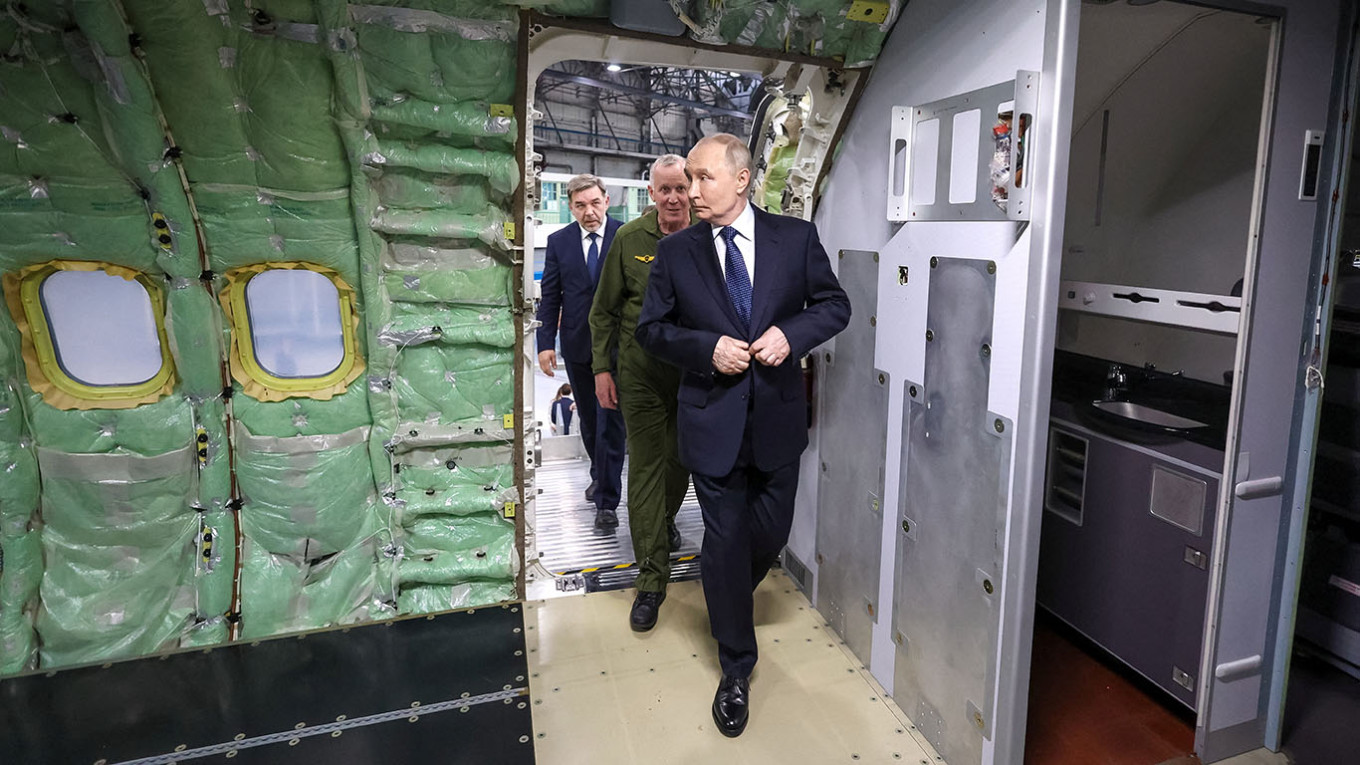
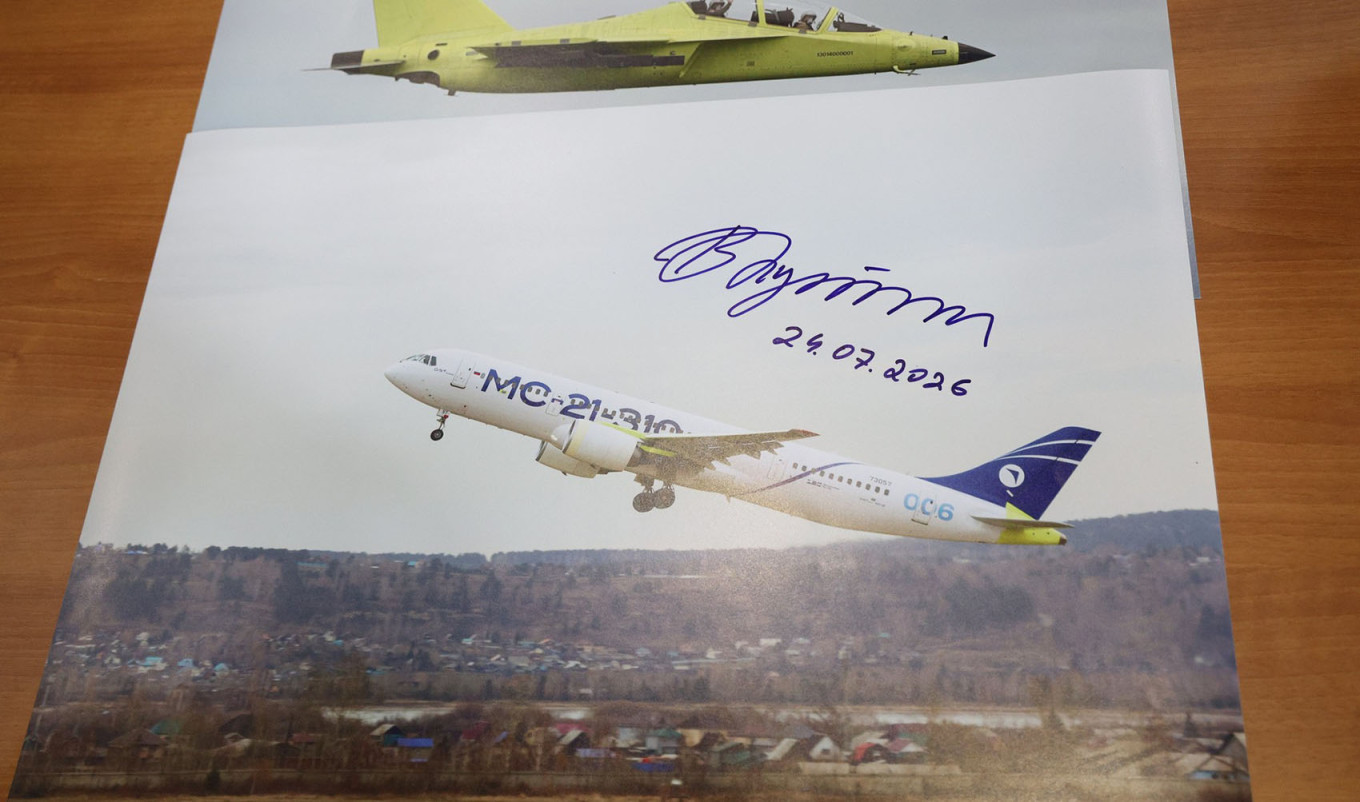
It took 21 years for President Vladimir Putin to step aboard Russia’s new MC-21 passenger jet, the long-delayed plane that Moscow hopes will replace the aging Airbus and Boeing aircraft underpinning its commercial fleet.
But the plane Putin inspected at the Irkutsk Aviation Plant in July was markedly different from the aircraft that was originally envisioned. Western sanctions imposed after Russia invaded Ukraine forced manufacturer United Aircraft Corporation to replace its foreign-made engines, composite wing and other components with Russian alternatives.
The MC-21’s troubled development reflects the mounting pressure on Russian civil aviation after sanctions forced manufacturers to redesign aircraft using heavier and costlier domestic components, while airlines increasingly rely on aging Western-made planes kept flying through improvised supply chains.
Industry insiders say Russia has so far avoided a safety crisis, but warn that its fleet will continue to shrink — and that the MC-21 is unlikely to be produced quickly or cheaply enough to reverse the decline.
“Production of the MC-21 will be limited,” said Kirill Zhirikhin, who worked on tests of the aircraft’s capabilities at Russia’s Central Aerohydrodynamic Institute (TsAGI) from 2007 to 2022.
Russian officials have repeatedly promised Putin that airlines will receive dozens of domestically produced aircraft, including the MC-21, Tu-214 and Sukhoi Superjet, in the coming years.
“Under Russia’s wartime conditions, this is unimplementable. The announced targets would require some kind of ideal conditions,” Zhirikhin said.
Russia’s invasion of Ukraine and the sanctions that followed it have strained the economy while redirecting money, industrial capacity and skilled labor toward the defense sector. For the aviation industry, shortages of qualified workers and broader economic pressures are now among the most acute problems, Zhirikhin said.
“There are very few qualified people. Only the loyalists stayed,” he said. “Aviation is an industry that needs to keep working continuously. A country cannot drop out of aircraft production for three years and then return and produce 50 or 100 planes a year. It’s physically impossible.”
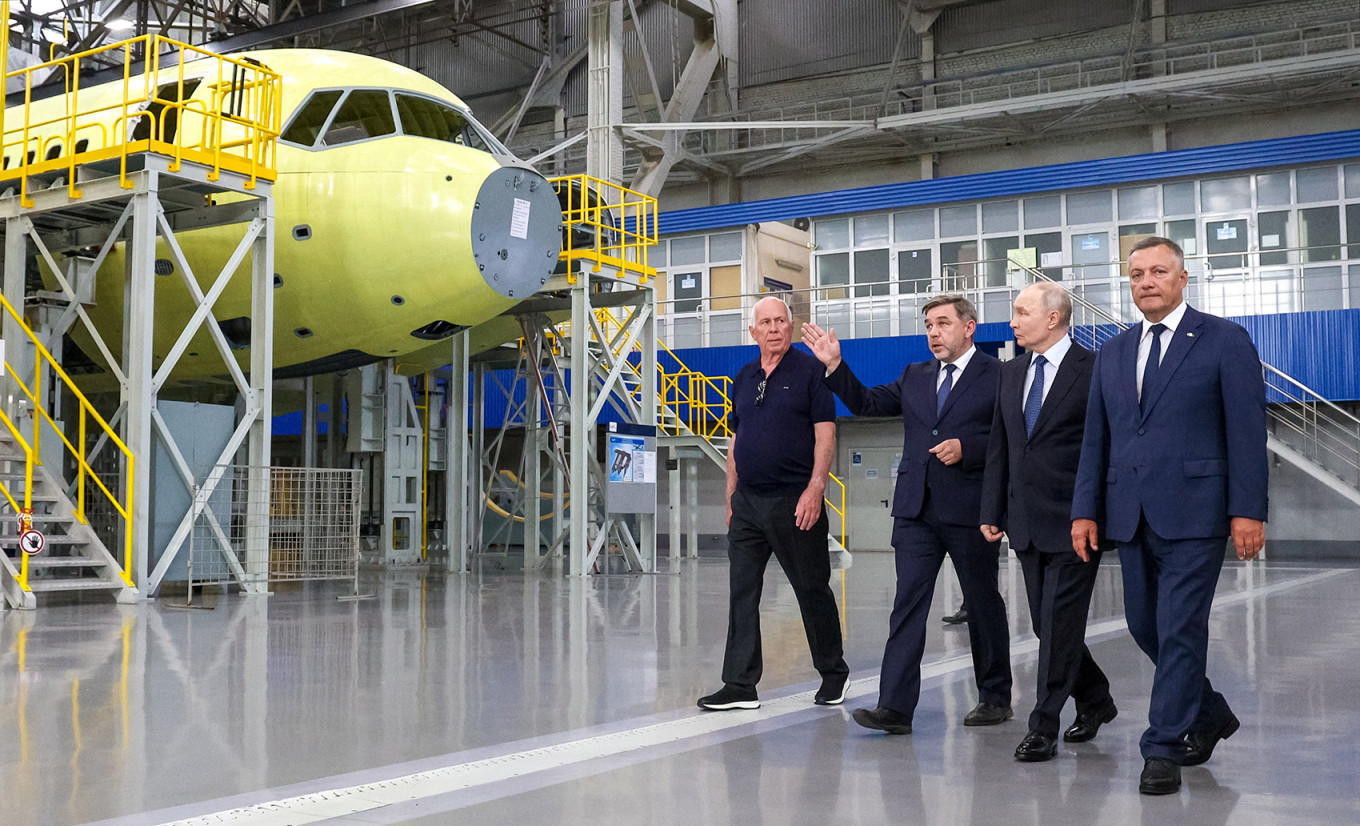
The MC-21 was developed by the United Aircraft Corporation and is being produced at the Irkutsk Aviation Plant, which also manufactures Sukhoi Su-30 fighter jets.
During his visit, Putin walked past six MC-21 fuselages on the assembly line.
Irkutsk Aviation Plant head Andrei Soynov told the president that four planes would be completed by the end of 2026 and transferred to Aeroflot once the MC-21 had passed all certification requirements.
Zhirikhin said the United Aircraft Corporation had made considerable progress in developing the aircraft but argued that the MC-21 remained at least 15 years behind its foreign competitors.
“They might finish the MC-21 just to show it off and possibly deliver a few aircraft through transactions within the state-controlled industry,” he said. “But it will not become a mass-produced plane.”
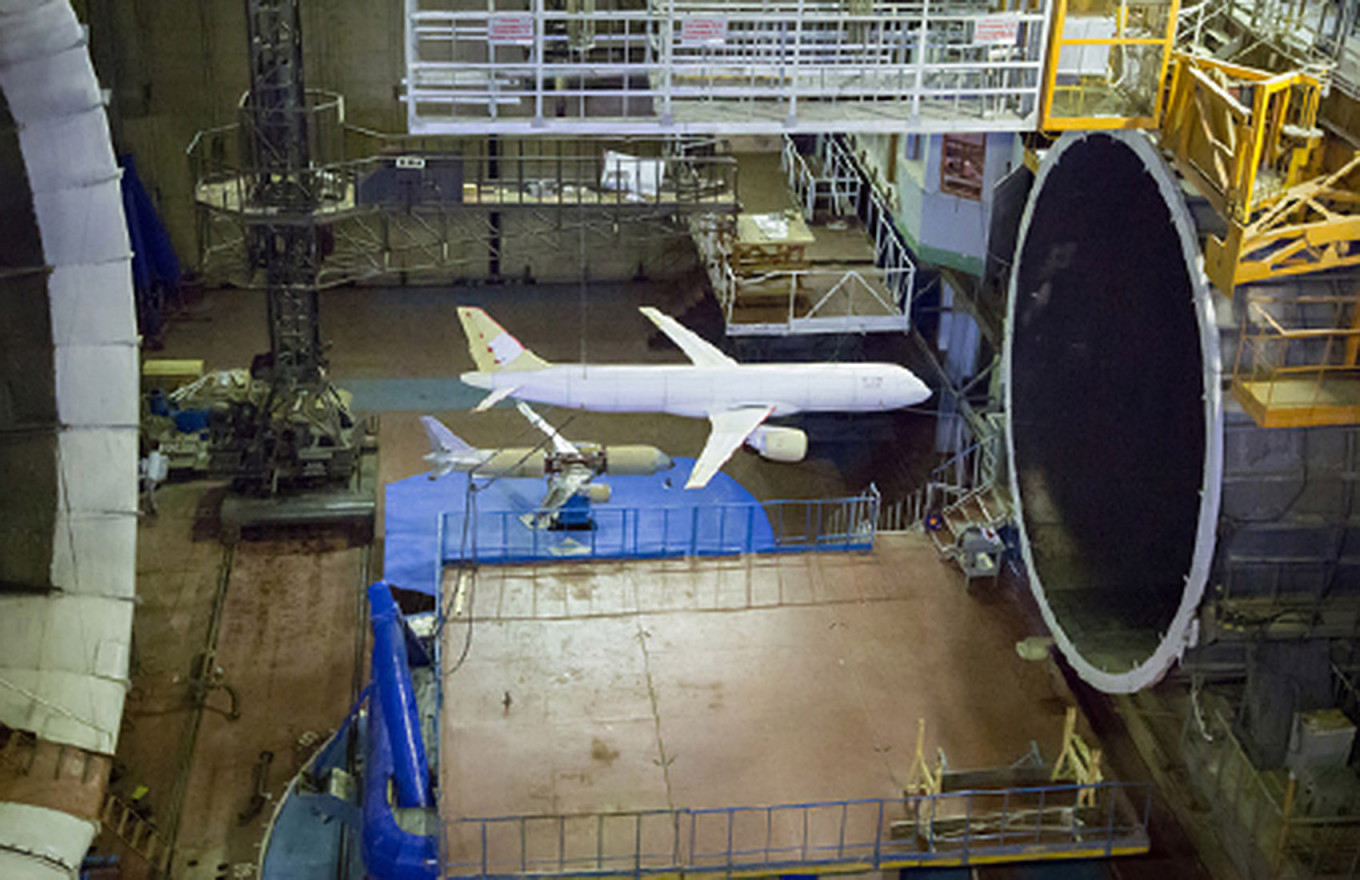
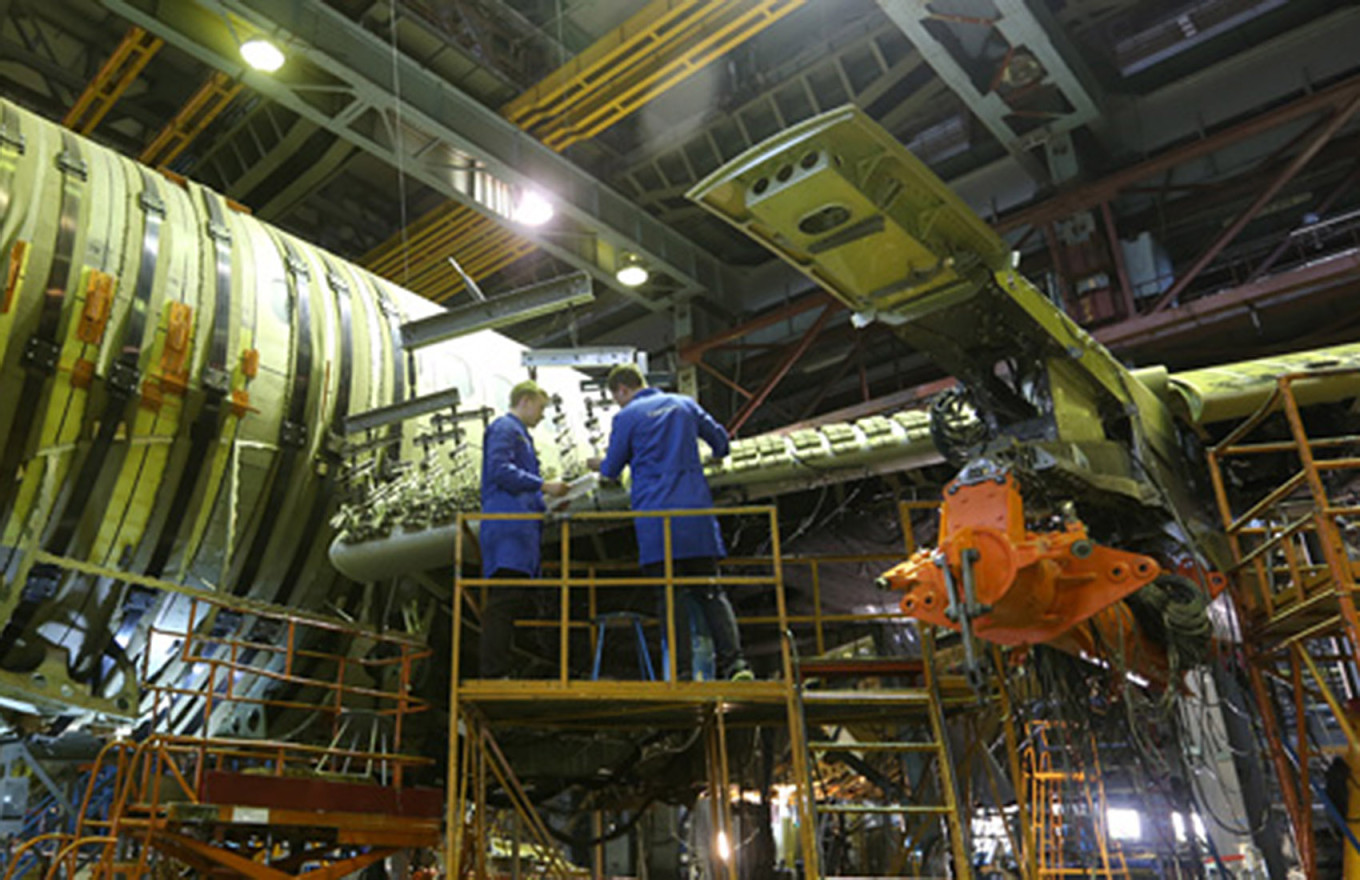
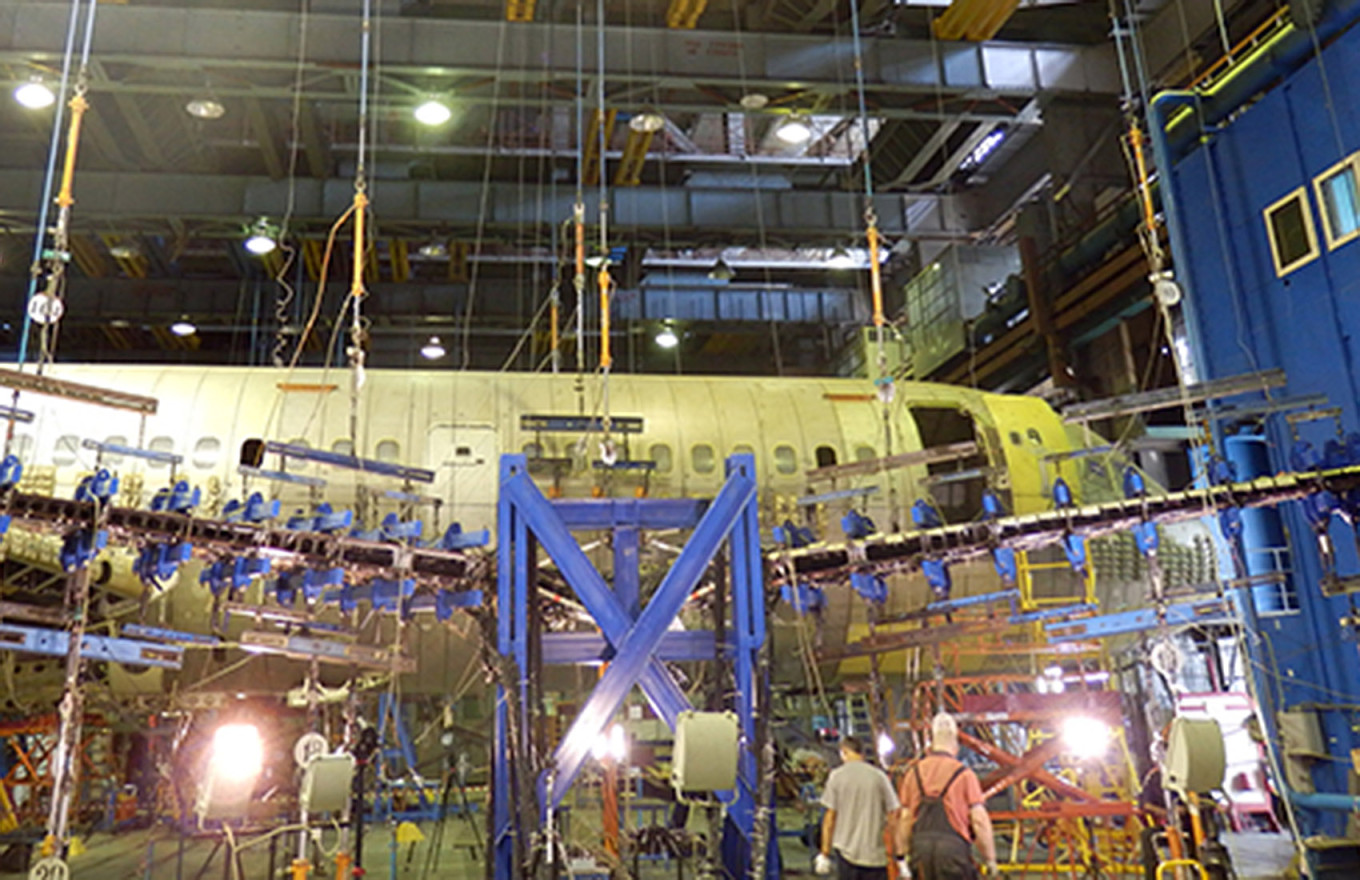
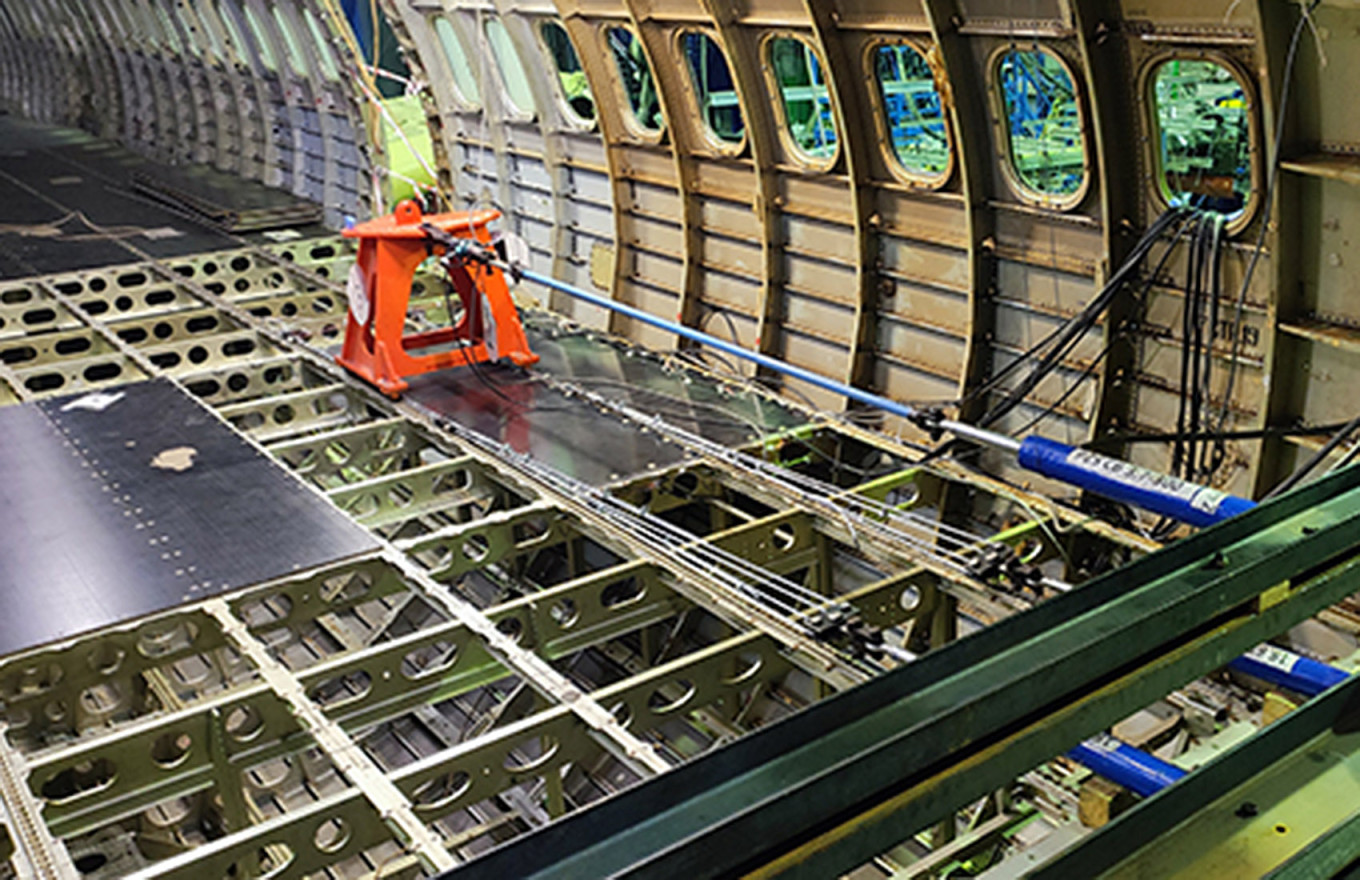
The post-invasion version shown to Putin will not be able to fly nonstop from Moscow to Vladivostok as originally planned because Russian-made components have made the aircraft about six metric tons heavier.
In an exchange captured on camera, Putin told Sergei Chemezov, head of the state-owned defense and technology conglomerate Rostec, that the plane needed to be able to fly farther.
“We will work on it,” Chemezov replied, adding that a longer-range version remained under development.
In June, the Russian government raised the projected cost of the first 18 localized MC-21 aircraft by almost two-thirds. Their total cost increased to 96.1 billion rubles ($1.2 billion) from 58.3 billion rubles ($730 million).
The estimated cost per aircraft is now 5.34 billion rubles ($67 million), up from between 3.14 billion and 3.29 billion rubles ($39 million to $41 million) in 2023.
How Russia keeps its fleet flying
More than 400 foreign-owned aircraft, mostly Boeing and Airbus jets, remained in Russia after the invasion of Ukraine, when Western sanctions forced leasing companies to terminate their contracts.
The fleet’s future has raised long-term concerns as Russia is forced to cannibalize existing aircraft for spare parts and obtain components through channels designed to circumvent sanctions.
Major airlines have established their own maintenance centers, while Aeroflot has been authorized to service Airbus and Boeing engines independently.
About 20% of Russia’s fleet has been grounded in recent years, partly due to a global problem with Pratt & Whitney engines.
Open-source data show that reported malfunctions involving commercial and military aircraft increased after the invasion, reaching 300 in 2024.
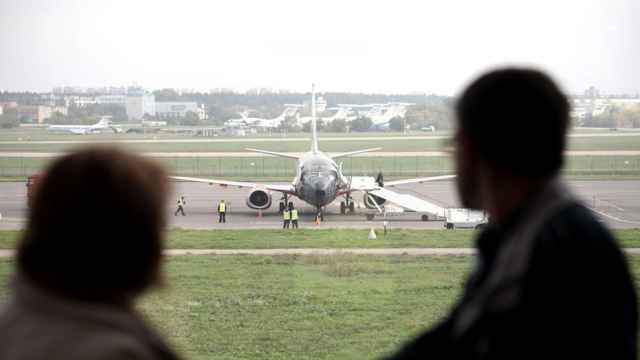
Russia has nevertheless avoided major crashes involving its largest airlines. In one serious incident in 2023, a Ural Airlines Airbus A320 made an emergency landing in a field near the Siberian city of Novosibirsk.
News reports cannot provide a complete picture of the industry, said Andrei Menshenin, an independent Russian journalist who previously covered aviation for the St. Petersburg-based news outlet Fontanka.
“Inside airlines, dozens of incidents can happen that never become public,” Menshenin said. “There could be a system failure, for example, or an engine failure that keeps a plane on the ground.”
A pilot working for one of Russia’s largest airlines, who spoke on condition of anonymity, said the industry had overcome its initial difficulties but now faced financial pressure that was being felt by passengers and staff.
“Aviation is fully safe,” the pilot said in a Telegram call from Russia, adding that airlines had continued flying “as before.”
Crews had expected malfunctions to become more frequent after the invasion, “but nothing like that happened” at his airline, he said.
“As the special military operation began, we feared: How would we fly? What would happen? Nobody knew,” he said, using Russia’s official term for its invasion. “There was uncertainty. What would happen next? What would happen if the planes were grounded? What would happen if Russian aviation couldn’t cope?”
The pilot dismissed reports that Russian crews had been forced to use paper maps and said Aeroflot continued to receive the necessary components and software updates despite sanctions.
Menshenin said critical aeronautical data, which aircraft should receive every 28 days, was most likely reaching Russia through Kazakhstan using improvised arrangements.
Investigations have also found that Russia imports aircraft components, including engines, through countries like India and China.
The pilot said crews remained cautious and that airlines could operate aircraft with certain repairs deferred under the Minimum Equipment List (MEL), which sets out the conditions under which an aircraft may fly with specific equipment inoperative.
“For example, one airline may have one or two minor deferred defects under the MEL, while another, such as S7, may have five MEL items requiring additional procedures before departure,” the pilot said.
Menshenin said safety standards were broadly similar across Russian airlines but were likely to deteriorate as the country became increasingly isolated, inevitably leading to more incidents.
“Russian aviation is becoming isolated and moving toward such ‘safety giants’ as North Korea and the Central African Republic,” Menshenin said. “We should expect incidents to increase. That doesn’t necessarily mean planes will crash, but pilots will be the last line of defense, with more responsibility on their shoulders.”
‘Bankruptcies will begin’
The closure of Western airspace after the invasion of Ukraine cost Aeroflot and S7 Airlines a large share of their international destinations. Both carriers have gradually rebuilt parts of their networks by focusing on Asia and neighboring countries.
Russian airlines are no longer thinking about a “great future” and are instead trying to solve practical problems, including how to keep operating as capacity declines, according to a source close to the Russian aviation market.
“The overall feeling in the industry is: We will fly, but the question is at what scale,” the source said on condition of anonymity.
Recent reports have said that foreign carriers now account for nearly half of Russia’s aviation market.
The aviation market source attributed that growth to Russia’s aircraft shortage and said the share of international flights operated by Russian airlines had plateaued.
The source, who spoke on condition of anonymity from a major international aviation hub, said that even if the MC-21 entered service with Aeroflot, it would not be commercially viable or resolve the industry’s long-term problems.
“Everyone has come to terms with the situation,” he said. “No one expects sanctions to be lifted. They need to work now, and everyone is working and trying to maintain safety while seizing the opportunities that remain.”
The source said the industry consensus was that Russian airlines remained safe, but that major carriers had little idea of what would come next.
Even if airlines transition to the MC-21, domestically produced aircraft are unlikely to improve the situation in the way Putin wants, the source said. They could instead push prices higher because they are less fuel-efficient.
“The Russian aviation industry understands that, at some point, bankruptcies will begin,” he said. “For various reasons, some airlines may not have aircraft, while others may receive Russian-made planes, but the economics won’t work.”
The source predicted that Russian aviation would continue to contract and become increasingly focused on domestic routes.
“The dilemma facing Russian aviation today is how to maintain connectivity within the country and with the friendly nations Russia still has,” he said.
A Message from The Moscow Times:
Dear readers,
We are facing unprecedented challenges. Russia's Prosecutor General's Office has designated The Moscow Times as an "undesirable" organization, criminalizing our work and putting our staff at risk of prosecution. This follows our earlier unjust labeling as a "foreign agent."
These actions are direct attempts to silence independent journalism in Russia. The authorities claim our work "discredits the decisions of the Russian leadership." We see things differently: we strive to provide accurate, unbiased reporting on Russia.
We, the journalists of The Moscow Times, refuse to be silenced. But to continue our work, we need your help.
Your support, no matter how small, makes a world of difference. If you can, please support us monthly starting from just $2. It's quick to set up, and every contribution makes a significant impact.
By supporting The Moscow Times, you're defending open, independent journalism in the face of repression. Thank you for standing with us.

Remind me later.