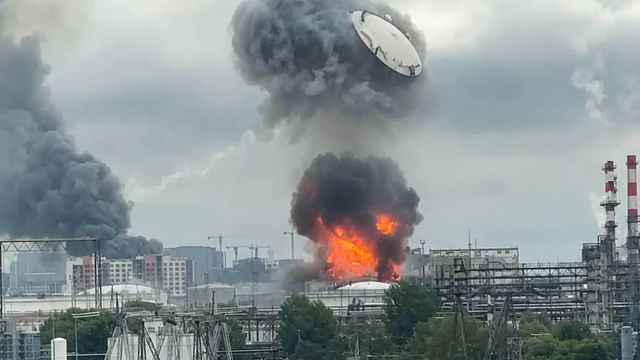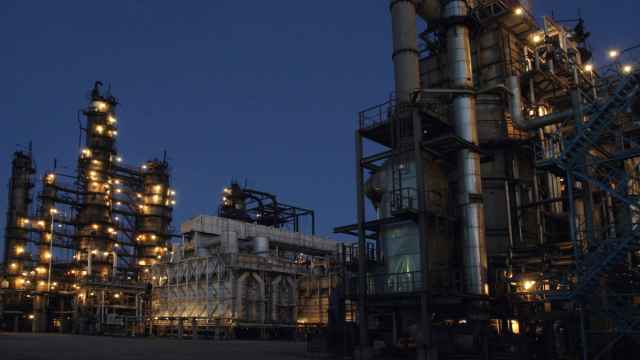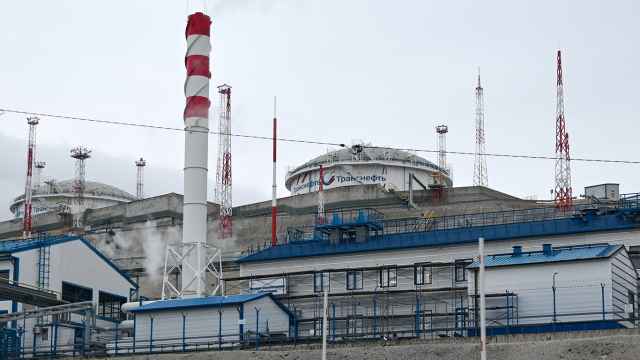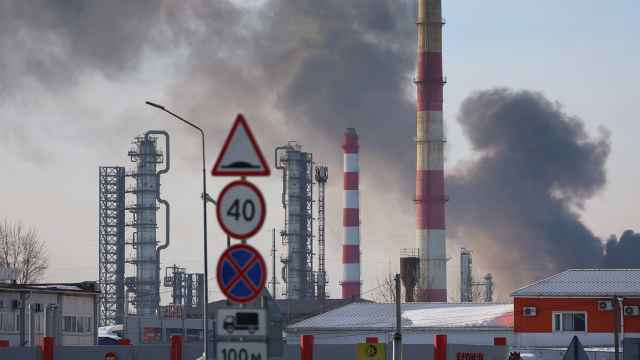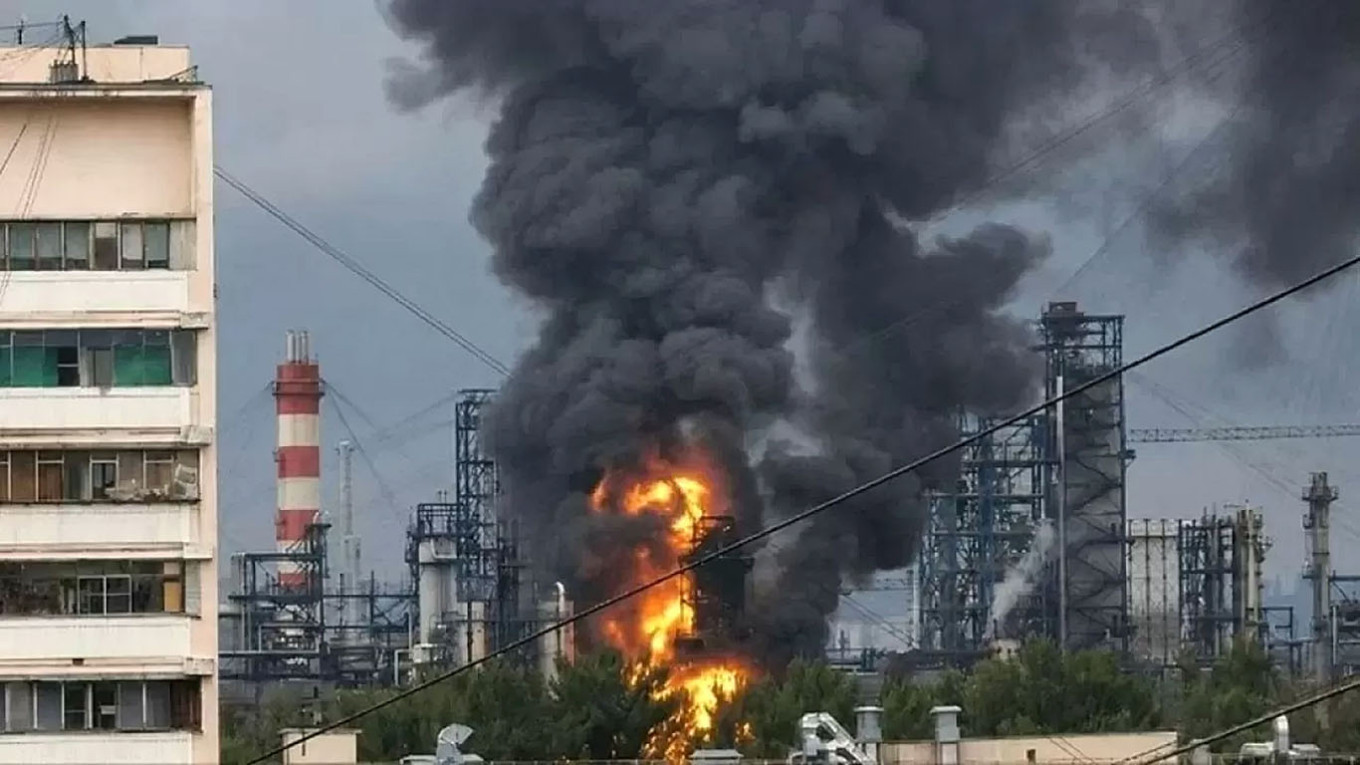
Russian oil refining fell in July to its lowest level in more than two decades as Ukrainian drone attacks intensified against refineries, tankers and other energy infrastructure, Bloomberg reported Monday.
Refineries processed an estimated 3.6 million barrels of crude per day last month, the lowest level since May 2002, according to EA Analytics data cited by Bloomberg. That was roughly one-third below the seasonal norm.
Russian refineries processed an average of between 5.3 million and 5.6 million barrels per day during the same period of the year between 2020 and 2025.
The decline highlights the growing impact of Ukraine’s long-range drone campaign on Russia’s oil industry, a crucial source of export revenue for Moscow as the war enters its fifth year. While Russia can redirect some crude to alternative ports, analysts said limited pipeline, storage and tanker capacity could constrain its ability to compensate for disruptions.
Eighteen Russian refineries were targeted in July, including the Omsk refinery, the country’s largest and located more than 2,500 kilometers (1,550 miles) from the Ukrainian border, according to a Bloomberg tally based on statements by Russian and Ukrainian officials.
The previous monthly record of 17 refinery attacks was set in May.
Five large tankers, five pieces of port infrastructure and two pipelines were also targeted in July. Bloomberg counted 30 attacks on oil infrastructure during the month, the second-highest total after 32 in May.
If eight tankers linked to the Caspian Pipeline Consortium (CPC) terminal are included, July would rank as the busiest month for attacks on oil assets connected to Russia, Bloomberg said.
No one has claimed responsibility for those tanker attacks, which included strikes on two vessels overnight on July 30. Oil loading at the CPC terminal was subsequently suspended.
The CPC’s shareholders include Russian and Kazakh entities as well as major international oil companies such as Chevron and ExxonMobil. Both U.S. companies withdrew from Russia after Moscow’s full-scale invasion of Ukraine but continue to operate in Kazakhstan.
Kazakhstan’s Energy Ministry denied reports that the CPC could completely halt operations.
The outlook for Russian oil refining and exports will depend partly on how many drones Ukraine has available and which targets it chooses to prioritize, said Sergei Vakulenko, a senior fellow at the Carnegie Russia Eurasia Center in Berlin.
Ukraine’s Unmanned Systems Forces concentrated on refineries in the first half of July before shifting their focus toward tankers later in the month, Vakulenko said. Refineries again came under heavy attack in the final week of July, with three large plants targeted during the month’s final three days and four more struck over the weekend.
Russia’s efforts to strengthen its air defenses could reduce the number of drones reaching their targets but would not provide complete protection, Vakulenko said.
Russia has some capacity to redirect oil from the Black Sea port of Novorossiysk to terminals on the Baltic Sea, said Jorge Leon, senior vice president and head of geopolitical analysis at Rystad Energy.
But spare pipeline, storage and tanker capacity was unlikely to be sufficient to handle all the volumes diverted from the Black Sea, Leon said.
Ukraine has also demonstrated that its drones can reach Russia’s Baltic ports, targeting them during the first months of this year, he added.
Read this article in Russian at The Moscow Times' Russian service.
A Message from The Moscow Times:
Dear readers,
We are facing unprecedented challenges. Russia's Prosecutor General's Office has designated The Moscow Times as an "undesirable" organization, criminalizing our work and putting our staff at risk of prosecution. This follows our earlier unjust labeling as a "foreign agent."
These actions are direct attempts to silence independent journalism in Russia. The authorities claim our work "discredits the decisions of the Russian leadership." We see things differently: we strive to provide accurate, unbiased reporting on Russia.
We, the journalists of The Moscow Times, refuse to be silenced. But to continue our work, we need your help.
Your support, no matter how small, makes a world of difference. If you can, please support us monthly starting from just $2. It's quick to set up, and every contribution makes a significant impact.
By supporting The Moscow Times, you're defending open, independent journalism in the face of repression. Thank you for standing with us.

Remind me later.