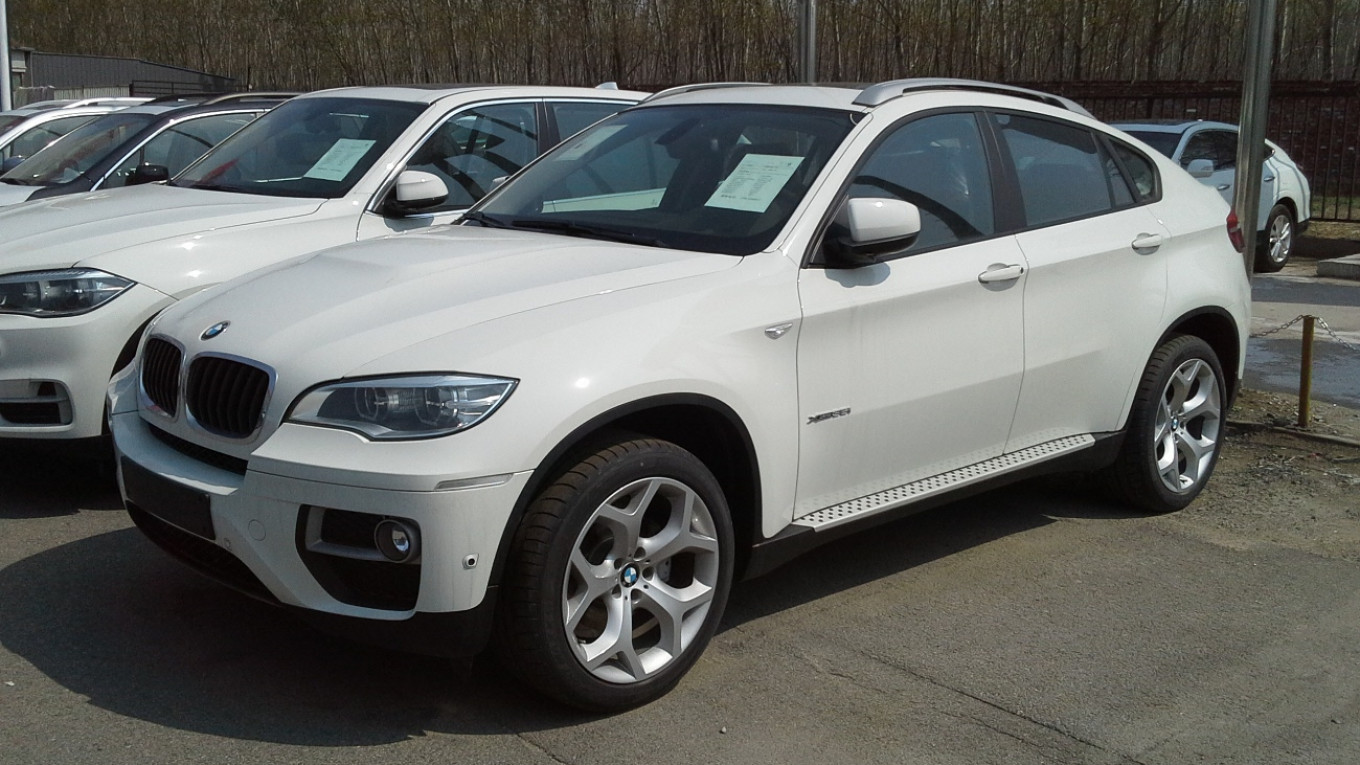
German automaker BMW said vehicles bearing its brand are continuing to be assembled in Russia without its authorization, warning buyers about what it described as "pirated BMW" cars produced by its former manufacturing partner after the company exited the country following the invasion of Ukraine.
BMW told Germany's Bild newspaper that production at the Kaliningrad plant operated by its former Russian partner Avtotor was taking place without the company's approval.
According to Bild, Avtotor resumed assembling BMW X5, X6 and X7 sport utility vehicles earlier this year using stocks of components left over from 2022, when BMW halted its Russian operations after Moscow launched its full-scale invasion of Ukraine.
A BMW spokesperson told Ukrainian media outlet United24 that the production was being carried out on an irregular basis. The company said vehicles assembled since 2022 have not undergone BMW's quality control procedures or certification.
German automotive magazine Auto Motor und Sport reported that registrations of Russian-built BMW vehicles in Russia nearly tripled in 2025 compared with the previous year.
The publication said the newly assembled vehicles differ from their 2022 counterparts, including smaller air intakes. As stocks of original BMW components have dwindled, Avtotor has increasingly relied on locally produced parts such as hoses, body components and wiring harnesses.
The vehicles are also no longer connected to BMW's official digital systems, meaning some functions are unavailable, the report said.
Despite those changes, Avtotor is selling the vehicles for between 12 million and 14 million rubles ($156,000-$182,000). By comparison, a new BMW X7 starts at around 105,000 euros in Germany.
Demand for BMW vehicles in Russia has continued to grow despite the automaker's departure. According to Russian analytics agency Autostat, about 16,700 BMW vehicles were sold in the country in 2025, up 42% from a year earlier. Some of those vehicles entered Russia through parallel import channels.
Before the war, BMW assembled vehicles at Avtotor's Kaliningrad plant under a contract manufacturing arrangement.
After Western automakers withdrew from Russia in 2022, Avtotor was left without production orders. The company temporarily idled workers, citing difficult economic conditions, and offered employees seasonal agricultural work harvesting strawberries, blueberries and apples, as well as construction jobs. It also allocated plots of land to workers to grow potatoes.
Read this article in Russian at The Moscow Times' Russian service.
A Message from The Moscow Times:
Dear readers,
We are facing unprecedented challenges. Russia's Prosecutor General's Office has designated The Moscow Times as an "undesirable" organization, criminalizing our work and putting our staff at risk of prosecution. This follows our earlier unjust labeling as a "foreign agent."
These actions are direct attempts to silence independent journalism in Russia. The authorities claim our work "discredits the decisions of the Russian leadership." We see things differently: we strive to provide accurate, unbiased reporting on Russia.
We, the journalists of The Moscow Times, refuse to be silenced. But to continue our work, we need your help.
Your support, no matter how small, makes a world of difference. If you can, please support us monthly starting from just $2. It's quick to set up, and every contribution makes a significant impact.
By supporting The Moscow Times, you're defending open, independent journalism in the face of repression. Thank you for standing with us.

Remind me later.