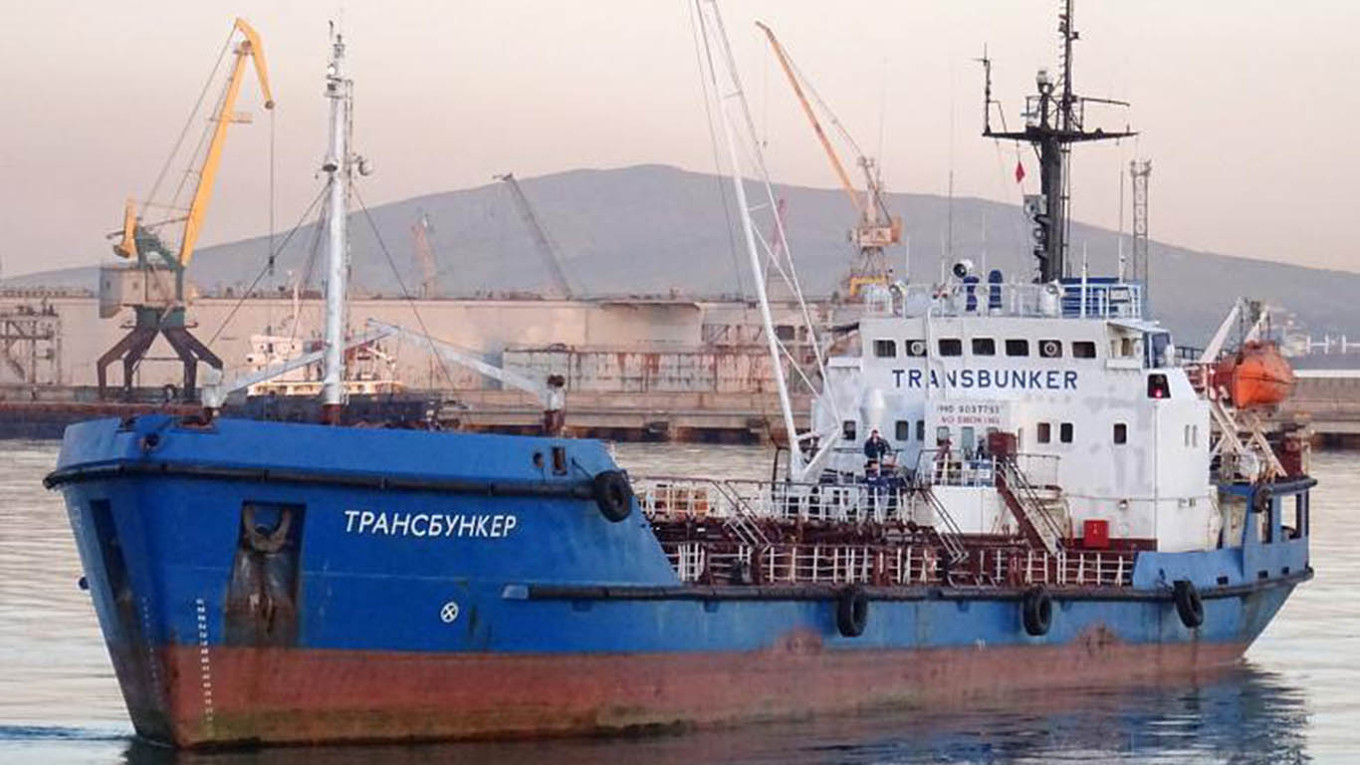
A Moscow court on Monday ordered the seizure of the assets of Transbunker, Russia's largest marine fuel supplier, handing control of the company to the state.
The ruling follows a lawsuit filed by Russia's Prosecutor General's Office in April which alleged that the holding company had been illegally controlled through offshore structures despite operating in sectors subject to restrictions on foreign ownership.
The decision is the latest in a sweeping campaign that has seen hundreds of private companies transferred to state ownership since the full-scale invasion of Ukraine in 2022.
Prosecutors have increasingly used national security and strategic asset legislation to justify seizures of businesses whose owners hold foreign citizenship or maintain overseas corporate structures.
According to the Moscow Arbitration Court's case database, the court granted the prosecutor's claims in full, ordering the assets of the Transbunker group to be transferred to the state. The ruling takes effect immediately.
The Prosecutor General's Office sued Transbunker founders Iosif Sandler and Sergei Pugachev, as well as Transbunker Management CEO Yelena Zavyalova.
Twenty-three companies, Russia's Federal Antimonopoly Service and the Federal Agency for State Property Management (Rosimushchestvo) participated in the proceedings as third parties.
Prosecutors argued that companies within the Transbunker group qualify as strategic enterprises under Russian law and are therefore subject to restrictions on foreign ownership.
According to the lawsuit, Sandler and Pugachev, who hold Cypriot citizenship, concealed their control over the strategically important holding company through a network of offshore entities registered in jurisdictions including Cyprus and the British Virgin Islands.
Prosecutors also alleged that they transferred profits out of Russia, citing data from the Federal Tax Service showing that 19.3 billion rubles ($247 million) had been moved abroad since 2020.
The Prosecutor General's Office further alleged that, after Western sanctions and Russia's retaliatory economic measures were introduced, the company's beneficial owners sought to circumvent restrictions by redomiciling some subsidiaries to Russia's special administrative regions while moving the group's parent companies to the United Arab Emirates.
Prosecutors said these steps allowed the owners to retain control of the business while continuing to transfer funds abroad.
The lawsuit sought to invalidate corporate redomiciliation decisions made in 2024, transfer the state's ownership of stakes in key holding companies, including a 99% stake in the group's parent company, freeze the defendants' assets and bank accounts, and prohibit transactions involving shares in several affiliated companies.
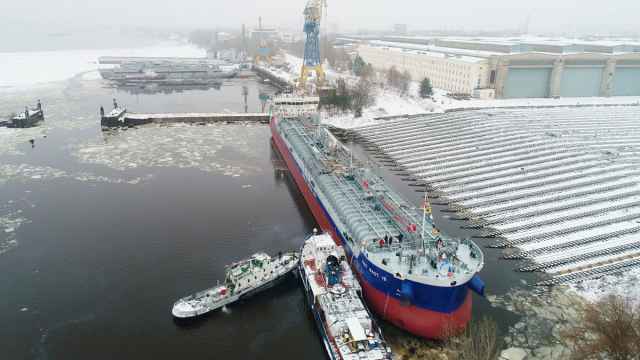
Founded in 1991 in the Far Eastern port of Vanino, Transbunker built a nationwide network supplying marine fuel to Russian ports on the Baltic and Black Seas. The group owns dozens of assets, including fuel terminals in Novorossiysk, Vanino, Sakhalin and the Leningrad region.
Russia has accelerated the transfer of private assets into state ownership since the start of the war in Ukraine. More than 800 companies have been taken over by the state in recent years, according to Rosimushchestvo head Vadim Yakovenko.
Between 2022 and 2024, the value of seized assets totaled about 5 trillion rubles ($64 billion).
Major beneficiaries of the redistribution have included state-controlled companies such as Gazprom, Rosatom, Rostec, Transneft, VTB and Russian Agricultural Bank, as well as business groups linked to longtime associates of President Vladimir Putin, including the Kovalchuk, Rotenberg and Patrushev families.
Read this article in Russian at The Moscow Times' Russian service.
A Message from The Moscow Times:
Dear readers,
We are facing unprecedented challenges. Russia's Prosecutor General's Office has designated The Moscow Times as an "undesirable" organization, criminalizing our work and putting our staff at risk of prosecution. This follows our earlier unjust labeling as a "foreign agent."
These actions are direct attempts to silence independent journalism in Russia. The authorities claim our work "discredits the decisions of the Russian leadership." We see things differently: we strive to provide accurate, unbiased reporting on Russia.
We, the journalists of The Moscow Times, refuse to be silenced. But to continue our work, we need your help.
Your support, no matter how small, makes a world of difference. If you can, please support us monthly starting from just $2. It's quick to set up, and every contribution makes a significant impact.
By supporting The Moscow Times, you're defending open, independent journalism in the face of repression. Thank you for standing with us.

Remind me later.