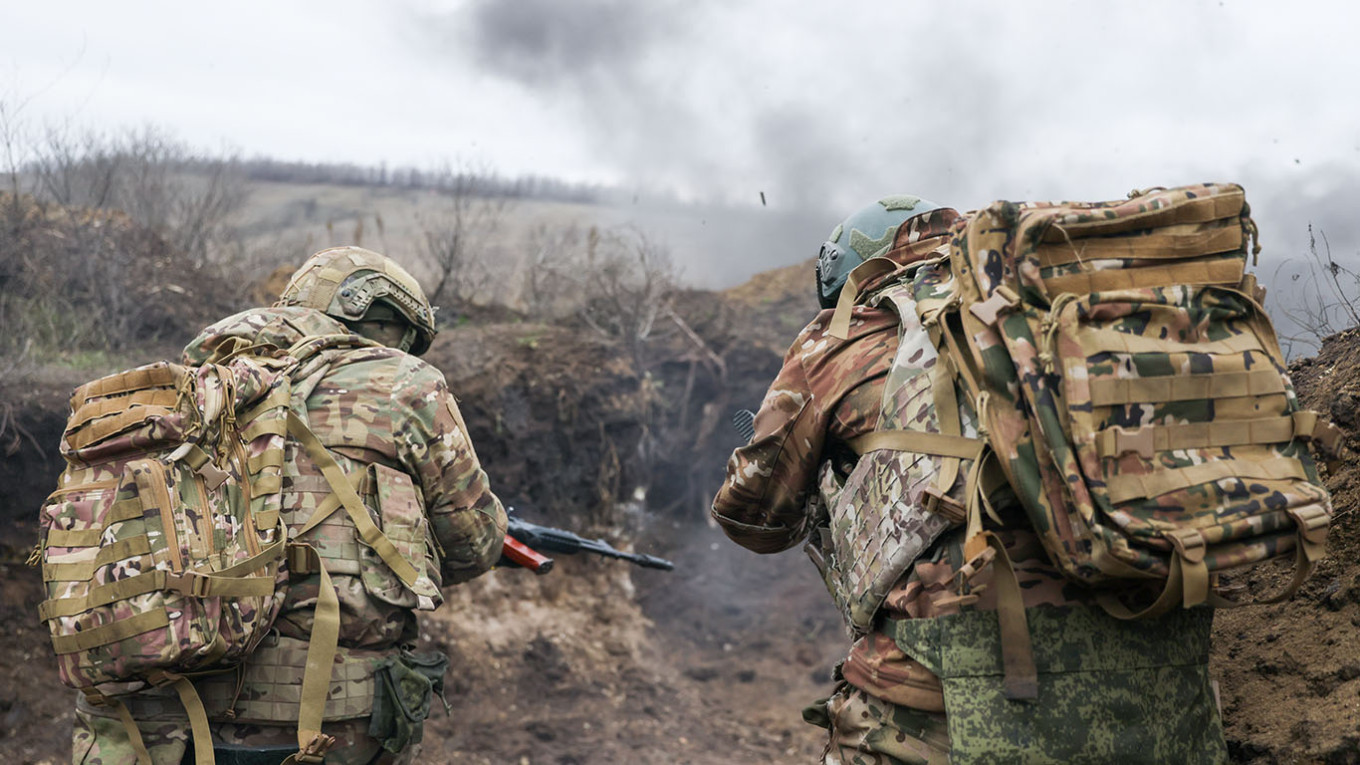
Russia lost more territory than it gained in Ukraine in April for the first time since a Ukrainian counteroffensive in the summer of 2023, an AFP analysis of data from the Institute for the Study of War (ISW) showed.
Moscow ceded control of about 120 square kilometers (46 square miles) between March and April, the ISW data revealed.
Despite the fighting at the front reaching a near stalemate, intense and deadly drone-dominated attacks have continued unabated in recent months, while U.S.-led talks on the conflict have stalled as the Middle East war grinds on.
Russia's advances have slowed since late 2025, as communication issues in the Russian army combined with Ukrainian counterattacks helped Kyiv make localized breakthroughs in the southeast.
"Ukrainian mid-range strikes, the February 2026 block on Russia's use of Starlink terminals in Ukraine, and the Kremlin's throttling of Telegram have exacerbated existing problems within the Russian military," the U.S.-based ISW said.
However, scattered Russian forces were still present in around three-quarters of the areas Ukraine had regained, according to AFP's calculations based on ISW data.
The decline in the rate of Russian advances may also be linked to "annual seasonal patterns," as the melting of frozen ground and spring rains muddy the soil, complicating "mechanised movement," the ISW said.
According to the ISW, Ukraine advanced across multiple parts of the front line in April, regaining about 40 square kilometers in each of the eastern regions of Zaporizhzhia, Kharkiv and Donetsk.
AFP's calculations exclude infiltration operations, a popular Russian tactic of sending small, highly mobile groups of soldiers behind enemy lines.
They also do not include advances claimed by Russia but neither confirmed nor denied by the ISW.
Russian troops gained several square kilometers of land east of Kramatorsk in the Donetsk region, where Russia has been concentrating its efforts, the data showed.
The Ukrainian army's net gains — their first in more than two years — were marginal, representing only 0.02% of Ukrainian territory.
Moscow occupies just over 19% of the country's territory, including 7% in Crimea and areas in the Donetsk and Luhansk regions already under Russian or Russia-backed separatist control before the 2022 invasion.
The ISW works with the Critical Threats Project of the American Enterprise Institute, another U.S. think tank.
A Message from The Moscow Times:
Dear readers,
We are facing unprecedented challenges. Russia's Prosecutor General's Office has designated The Moscow Times as an "undesirable" organization, criminalizing our work and putting our staff at risk of prosecution. This follows our earlier unjust labeling as a "foreign agent."
These actions are direct attempts to silence independent journalism in Russia. The authorities claim our work "discredits the decisions of the Russian leadership." We see things differently: we strive to provide accurate, unbiased reporting on Russia.
We, the journalists of The Moscow Times, refuse to be silenced. But to continue our work, we need your help.
Your support, no matter how small, makes a world of difference. If you can, please support us monthly starting from just $2. It's quick to set up, and every contribution makes a significant impact.
By supporting The Moscow Times, you're defending open, independent journalism in the face of repression. Thank you for standing with us.

Remind me later.