Russian internet giant VK received 43.5 billion rubles ($578.6 million) from the federal budget last year, according to Russia’s 2025 budget execution report cited by the Kommersant business daily, underscoring the Kremlin’s push to build state-backed alternatives to Western digital platforms.
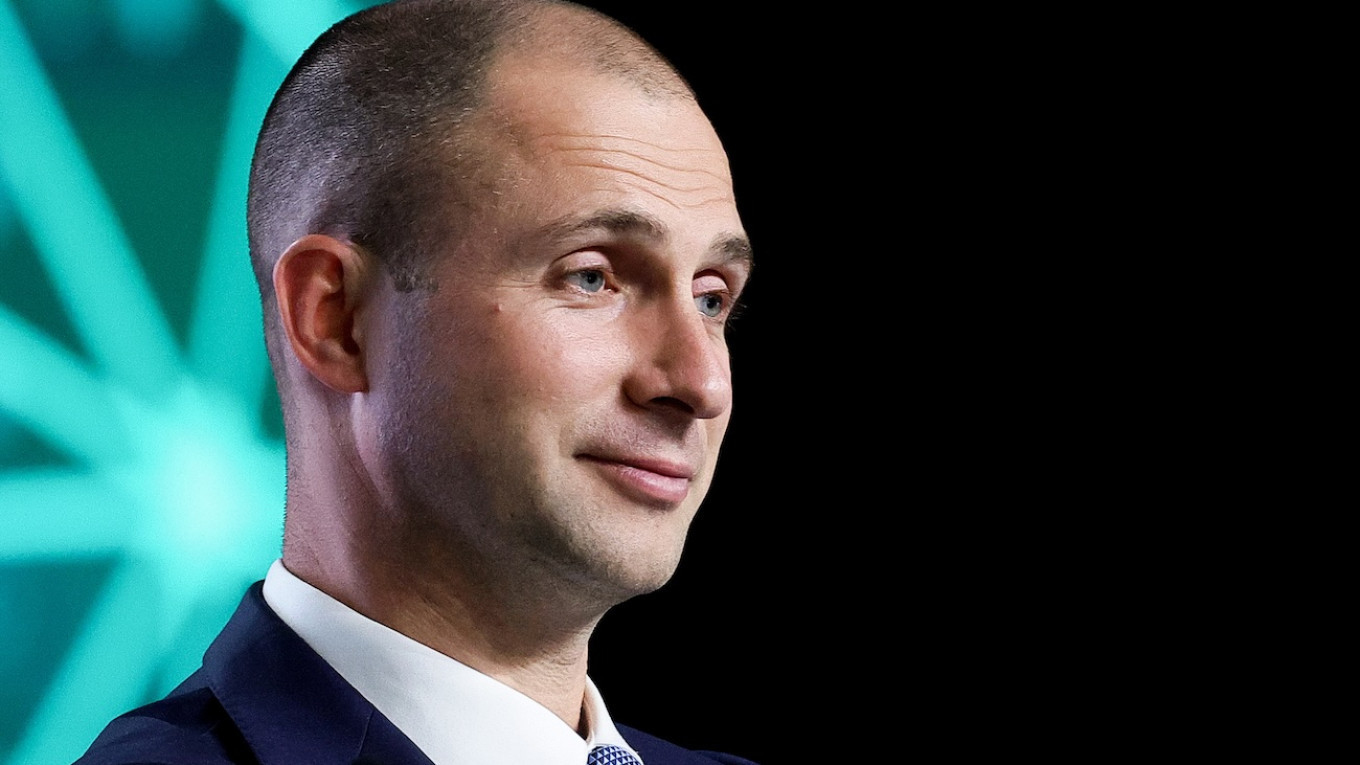
VK operates Russia’s largest social network VKontakte, the VK Video hosting platform and the recently launched Max messaging app. The company has been headed since 2021 by Vladimir Kiriyenko, the son of Kremlin deputy chief of staff Sergei Kiriyenko.
The allocation accounted for nearly 10% of the Digital Development Ministry’s total spending of 456.8 billion rubles ($6.08 billion), Kommersant reported.
Most of the funds — 39.5 billion rubles ($525.4 million) — were earmarked for the development of a “national video platform,” a domestic alternative to YouTube. Another 4 billion rubles ($53.2 million) was allocated for the development of the Max messenger app, which authorities have promoted as a Russian counterpart to China’s WeChat.
The subsidies come as Moscow accelerates efforts to reduce Russia’s dependence on Western technology platforms following sweeping sanctions and the exodus of foreign tech companies after the start of the war in Ukraine.
Russian authorities have increasingly promoted domestic online services while slowing access to foreign platforms and encouraging state institutions and businesses to migrate to locally developed software.
VK has remained unprofitable for six consecutive years, posting cumulative losses of nearly 200 billion rubles ($2.66 billion) between 2020 and 2025.
The company reported a net loss of 24.9 billion rubles ($331.2 million) in 2025, following losses of 94.9 billion rubles ($1.26 billion) in 2024, 34.3 billion rubles ($456.2 million) in 2023, 32.6 billion rubles ($433.6 million) in 2022, 6.5 billion rubles ($86.5 million) in 2021 and 1.9 billion rubles ($25.3 million) in 2020.
The company’s cumulative losses over the six-year period are roughly equivalent to the annual budgets of entire Russian regions including the Stavropol region, whose 2025 budget totaled 195 billion rubles ($2.59 billion), or the Voronezh region, with a budget of 208 billion rubles ($2.77 billion).
A source familiar with the government’s plans told Kommersant that the subsidies were directed specifically toward the development of VK Video.
Another source said officials are considering granting the platform the status of a “national video platform” to strengthen its position against competitors.
Such a designation could guarantee access to the service during internet restrictions, require its pre-installation on smartphones and enable integration with the state services portal Gosuslugi, according to the report.
Research group Mediascope said VK Video’s daily audience reached 42.2 million users in January, excluding Smart TV, background and embedded viewing. Its monthly audience stood at 82.8 million users during the same period.
By comparison, YouTube’s monthly audience in Russia was 65.9 million users, while the state-backed Rutube platform had 47.7 million users, Mediascope data showed.
Read this article in Russian at The Moscow Times' Russian service.
A Message from The Moscow Times:
Dear readers,
We are facing unprecedented challenges. Russia's Prosecutor General's Office has designated The Moscow Times as an "undesirable" organization, criminalizing our work and putting our staff at risk of prosecution. This follows our earlier unjust labeling as a "foreign agent."
These actions are direct attempts to silence independent journalism in Russia. The authorities claim our work "discredits the decisions of the Russian leadership." We see things differently: we strive to provide accurate, unbiased reporting on Russia.
We, the journalists of The Moscow Times, refuse to be silenced. But to continue our work, we need your help.
Your support, no matter how small, makes a world of difference. If you can, please support us monthly starting from just $2. It's quick to set up, and every contribution makes a significant impact.
By supporting The Moscow Times, you're defending open, independent journalism in the face of repression. Thank you for standing with us.

Remind me later.